Fraser council reviews FY2025-26 draft budget, flags water, public-safety and senior-program costs
Loading...
Summary
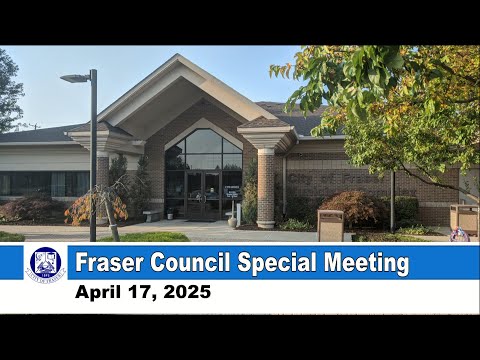
Fraser — City leaders spent a lengthy April 17 budget workshop poring over a draft fiscal 2025-26 budget that keeps the public-safety millage intact while asking council to approve capital spending on water mains, stormwater repairs, police and fire vehicles and equipment.
Fraser — City leaders spent a lengthy April 17 budget workshop poring over a draft fiscal 2025-26 budget that keeps the public-safety millage intact while asking council to approve capital spending on water mains, stormwater repairs, police and fire vehicles and equipment.
City Manager Levin opened the review by noting the administration is recommending holding the public-safety millage at 1.5 mills in the coming year. "We are maintaining, or at least the recommended budget of maintaining, the public safety millage at 1.5 mills," Levin told the council as the meeting moved into department-by-department reviews.
Why it matters: Fraser staff said infrastructure and public-safety equipment deferred for years now require replacement or expanded maintenance budgets. Council members repeatedly asked for more detail and prioritized near-term fixes — notably water-main and stormwater repairs tied to street projects — while flagging community concerns about costs for recreation, fireworks and retiree benefits.
Major items and debate
Water and stormwater: DPW staff told council an engineering inventory found roughly 1,315 stormwater assets in critical condition and recommended pairing targeted storm-sewer repairs with planned water-main projects rather than treating each item separately. DPW staff said the draft budget includes $750,000 for stormwater repairs in 2025-26 and then an estimated $250,000 per year in later years to begin addressing the backlog. Council members pressed on timing and disruption from construction; staff said water-main work would typically precede paving and that some street projects would be followed immediately by resurfacing.
Meters and water loss: Staff proposed a multi-year meter replacement program to address apparent water loss and aging meters. The largest vendor quote staff reported was roughly $3 million to replace all meters over a ten-year schedule (about $300,000 a year). DPW staff said the program would prioritize larger commercial meters and older neighborhoods and include options for residents to monitor usage online.
Public safety and equipment: The police and fire budgets include several high-cost items: an estimated $50,000 for a marked patrol SUV (plus upfitting), a roughly $350,000 estimate for a new full-size ambulance and about $80,000 for a powered stretcher/cot and warranty. The Department of Public Safety also proposed switching service sidearms from .40 to 9mm with MOS red-dot sights and related gear; the estimated kit cost was described as about $42,000 for 33 units, offset in part if the department sells existing weapons at reduced prices.
On accreditation and staffing, the department recommended hiring an accreditation manager and budgeting $40,000 to hire a consultant (the Rosso Group was cited as a potential vendor) to pursue Michigan Association of Chiefs of Police (MACP) accreditation; staff said the consultant could split fees across two years if council preferred. The department also proposed moving one existing patrol position into a sergeant/fire-marshal role (the initial salary delta was described as roughly $23,000 in year one).
Crossing guards and part-time pay: Council debated raising crossing-guard pay. Staff reported the current hourly pay was $15 (on record) and cited neighboring municipalities paying as high as $20–$25 per hour; several council members urged bringing the rate up and directed staff to research and return with an agenda item.
Recreation and senior services: Staff sought to expand senior activity programming and the recreation staff complement. The draft contained an option to add positions that would raise combined staffing costs for recreation and the Senior Activity Center to roughly $360,000; an alternate, scaled-back staffing model was presented at about $230,000. Council discussed an early-stage partnership with the private nonprofit RARE (regional recreation organization) and a separate long-range proposal that had been discussed previously — a voter-approved 1-mill levy that RARE estimated would generate about $580,000 annually. Council members described that levy as a large, voter-level decision and said any such proposal would need more public study and a ballot process.
Fireworks and events: Recreation staff included $25,000 in the draft for this year’s fireworks; staff said they expect a contract soon and that prices can vary with seasonality and contract terms.
Elections and clerk staffing: The city clerk reported that long-time elections staffer Cindy will leave in June and that the draft budget includes funding to hire a part-time deputy clerk or temporary election worker. Council members asked whether seasonal overtime or temporary staffing could cover peak election periods rather than creating ongoing head count. Clerk staff said the workload around elections includes required ongoing training and certifications and that a flexible part-time deputy remains the preferred model.
Budgetary and retiree obligations: Staff reiterated prior recommendations to increase funding for retiree health (OPEB) and pension obligations to improve long-term funding ratios. Finance staff said retiree-health premiums run roughly $1.3 million now, plus another planned corrective payment near $207,000, and discussed a proposal to raise the retiree-health contribution to about $2 million in the next budget cycle to improve funding levels. Council asked for clearer options and projected impacts on reserves.
Public works operations: DPW asked for modest capital items — a salt-dome extension (estimated $20,000), epoxy floors for the public-works garage, and replacement or trade-in of aging trucks — and recommended a five‑year fleet plan to stagger purchases and reduce unplanned repairs. On salt, staff said the city’s salt purchasing requires spring commitments and this year the city had both a surplus delivery and concerns about national availability; council debated whether to expand storage to avoid shortfalls.
Rubbish contract and leaf pickup: The city’s rubbish/collection contract is due for renewal; staff told council competitive bids currently show rates up roughly 30% in the market. Staff also recommended keeping the city leaf‑pickup program and, if council approves replacing a leaf loader, to buy earlier in the year because lead times for specialized equipment can be long.
Park maintenance and historic properties: The budget draft includes a one‑time proposed $2,500 increase to help the Historical Commission fund the 150th anniversary of the Baumgartner House. Parks line items were presented as a menu of possible projects (playground repairs, pavilion work, landscaping) with $200,000 held as a placeholder for park projects pending council direction.
What council asked staff to return with
- Precise OPEB/pension contribution scenarios and the projected effect on the city’s funded ratios. - Clarified cost estimates and timing for stormwater repairs tied to water-main work and street resurfacing. - More detail on the ambulance procurement timeline and up-to-date vehicle pricing before any purchase. Staff warned vehicles often have long lead times and prices can change with tariffs. - A deputy-clerk hiring plan that compares part-time hire vs. overtime/seasonal alternatives, including training costs and certification requirements. - Options and a staff recommendation on crossing-guard pay, to be placed on a future agenda.
Votes at a glance: procedural actions recorded at the meeting
- Motion to excuse Councilmember Baranski from the special meeting: moved by Mayor Lesage, seconded by Councilmember Shornack — outcome: approved (voice vote). - Motion to approve the special-meeting agenda: moved by Mayor Pro Tem Sutherland, seconded by Councilmember Stein — outcome: approved (voice vote). - Motion to go into closed session for negotiations of a collective-bargaining agreement (Michigan Open Meeting Act): moved by Mayor Lesage, seconded by Councilmember Schornack — roll call: Lesage yes; O'Dell yes; Perry yes; Shornack yes; Stein yes; Sutherland yes; Baranski absent — outcome: approved. - Motion to adjourn the special meeting and then to open the budget workshop and adjourn at the end of the workshop: moved and seconded — outcome: approved.
Next steps and timeline
Staff said it will return a revised budget draft with updated salary/fringe detail, refined capital costs, debt/transfer adjustments and clearer timing for large procurements (ambulance, major vehicles, meter-replacement contracts). Several council members expressed interest in preserving capital reserves while addressing the highest-priority safety and infrastructure needs first.
Sources and attribution
Quotes and attributions in this article come from the city’s April 17 budget workshop transcript and the staff presentations during that meeting. Direct attributions are limited to speakers identified in the council record.
Ending
Council set no final budget votes on April 17; the session was a review and direction-setting meeting. Staff will prepare a follow-up draft for council review reflecting the priorities and clarifications the council requested.