Get Full Government Meeting Transcripts, Videos, & Alerts Forever!
Get email alerts on the Parks And Recreation topic
No spam. Unsubscribe anytime.
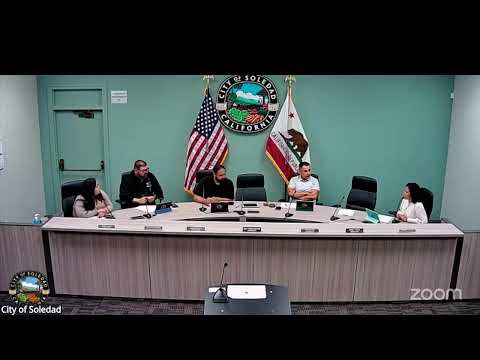
Soledad planning commission recommends 20-year Parks and Recreation Master Plan to city council
Summary
The Soledad Planning Commission voted to recommend the City Council adopt the Soledad Parks and Recreation Master Plan, a 20‑year roadmap for parks, facilities and recreation programs in the city.
The Soledad Planning Commission voted to recommend the City Council adopt the Soledad Parks and Recreation Master Plan, a 20‑year roadmap for parks, facilities and recreation programs in the city.
Jessica Potts, Soledad’s Parks and Recreation director, presented the plan and said it was “a comprehensive update that reflects our community’s vision and sets direction for the next 20 years of parks and recreation investment.” Senior planner Adena Moore told commissioners the planning commission is serving as the city’s parks and beautification advisory body under city code to review standards and policies tied to the master plan.
The update, Potts said, replaces a 2009 plan and responds to growth in use and population. City consultants and outreach work reached more than 800 residents, Moore said, including 401 survey responses, five pop‑up events and an online mapping exercise that generated about 1,100 comments and likes. “Residents want shade and protections from the wind,” Potts said. “They want safe routes to get to our parks, especially by bike or on foot. They need more sports fields, reliable restrooms and dedicated youth program space.”
Staff analysis in the presentation identified service gaps and quantifiable shortfalls: the city currently provides about 3.8 acres of improved parkland per 1,000 residents compared with the National Recreation and Park Association guideline of 5 acres per 1,000, and staff noted that shortfall could equate to roughly a 40‑acre deficit at buildout if additional parkland is not added. The plan also reports that about 81% of residents live within a roughly ten‑minute walk of some kind of park, while parts of North Soledad, the Miramonte growth area and the southwest are underserved.
The plan includes revised and strengthened park standards prepared by BFS Landscape Architects. Those standards classify parks into pocket, neighborhood, community, sports and special‑use types and define required amenities and service areas; staff said the standards give the city clearer, enforceable expectations for parks that new developments must meet. The plan also proposes lifecycle replacement schedules, drought‑tolerant landscaping, climate‑adaptive tree planting and wind shelters at high‑use sites.
Potts outlined a three‑phase implementation schedule in the plan: near‑term (0–2 years) items such as shade structures and restroom repairs, mid‑term (3–5 years) work such as sports lighting and expanded trail connections, and long‑term priorities including new parkland acquisition in the Miramonte growth area. Moore said the plan is intended to strengthen the city’s position for state and federal grants and to guide subdivision requirements for parks and open space as new development comes online.
Commissioners asked about fiscal impacts and implementation. Potts and Moore said the plan document itself was paid through past budgets and that most capital implementation would be funded through impact fees collected from new development, supplemented by grants when available. Potts also said the document is amendable and can be updated if priorities change over time.
The commission adopted Resolution No. 2025‑04 recommending council adoption. In discussion commissioners praised the plan’s community engagement and flexibility; one commissioner noted the plan can be amended if priorities change. The recommendation will be forwarded to City Council for final action.
The plan identifies Toledo Basin as the next concept design priority and mentions Miramonte as a growth area where the city expects to secure new community parkland as development occurs. Potts said the city will use the master plan as a standard to evaluate parks required as part of future subdivisions and to avoid “bare minimum” park installations.
The resolution now moves to City Council for consideration; adoption would make the master plan a guiding policy document for future parks investments.