San Rafael council restricts throttle e-bikes for riders under 16 and requires helmets
Summary
The San Rafael City Council introduced and adopted an ordinance implementing age and helmet requirements for throttle (class 2) e-bikes, aligning local rules with Assembly Bill 1778 and launching an education-focused county campaign.
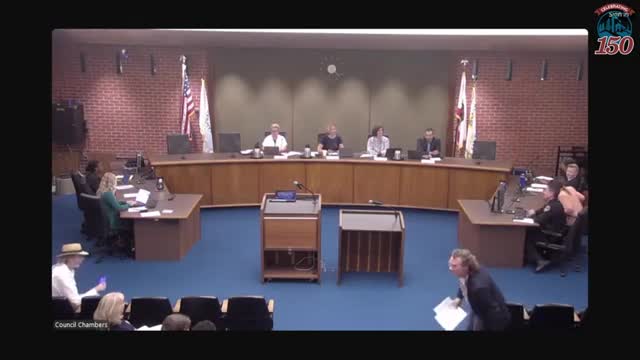
San Rafael — The City Council on Aug. 18 introduced and adopted an ordinance that restricts the use of throttle (class 2) electric bicycles by riders under 16 and requires helmets for riders of those devices.
The measure implements authorities granted by Assembly Bill 1778 and brings San Rafael into alignment with a countywide effort to reduce injuries among young riders. The council voted 4-0 to introduce and adopt the ordinance and to add Chapter 5.35, “Operations of Electric Mobility Devices,” to the municipal code.
Why it matters: County public health and EMS data presented to the council show a sharp rise in e-bike injuries among the youngest riders. Talia Smith, director of legislative intergovernmental affairs for Marin County, said the county’s data collection found that “for e-bikes, 10 to 15 year olds have an accident rate that is actually 5 times higher.” County staff and local advocates said the injuries observed in emergency rooms resemble motor-vehicle crash trauma more than typical bicycle injuries.
What the ordinance does: The local ordinance targets class 2 throttle e-bikes — devices whose motors can propel the bike via a throttle and which assist up to 20 miles per hour — and treats them like class 3 devices under state law by (1) establishing a minimum rider age of 16 for throttle e-bikes and (2) requiring helmets for riders. Talia Smith summarized the policy intent and coordination behind the measure, noting the county’s eBikers Club public-education campaign that uses local imagery and school-focused outreach.
Enforcement and education: Lieutenant Alex Holm of the San Rafael Police Department told the council that enforcement will focus first on dangerous riding behavior already prohibited under the California Vehicle Code (running stop signs, red lights, reckless operation) and that the new ordinance is intended to function primarily as a secondary violation in enforcement encounters. Holm said officers will “target the behavior” and use the age-based restriction as a secondary tool; the department also said officers would notify parents when youth are stopped and a violation is documented.
Public reaction: Dozens of public commenters, medical and injury-prevention professionals, school-safety advocates and local residents urged adoption. John Maughan, a physician with MarinHealth, read a statement of support and said he strongly urged the council to adopt the ordinance: “I urge you to vote aye.” Gwen Ferreaux, education director for the Marin County Bicycle Coalition and Safe Routes to Schools, described school-based education and retailer responsibilities and urged enforcement and retail accountability.
Next steps and monitoring: County staff said the ordinance is one part of a broader, countywide approach that combines regulation, school-based education and retailer/manufacturer outreach. Marin County will continue to publish EMS and 911 dashboards to track whether the 9-1-1 injury rate for the youngest riders declines following the ordinance and the education campaign.
Ending: The council’s action brings San Rafael into the countywide framework created after AB 1778. Staff said they will report back on enforcement outcomes and on whether the countywide education campaign alters behavior among parents and teen riders.