
Historic commission approves rooftop solar on several houses, asks that equipment be placed as far back and painted to match façades; one application continued
Get AI-powered insights, summaries, and transcripts
Subscribe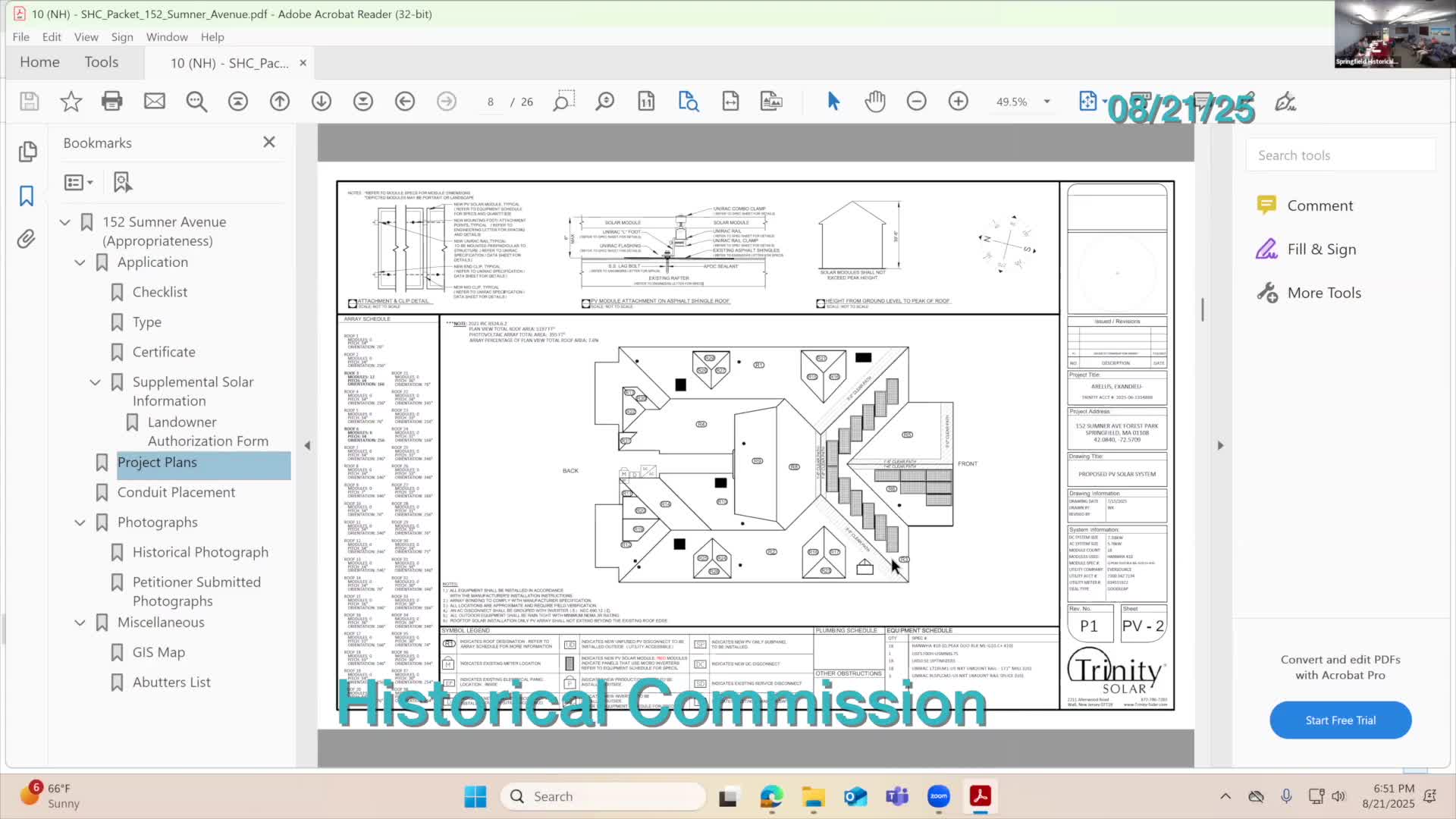
Summary
The commission approved rooftop solar for multiple properties with conditions that inverters, conduits and meters be sited to minimize visual impact and painted to match building exteriors. One application was continued to allow the petitioner to coordinate with the electric utility about meter relocation.
SPRINGFIELD — The Springfield Historic Commission on Thursday approved several rooftop solar installations for properties within the commission’s review area, attaching conditions intended to minimize streetscape visibility and continuing a separate application to allow the petitioner time to resolve utility-meter placement.
Key points: Commissioners approved solar-panel arrays sited on roof planes of later-era buildings where placement would be minimally visible from the public right-of-way. Approvals included a condition that inverters, disconnects and conduit be installed “as far back on the house as possible” and that exterior boxes be painted to match the building material or stucco. At least one application — for a property on Southern Avenue — was continued so the petitioner could secure written confirmation from the electric utility explaining whether the meter and related equipment must be relocated to the front façade or may be routed to the rear, as the plans originally indicated.
Why it matters: Rooftop solar reduces energy costs but often requires exterior electrical equipment — meters, inverters and disconnects — that can affect historic streetscapes. The commission balanced the benefits of renewable energy against visual impacts by approving rooftop panels while limiting visible ancillary equipment.
Details and technical notes: Solar contractors and local installers told the commission the meter is sometimes required to be relocated outside by the utility for interconnection; this often increases cost because utilities bill for meter relocation. Installers said they will route conduit through attics where possible and paint conduit and boxes to match adjacent surfaces. In most approved cases, the homeowner and installer agreed to place the inverter and small disconnects near the rear or side yard, not on the primary façade.
Public and commission remarks: A solar-industry representative in the public noted that meter relocation to the exterior is a common utility requirement in Massachusetts and that installers frequently coordinate with utilities to minimize visible equipment. Commissioners asked petitioners to provide photos and final equipment spec sheets and to note locations in the record so staff can enforce the “as far back as possible” condition.
Outcome and next steps: Approvals were granted with the stated conditions; the Southern Avenue application was continued to the commission’s next meeting so the petitioner and the utility can clarify where the meter and equipment must be placed and submit any revised plans.