
Historic commission approves multiple window-replacement applications, citing hardship and matching profiles
Get AI-powered insights, summaries, and transcripts
Subscribe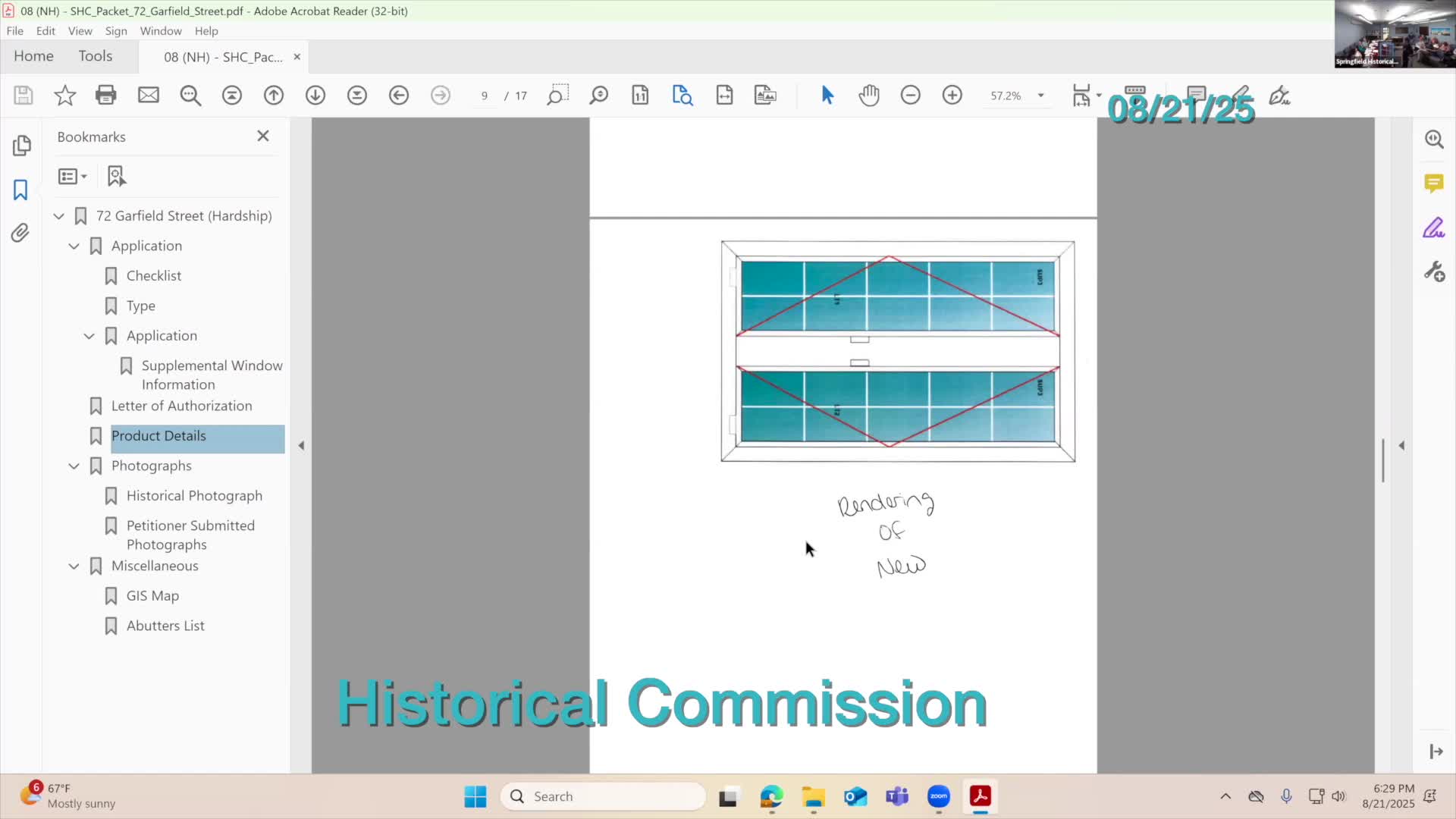
Summary
The commission approved several certificates of appropriateness to replace deteriorated or single-pane windows at multiple addresses, allowing modern insulated units with simulated divided lights where needed and finding hardship for units with energy loss and security issues.
SPRINGFIELD — The Springfield Historic Commission approved multiple applications to replace deteriorated single-pane and failing wood windows at selected homes and buildings, citing owner hardship and compatibility measures submitted with the applications.
What the commission approved: Presenters requested certificates of appropriateness for several properties that included like-for-like visual matches while upgrading to double- or triple-pane insulated units. Approvals in the meeting included an application to replace nine windows at a Garfield Street residence with Polaris UltraWeld Select vinyl casement windows featuring simulated divided lights and argon-filled double-pane glass, and another application to replace approximately 38 windows at a larger residence with triple-pane units in a “desert sand” finish. The commission found hardship arguments persuasive where applicants documented heat loss, operational failure and high energy costs.
Why it matters: The approvals allow property owners to address security, energy-efficiency and maintenance problems while retaining the appearance of divided-light windows on the exterior. Commissioners emphasized samples and simulated-divided-light detailing — grid placement and exterior shadow bars — to preserve sight-lines and historic character.
Details: For the Garfield Street property, the petitioner’s contractor described out-swinging casement installations with internal screen placement and a lifetime manufacturer warranty. The installer said windows could be built to one-eighth inch accuracy to match historic glass openings. Commissioners asked for external grid placement or shadow bar detailing where visible from the street. In the larger house application, the petitioner documented high winter heating costs and degraded sash; commissioners accepted the use of triple-pane replacement units to reduce energy loss.
Public comment and outcome: Residents and neighbors spoke in favor of replacement where the windows were failing; commission members voted to approve the listed applications as presented. Several approvals included conditions requiring simulated divided lights (external or shadow-bar configuration) and that final material samples be submitted if not already on file.
Next steps: Applicants must provide final shop drawings and — where required by the commission — physical samples of trim and grid profiles before work begins. The commission stressed that approvals pertain to the exterior appearance and do not authorize interior work or structural changes beyond what was presented.
Ending: The approvals strike a compromise between preserving neighborhood character and allowing modern performance upgrades for homeowners with documented hardship.