
Committee pauses on Urban Woodlands ordinance amid enforcement and developer concerns
Get AI-powered insights, summaries, and transcripts
Subscribe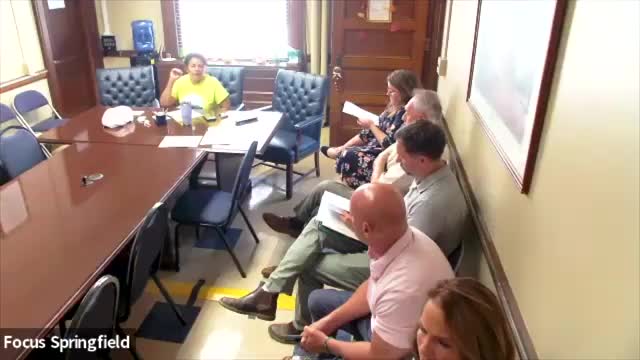
Summary
The Sustainability and Environmental Committee continued its discussion Sept. 10 of a proposed Urban Woodlands ordinance that would apply to trees 6 inches and larger on parcels of 5,000 square feet or more, but committee members and staff agreed more drafting and stakeholder meetings are needed before the measure moves forward.
The Sustainability and Environmental Committee continued its discussion Sept. 10 of a proposed Urban Woodlands ordinance that would apply to trees 6 inches and larger on parcels of 5,000 square feet or more, but committee members and staff agreed more drafting and stakeholder meetings are needed before the measure moves forward.
The discussion matters because the ordinance is intended to protect wooded land and urban canopy across Springfield while committee members and city staff warned its current language could impose broad permitting requirements on homeowners, create enforcement challenges for the forestry division and complicate housing development.
Forestry staff said the proposal as written would be difficult to enforce and could be “overly burdensome to residents in the city.” Alex, a representative of the forestry division, told the committee that the draft would require identifying virtually every tree 6 inches and larger on covered parcels and that on larger sites “it’s gonna be very difficult to interpret” how to apply that requirement. Alex also described how the city’s existing significant-tree rules work: “If that tree is healthy and in good condition then I deny removal of that tree,” and property owners can appeal that decision to the Board of Park Commissioners, which may grant relief based on demonstrated hardship.
The city solicitor told the committee the law department had reviewed the August 8 redraft and found “20 to 25 concerns” ranging from definitions to authority and commission procedures. The solicitor said the draft’s current wording “heavily incorporates the impact to homeowners and then carves out exceptions to that,” and recommended meeting with the ordinance initiators to agree on scope before reworking language.
Several council members and developers said the proposal’s parcel-size trigger — 5,000 square feet — risked being used to circumvent protections through parcelization. Jay raised that concern, saying one fear was that a developer could purchase large wooded tracts, subdivide them into smaller lots and thereby bypass protections. As one potential fix, multiple participants suggested tying review to the subdivision process so wooded tracts would be reviewed at the time a developer files subdivision plans rather than treating each small lot in isolation.
Committee members debated scope and approach. Councilor Govan, who is leading the effort, said the ordinance’s goal is to protect canopy for future generations: “We have to try to save this environment for our children, for our children’s children.” She also said the committee does not want the ordinance to be “a burden on the residents.” Councilor Whitfield said she did not want to add an extra layer of bureaucracy that could hinder development during a housing shortage: “We want to protect our trees, but we have a housing crisis also.”
Staff and council members discussed existing protections and administrative limits. Committee members noted Springfield’s current tree-protection code (referred to in the discussion as Chapter 87 and the “significant tree ordinance,” in place since the mid-1970s) already regulates large, historic trees and that the city’s tree warden handles certain public-shade-tree matters. The committee learned that permit fees would be deposited into the city’s tree replacement revolving fund, but the parks and forestry staff warned they lack capacity to administer the heavy permitting, inspections and follow-up the draft would require and that the city is not in a position to add staff immediately.
Participants proposed specific drafting approaches to reduce homeowner burden and target large wooded parcels: grandfather existing buildable lots under 5,000 square feet so the permit requirement applies only to future subdivision or larger parcels; focus the ordinance on woodland areas (a referenced USDA definition notes woodland as areas greater than one acre); require a clearance plan integrated with subdivision filings so developers cannot clear land prior to filing; and refine thresholds for exemptions (for example, allowing small removals without full review). Vern suggested grandfathering current lots to avoid retroactive burdens on homeowners.
The committee agreed to continue outreach and drafting. The solicitor and planning staff said they are willing to meet with the ordinance initiators and developers to refine scope and language; the chair said she would request meetings with the initiative’s proponents (including a named contact, Mr. Bonacotti) and with Alex to work on practical improvements. Staff also agreed to provide a conservation-land map on city GIS at members’ request.
No formal vote or ordinance adoption occurred. Instead, the meeting closed with consensus to continue revisions, schedule focused meetings with the law department, planning staff and invited developers, and return with redrafted language and implementation options.
“...the draft heavily incorporates the impact to homeowners and then carves out exceptions to that,” the city solicitor said during the meeting.
“We’re developing regulations. That’s what we’re doing,” Councilor Govan said, adding the goal is to preserve canopy for future generations.
Next steps identified by the group include a law-department-led redrafting of scope and language, targeted developer outreach and a follow-up committee meeting to review updated language and implementation plans.