Get Full Government Meeting Transcripts, Videos, & Alerts Forever!
Get email alerts on the Ethics Censure topic
No spam. Unsubscribe anytime.
Gardena council adopts censure against Councilmember Wanda Love after investigator’s report
Summary
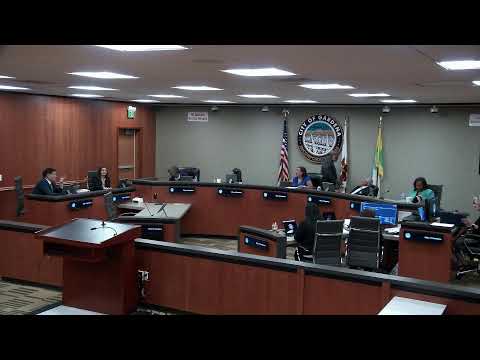
The Gardena City Council voted 3–2 on Aug. 12 to adopt Resolution No. 6709 censuring Councilmember Wanda Love after reviewing a redacted investigation that concluded, by a preponderance of the evidence, she made false or misleading statements about the Department of Recreation and Human Services and disclosed confidential complaint information to other city employees.
The Gardena City Council voted 3–2 on Aug. 12 to adopt Resolution No. 6709 censuring Councilmember Wanda Love after the council reviewed an outside investigator’s executive summary and a redacted investigation report. Mayor Serta, Mayor Pro Tem Tanaka and Councilmember Henderson voted to adopt the resolution; Councilmember Francis and Councilmember Love voted no. The measure removes Councilmember Love’s authority to allocate funds from the city’s community discretionary fund and orders three training sessions provided by the city’s special labor counsel, to be paid by the city, within 90 days of adoption.
The executive summary read into the record by the city attorney summarized findings from a confidential investigation prepared by independent investigator Jeffrey Love (report dated May 27, 2025) and a separate summary prepared by special counsel Scott Tiedemann of Liebert Cassidy Whitmore. The investigator concluded, by a preponderance of the evidence, that Councilmember Love made false or misleading statements about the Department of Recreation and Human Services (DRHS), discussed concerns about the city manager with subordinate employees at a public event, and disclosed the identities and substance of complaints made by city employees to other employees.
Why it matters: The censure is a formal condemnation; it does not remove a councilmember from office nor strip statutory rights or pay but is used as an official public statement that the council does not condone the behavior described in the investigator’s findings. Council members discussed legal precedent and due process during the meeting; the city manager and city attorney said staff followed the investigation and closed-session processes and that the council provided the minimum due process required for a censure (notice and an opportunity to respond).
Council debate and key points Supporters of the resolution said the investigator’s report documented repeated instances in which Councilmember Love sought preferential treatment for chamber-related requests, publicly criticized DRHS and its director in ways the investigator found to be false or misleading, and disclosed information about city employees who filed complaints against her. Councilmember Henderson and Mayor Serta emphasized the city’s responsibility to protect employees and the council’s role in setting expectations for conduct toward staff.
Opponents, including Councilmember Love and Councilmember Francis, said the report relied on subjective impressions, lacked public presentation of the underlying evidence, and risked chilling legitimate oversight by elected officials. Councilmember Love said she would respond to the allegations and demanded to see the underlying evidence; she said she had been banking on public engagement and that removing her discretionary allocation would harm community organizations she supports.
Formal actions and due process The council took three actions reported from the June 24 closed session: (1) it waived attorney-client privilege to allow an executive summary prepared by special counsel Scott Tiedemann to be released; (2) it unanimously approved waiving attorney-client privilege for the investigator Jeffrey Love’s report and ordered the city to redact city-employee names to protect privacy, with the redacted report to be made public on or before Aug. 8, 2025; and (3) it scheduled a censure hearing for Aug. 12, 2025.
At the Aug. 12 meeting the council moved to adopt Resolution No. 6709. The motion to adopt the resolution was made by Mayor Pro Tem Henderson and seconded by Councilmember Tanaka. The roll-call vote was 3–2 in favor (yes: Tanaka, Henderson, Serta; no: Francis, Love). The resolution prescribes three training sessions provided by Liebert Cassidy Whitmore, paid for by the city, and suspends Councilmember Love’s authority to distribute community discretionary fund allocations (a $2,000 annual allocation) until a majority of the council rescinds that restriction.
What the resolution does not do The city attorney and staff emphasized that a resolution of censure has no authority to remove a member from office, to reduce pay, or to block voting rights; instead, it is an official expression of the council’s disapproval. The council noted potential costs associated with investigation and possible future litigation; staff estimated investigation-related costs already incurred and warned that future legal actions could increase taxpayer expense.
Next steps and public records The council ordered a redacted copy of the investigator’s report made public by the previously announced date (the report had been prepared by Jeffrey Love and redacted to remove employee names). Councilmember Love indicated she would provide a public rebuttal; the meeting record shows no further formal council direction beyond adoption of the resolution and the training and funding restrictions specified in the text. The city attorney cited case law and legal references in support of the authority to censure and explained the minimal due process standards that were followed.
Context and history The matter traces back to complaints from city employees and to an administrative review that prompted the city to retain an independent investigator. The council first considered waiving privilege and releasing summaries in June; the Aug. 12 action is the formal public censure following the release of the investigation’s conclusions. The council’s decision reflects tensions between elected officials’ oversight roles and protections for city staff, and it signals limits the majority of the council placed on one member’s access to a specific discretionary fund.
Ending note Councilmember Love and others in the meeting urged that the city prioritize unity and focus on other city business. The council’s adoption of the resolution is a formal, public step; the redacted investigative report and any written rebuttal from Councilmember Love will remain part of the public record for review by residents and the press.