Get Full Government Meeting Transcripts, Videos, & Alerts Forever!
Get email alerts on the Governance Bylaws topic
No spam. Unsubscribe anytime.
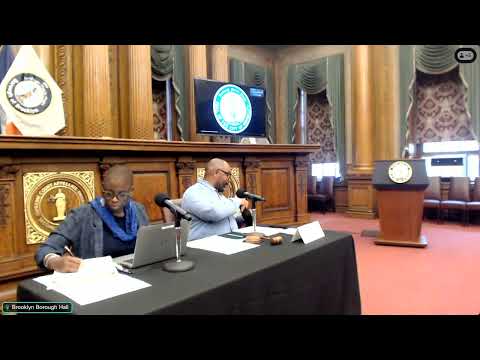
Brooklyn borough board amends bylaws; absenteeism, hybrid rules and committee authority flagged for follow-up
Summary
The borough board voted 27–0 (2 abstentions) to amend its bylaws, streamlining standing committees and updating meeting procedures; members raised concerns about absenteeism, designee voting and missing hybrid-meeting language.
The Brooklyn borough board voted to amend its bylaws after a committee review, approving the changes with 27 yes votes and two abstentions.
The revisions streamline standing committees, align meeting requirements with current community-board practice (including removing the requirement to meet in July and August), and tighten notification and hearing timelines to match current publicity standards, committee members said. The bylaws package was presented by the bylaws committee and included language designed to reflect how the board actually operates.
Why it matters: the bylaws govern how the borough board runs meetings, forms committees and records votes. Several members used the discussion period to press for stronger accountability on board attendance and for clarity about whether council members and their designees can vote on matters outside their districts.
During the discussion, board members repeatedly raised absenteeism across community boards, noting that some boards had appeared at only two of the previous 10 meetings. Committee members said legal counsel had advised the board that it lacks the power to penalize absences and that any enforcement would require charter-level changes. Members also noted missing text for a proposed hybrid/video-conferencing provision; the committee said the draft packet omitted that section pending fuller review and that state open-meetings rules remain relevant.
The final roll call recorded 27 yes votes and two abstentions; the amendments were adopted. After the vote, the chair said the packet revisions would be posted and the board would continue to consult with legal counsel on implementation questions.
Discussion versus decision: the meeting record shows extended discussion about attendance enforcement and committee formation; the formal decision was a vote to adopt the bylaws as revised. The board instructed staff to post documents and follow up with legal counsel about charter-level remedies for absenteeism.