
Developer seeks rezoning for 4‑story, 118‑room hotel at 13570 Fallingwater Road; council takes comments, will not vote tonight
Get AI-powered insights, summaries, and transcripts
Subscribe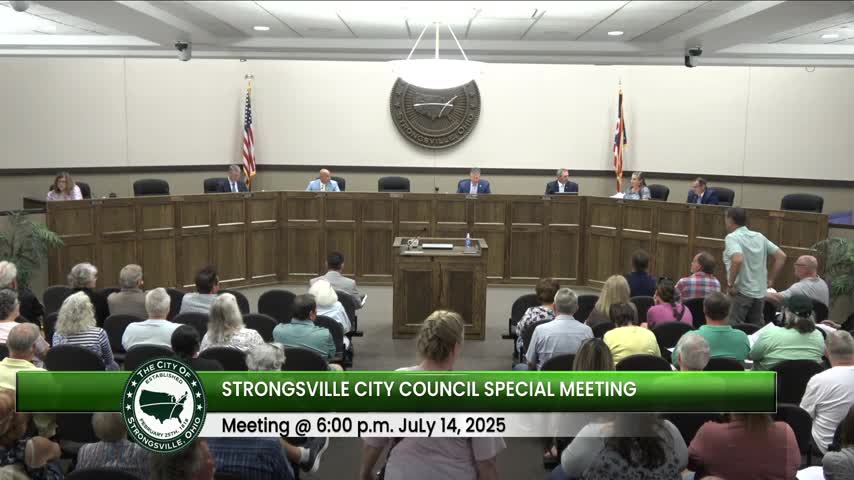
Summary
Strongsville — The Strongsville City Council opened a public hearing on Ordinance No. 20‑25‑53 to consider rezoning 13570 Fallingwater Road (PPN 396‑14‑015) from SC (shopping center) to MS (motorist service) but did not vote on the measure Wednesday evening.
Strongsville — The Strongsville City Council opened a public hearing on Ordinance No. 20‑25‑53 to consider rezoning 13570 Fallingwater Road (PPN 396‑14‑015) from SC (shopping center) to MS (motorist service) but did not vote on the measure Wednesday evening.
Tim Spencer, president of Trivium Development and the applicant, told council the proposal is for a four‑story, approximately 118‑room hotel on the 5.26‑acre parcel. Spencer said the project would preserve about 1.75 acres of trees as a buffer between the hotel and adjacent homes, restrict an on‑site pool and limit food‑and‑beverage service to hotel guests, and that deed restrictions would be recorded with the city and the Valley Creek Homeowners Association naming them beneficiaries. “These standards aren't empty promises. They're enforceable,” Spencer said.
The hearing drew dozens of neighbors and HOA representatives who argued the rezoning would increase traffic, reduce privacy, and create safety risks near a nearby licensed daycare, the Goddard School. Audra Bars, who organized a petition presented to council, said the petition included “almost 800 signatures” of Strongsville residents opposed to rezoning. “I hope that you'll oppose the rezoning,” she told council.
Why it matters: the zoning change would allow transient lodging adjacent to single‑family and condominium neighborhoods and a daycare; supporters say the hotel is less traffic‑intensive than alternative retail or a previously permitted 75,000‑square‑foot office building and would generate local tax revenue, while opponents say the change departs from the city's existing land‑use expectations and raises safety and traffic concerns.
Key facts and claims raised at the hearing: - Proposal and site: The rezoning application covers 13570 Fallingwater Road, a 5.26‑acre vacant parcel. Spencer described an initial plan that evolved from a hotel concept into the current four‑story, roughly 118‑room design to preserve the 1.75‑acre tree buffer and reduce vehicular impacts. He said the site plan places the building about 222 feet from a nearby condominium building and farther from the nearest Costco corner (about 153 feet) than existing development on the site. - Traffic and alternatives: Spencer presented comparative trip‑generation figures he said showed the hotel would produce fewer peak trips than a 75,000‑square‑foot office building from the site's 2005 final plan and fewer trips than a 25,000‑square‑foot retail center. Neighbors countered that a hotel still adds traffic at school drop‑off and morning commute times and warned of cut‑through traffic onto residential streets. - Child safety and crime: Opponents repeatedly cited proximity to the Goddard School and pedestrian routes used by children; several speakers urged protection of children and asked council to consider safety implications during commute and school hours. Spencer, who cited Ohio law prohibiting certain offenders from residing within 1,000 feet of daycare or schools and national data from the National Center for Missing & Exploited Children, said most crimes against children are committed by people they know and that he found no correlation between hotel locations and increases in crimes against children in public databases. - Deed restrictions and enforcement: Spencer said he and his attorney have drafted deed restrictions that would be recorded against the property and that the City of Strongsville and the Valley Creek HOA would be named as beneficiaries so the promises would be enforceable; he invited the city law director and councilmembers to review the documents. - Neighborhood impact and character: Multiple speakers representing Ledgewood, Valley Creek and other nearby streets opposed rezoning on grounds of lost tree canopy, noise, light pollution, and precedent for future zoning changes. Supporters including Dan Nagle, a property owner bordering the parcel, and Dan Benczak, president of the Valley Creek Village Association, said a business‑class hotel would preserve more green space than a strip‑mall alternative and could produce less peak‑hour traffic.
Process and next steps: Mayor Perciak and council members emphasized that the hearing was for public comment only and that council would not vote at the special meeting. The council is in recess until Sept. 6; at that meeting it may place the ordinance on a future agenda for a vote or continue the matter. No formal motion or vote on rezoning occurred during this session.
Voices (selected): Tim Spencer, president, Trivium Development (applicant); Dan Nagle, Ledgewood resident; Dan Benczak, president, Valley Creek Village Association; Audra Bars, petition organizer and resident; Courtney August, Ledgewood resident; Chris Burke, Ledgwood Association board member and parent at Goddard; several other Ledgewood and Valley Creek residents who urged council to preserve current zoning and tree canopy.
Background and context: The ordinance as introduced would amend the Strongsville zoning map adopted under Section 12.50.03 of Title 6, Part 12, of the Codified Ordinances of Strongsville. Speakers referenced a 2005 final development plan that previously showed a two‑story, 75,000‑square‑foot office building as a permitted use, and a denied rezoning application from 2014 for the same site. Spencer also referenced the Montrose Group’s November 2023 economic development strategy report for Strongsville when describing economic demand for hotel rooms.
Clarifying details from the hearing: the developer described the parcel as 5.26 acres and said a 1.75‑acre buffer is proposed; the hotel concept as presented is four stories and about 118 rooms; city zoning code cited by Spencer allows up to 70 feet in height plus 15 feet for mechanicals (85 feet total) under current code language for some shopping center designations (as discussed by the applicant); the applicant said deed restrictions would be recorded and enforceable with the city and the Valley Creek HOA named as beneficiaries; petition submittal was described as “almost 800 signatures.”
What council did: opened the public hearing for Ordinance No. 20‑25‑53, accepted public comment, and closed the hearing without voting. The council recessed until Sept. 6, when it may take additional action.
End note: Residents opposed and in favor were given five minutes to speak under the rules specified at the start of the hearing; council members did not engage in Q&A during the public‑comment portion and asked speakers to limit audience response to preserve decorum.