Get Full Government Meeting Transcripts, Videos, & Alerts Forever!
Get email alerts on the Zoning Code topic
No spam. Unsubscribe anytime.
Northbrook adopts new zoning code; removes cottage courts and duplexes from proposed R4/R5 allowances
Summary
After months of public input and debate, the Village of Northbrook adopted a comprehensive new zoning code but directed staff to remove cottage courts from R4 and R5 and duplexes from R5, sending remaining changes into effect for future implementation.
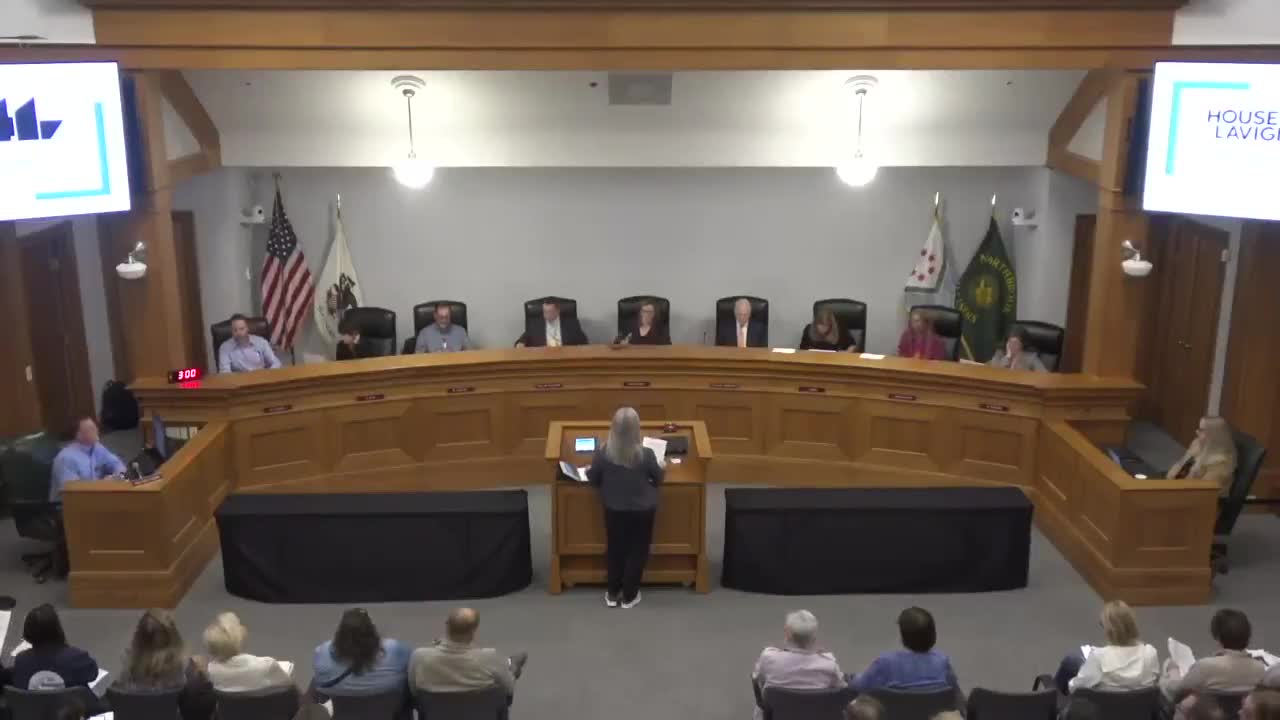
The Village of Northbrook on Sept. 9 adopted a comprehensive rewrite of its zoning code but directed that cottage courts not be allowed in R4 and R5 districts and that duplexes be removed from the R5 district. The new code — the product of more than two years of staff and consultant work, public meetings and Planning Commission review — updates lot-size rules, use tables and downtown overlay standards, while retaining the village’s inclusionary housing program adopted in 2020 under a new name. Planning director Amy McEwen told the board the rewrite is meant to make the code easier to use, reduce nonconforming lots and add housing choices where appropriate. The draft reduces some single‑family lot minimums (for example, the proposed R4 minimum lot area drops from 12,000 to 10,000 square feet and lot width to about 65 feet; the R5 minimum was proposed at about 7,000 square feet and 50-foot width), which staff said would reduce the share of nonconforming lots to roughly 10 percent in many neighborhoods. Trustees and the village attorney also discussed timing. Village attorney Eric Elrod said his office preferred a near‑term effective date if the board adopted the ordinance that night: Illinois law requires publication and a 10‑day wait for ordinances with enforcement provisions, which Elrod said would set a September 22 effective date if the village publishes the pamphlet the next day. Debate centered on whether to allow two specific forms of missing‑middle housing — duplexes and “cottage courts” — and how to introduce any change without altering neighborhood character. Board members heard more than two hours of public comment, with residents expressing both support for small additional housing choices and deep opposition over traffic, parking and the effect on single‑family neighborhoods. After discussion the board voted to adopt the new code as presented but with four changes trustees specified: inclusion of minor signage revisions the Planning Commission recommended, a set of attorney‑recommended edits, removal of cottage courts from the R4 and R5 districts, and removal of duplexes from the R5 district. Trustee Israel moved the motion; Trustee Cassidy seconded. A roll call vote recorded unanimous approval. Officials said the new code will allow clearer administrative adjustments for minor projects, revised use‑tables to reflect modern business categories, and an expanded downtown overlay with a by‑right 50 percent parking reduction for eligible developments (never reducing parking below one space per dwelling unit). The code also formalizes decision tables so applicants and neighbors can more easily see which body reviews or approves different land‑use actions. Public comments and trustees’ questions emphasized communicating code changes more clearly. Several speakers said they had not known the extent of the rewrite despite multiple outreach efforts; trustees and staff agreed to broaden community education and additional neighborhood outreach as the code is implemented. Attorney Elrod advised the board about the effective‑date process and warned that the zoning code remains a flexible document subject to future amendments. The board did not announce a final effective date during the meeting; Elrod’s summary described a practical timeline that would make the ordinance effective shortly after publication if the village proceeds with the recommended publishing schedule. The board also asked staff to prepare follow‑up materials describing how the code affects lot standards, parking requirements and special‑use procedures, and to continue neighborhood outreach as staff implements the new rules. Ending: The zoning-code adoption ends a multi‑year review and sets a new framework for land use in Northbrook while leaving several higher‑impact housing changes off the table for further study and public review.