
Village discusses social‑media policy, staff capacity and legal risks; no vote taken
Get AI-powered insights, summaries, and transcripts
Subscribe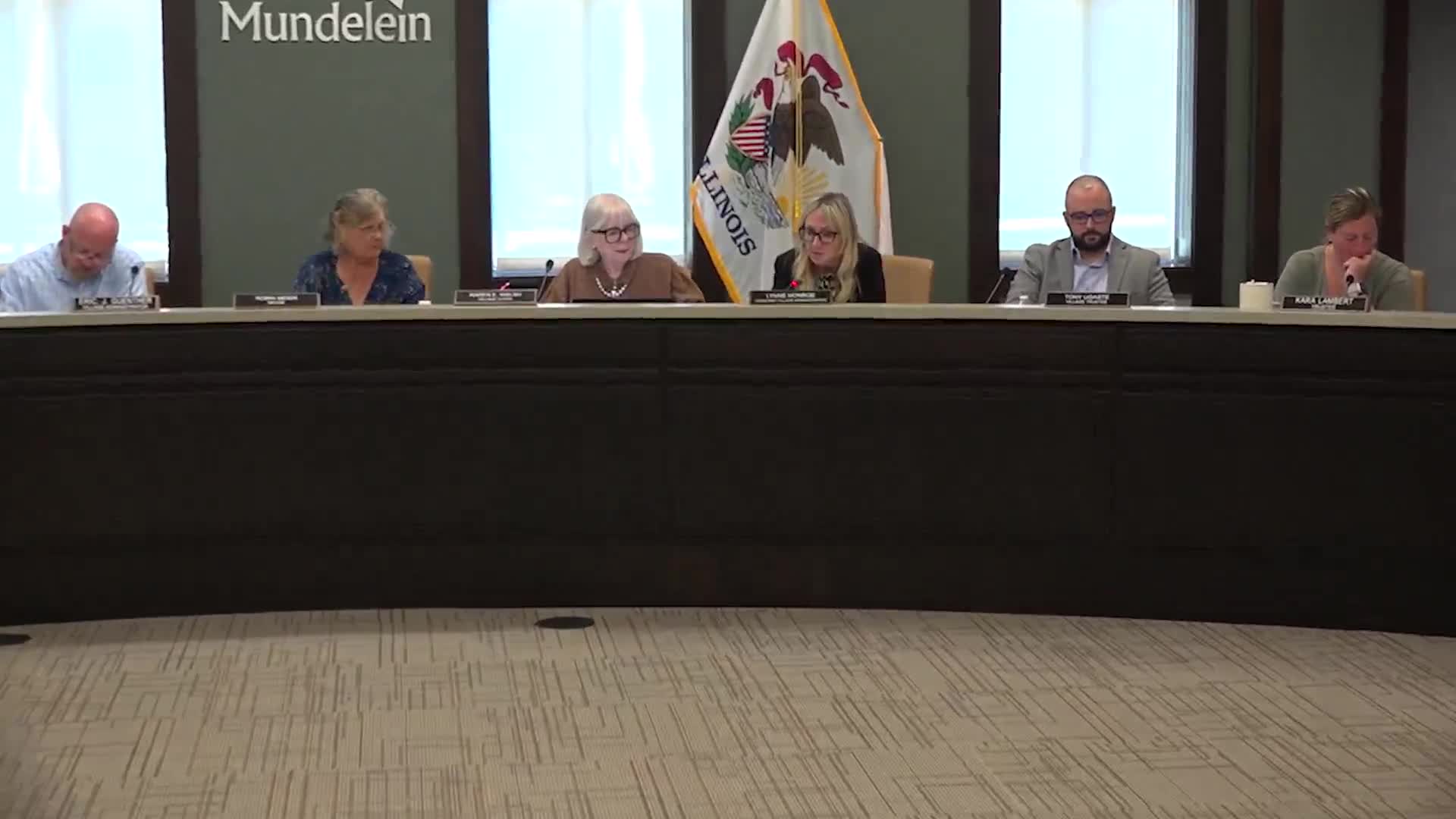
Summary
At a July 28 Committee of the Whole meeting, village counsel and outside attorneys briefed trustees on a proposed social‑media policy, emphasizing First Amendment limits, FOIA and records‑retention obligations, staffing and insurance uncertainties; trustees asked questions but the policy was not voted on in this session.
Village of Mundelein trustees heard a legal briefing July 28 on a proposed village social‑media policy that would govern official accounts, staff posts and guidance for elected officials, but took no formal vote at the Committee of the Whole meeting.
The presentation was led by Kelly, an attorney from the village's outside law firm, with Lynn Monroe (village staff) moderating and Ruth (law firm) present; Kelly told trustees the principal legal constraints are federal First Amendment doctrine and Illinois record‑keeping and open‑meetings laws. “If you open [comments] up to the public, you’ve created a forum,” Kelly said, explaining limits on content regulation and the legal exposure that can follow. Kelly added, “Disclaimer. Disclaimer,” urging trustees to keep personal pages clearly personal.
Kelly and staff explained why the village currently disables public comments on its official accounts: moderating comments requires dedicated staff and technology, and allowing comments can trigger obligations under the Illinois Local Records Act, the Freedom of Information Act (FOIA) and the Open Meetings Act. Kelly said post moderation and retention create both resource and legal demands, including the need to preserve comments as public records and to respond to FOIA requests. She also warned trustees that blocking users from accounts that appear official can produce First Amendment challenges, referencing a 2024 U.S. Supreme Court case described in the presentation that addressed whether a municipal official’s personal account could be treated as an official forum.
Trustees pressed on practical details: whether neighboring municipalities permit comments (trustee Juarez reported most nearby pages did allow comments), whether automated responses could route residents to official channels, and the likely cost for records‑management subscriptions. Village staff estimated a records/archival subscription through the village’s vendor would be an annual expense “close to $10,000,” and Kelly said that if the village enables comments it will need both the technology and staff time to moderate and to retain records for FOIA compliance.
Kelly recommended best practices for elected officials’ personal accounts: avoid listing an official title or village contact information on a personal account, add a clear disclaimer stating the account is personal, and begin posts about village business with a short statement such as “in my personal capacity.” Kelly cautioned that officials who include official identifiers and act in an official manner on personal pages risk being treated as speaking for the municipality.
Staff described operational options: continue with no comments (the current practice), enable comments with a “limited public forum” policy and explicit moderation rules, or use time‑limited comment windows to reduce ongoing moderation burdens. Staff and counsel also noted insurance limits: village liability coverage generally covers acts within the scope of official duties, but whether coverage applies when a First Amendment claim arises from a post on a trustee’s personal account is uncertain and may require litigation to resolve.
No formal action on the social‑media policy occurred during the Committee of the Whole. Counsel said the draft policy will be presented for consideration and a vote later in the regular board meeting at 7:00 p.m.; until the board adopts a policy, staff will not be required to implement the portions of the draft that apply only if comments are enabled.
The session opened with one public commenter, Jack McKay, staff for state Rep. Martin McLaughlin, who provided contact information for constituent services and upcoming community events; that comment was informational and unrelated to the policy briefing. The Committee approved prior Committee of the Whole minutes from Feb. 24, 2025, earlier in the meeting and later adjourned by recorded motion.
Trustees and staff left the meeting with two clear takeaways from attorneys: (1) enabling public comments imposes predictable records‑retention and FOIA duties and likely requires new staff or vendor expense; and (2) elected officials should take clear steps on personal accounts — disclaimers and removing official identifiers — to reduce risk of being treated as an official municipal speaker.