
Lorain records commission approves updated retention schedule, delays disposal until state audit for some financial records
Get AI-powered insights, summaries, and transcripts
Subscribe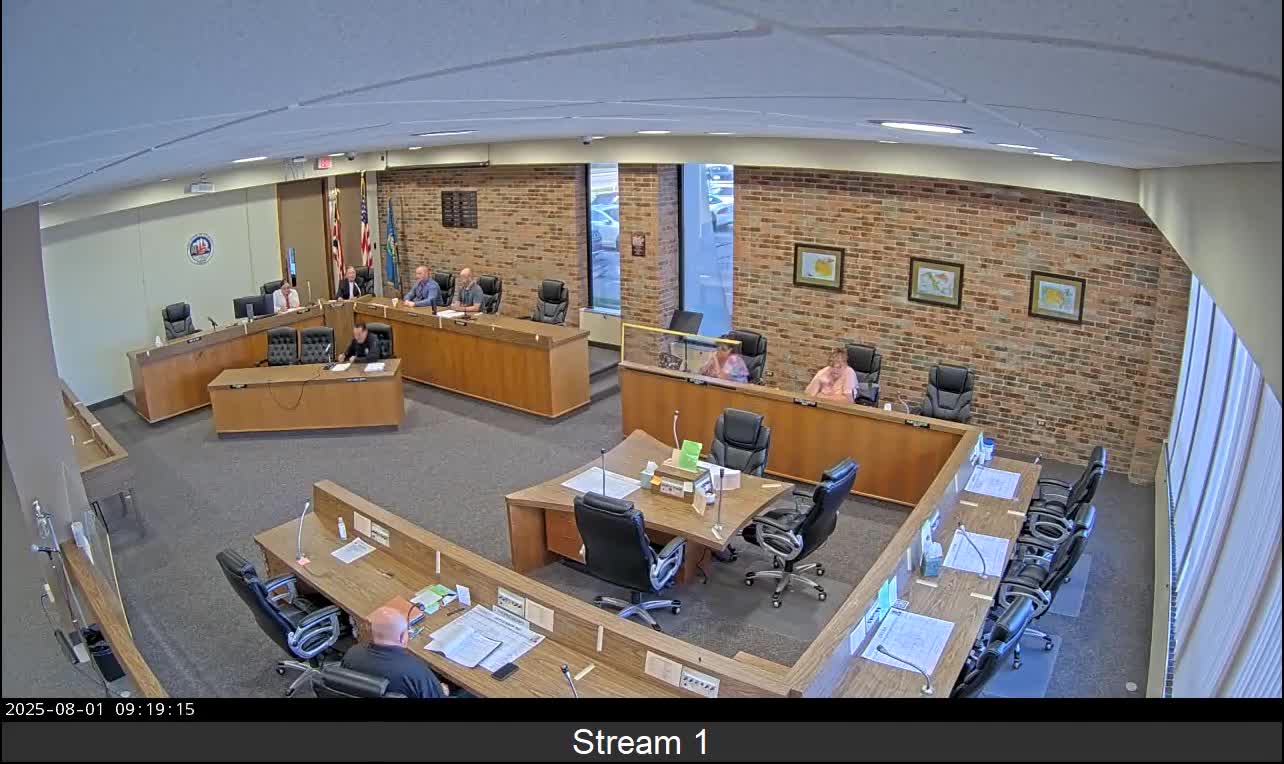
Summary
The Lorain Records Commission approved an updated city records retention schedule (RC-2) and amended one line to retain purchase orders and payroll sheets for two years or until the state audit is completed; commissioners clarified that no records were destroyed at the meeting and reviewed the state review process for disposal.
The Lorain Records Commission on Aug. 1 approved an updated records retention schedule (RC-2) submitted by the clerk of counsel and amended a line item so city purchase orders and payroll sheets will be retained for two years or until the Auditor of State completes its audit.
The change, proposed by John Schroeder and seconded by Mister Carreon, applied to DF13-41 (purchase orders and payroll sheets). Brianna Dahl, clerk of counsel, told the commission the RC-2 update follows a recommendation from the Ohio History Connection that the schedule be reviewed every eight years; the commission’s existing RC-2 dated February 2013 is otherwise not deficient, she said.
Why it matters: the RC-2 sets how long city offices keep records and establishes the schedule the commission uses before sending disposal requests to the Ohio History Connection and to the Auditor of State for approval. Commissioners emphasized the legal check points and said no records were disposed of at the Aug. 1 meeting.
The commission chair said social media posts had incorrectly claimed the commission failed to meet statutory requirements and had allowed records to be destroyed; the chair called those reports “recklessly reported on social media” and said the commission follows the Ohio Revised Code and forwards recommended disposals to the Ohio History Connection and the Auditor of State before any records are destroyed. “We follow the law,” the chair said.
Dahl, who presented the update, said highlights added to the schedule include recently instituted items such as public comment sign-in sheets and department name updates (for example, Community Development is now BHB). She said the city follows the Ohio Municipal Records Manual and sometimes elects to retain records longer than the manual’s baseline recommendation.
Commissioners and staff clarified several procedural points during discussion. They said: - No records were approved for destruction at the Aug. 1 meeting; the RC-2 approval is an update to retention periods, not an immediate disposal authorization. - The disposal process requires sequential review: after the Records Commission approves an RC-3 disposal request, the Ohio History Connection has 60 days to respond and then the Auditor of State has another 60 days to object or approve. - The RC-2 entries list media types (paper and electronic). When disposal is authorized the city’s process removes both paper and indexed electronic copies (the city uses DocuWare to index electronic records), staff said.
On DF13-41, Commissioner John Schroeder moved the amendment to read “two years or until the state audit has been completed.” Mister Carreon seconded. The commission voted in favor and the chair declared the RC-2 update, as amended, approved.
Several commissioners and staff also raised questions about historic records from the COVID-era, when council met virtually. One councilwoman asked whether video recordings from 2020–2021 might be historically significant and therefore deserve longer retention; staff replied that the Ohio History Connection reviews disposals for historical significance and would request retention if warranted. Staff also noted that council minutes themselves are permanent records and remain available for inspection at the clerk’s office.
Staff described practical limits on public access: many records are not posted online and a requester must identify the records sought in a public-records request; some departments do not retain duplicate backups for every item, and once paper and indexed electronic copies are disposed, they are not retrievable. The commission said departments may extend retention for specific records when they know a prolonged review or audit (for example, ARPA-related records) will occur.
The records commission set a tentative next meeting date of Jan. 29, 2026, at 2 p.m. and adjourned. No records were destroyed during the Aug. 1 meeting.