Get Full Government Meeting Transcripts, Videos, & Alerts Forever!
Get email alerts on the Cannabis Licenses topic
No spam. Unsubscribe anytime.
Teravis seeks village OK to pursue second adult‑use cannabis license at former Bank of America site
Summary
Teravis representatives presented plans April 28 to convert the former Bank of America outlot in Mundelein Crossing into an adult‑use cannabis dispensary and asked the Village Board to permit a code amendment allowing a second adult‑use license; trustees gave informal feedback but took no formal vote.
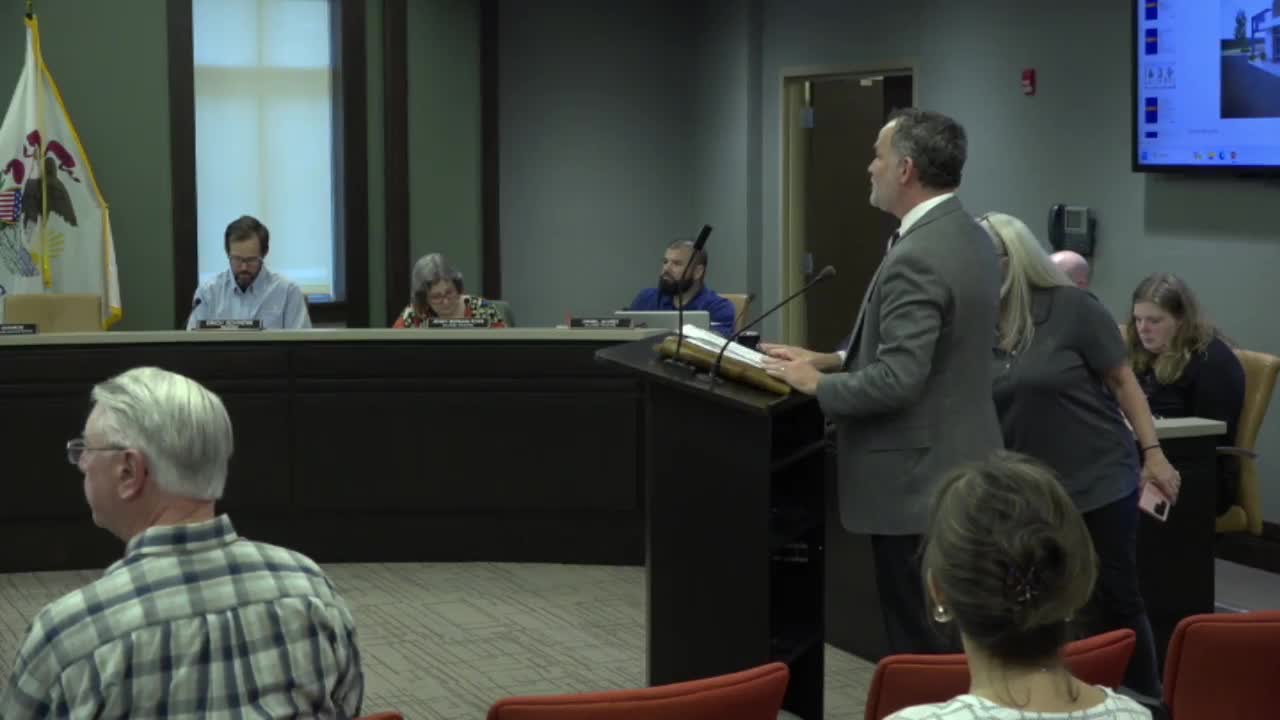
Teravis, a Midwestern cannabis operator, asked the Mundelein Village Board at its April 28 meeting to allow the company to pursue a code amendment that would permit a second adult‑use cannabis business license and to reserve that new license for a proposed dispensary on the northern outlot of Mundelein Crossing, the site of the former Bank of America branch.
Representatives said the request is for licensing only, not rezoning or municipal financial assistance. “We are not asking for zoning, we’re not asking for financial assistance,” Stu Weiss, representing Teravis, told the board. Nick DeRamadas, Teravis co‑founder, described the site as smaller than the company’s previously proposed restaurant‑site location and said its existing bank vault and parking make conversion faster and less costly.
DeRamadas pointed to the site’s trade area, saying about 113,000 people live within five miles and that data from a commercial analytics vendor shows roughly 5,100 shoppers would be two miles closer to this site than to competing dispensaries outside Mundelein. He estimated that with a $65 average transaction and a 3% local excise tax, the additional convenience could yield about $120,000 in local tax revenue that might otherwise go to neighboring communities.
Teravis said the facility would follow a layered security model and highlighted the existing bank vault as meeting overnight storage requirements. “That vault is already constructed to those standards,” DeRamadas said, adding the company would use a “day vault” during operating hours and employ a third‑party security provider. Josh, identified as president of Silver Star Protection Group, described layered external and internal security, ID scanning, and transport procedures; he said state agencies (IDFPR and ISP) inspect sites monthly and Teravis conducts additional internal checks.
Trustees asked questions about lighting, playground sightlines and future development near the site. Trustee Morris offered “a reluctant thumbs up,” saying he still had concerns about the building’s visibility and line of sight to a playground. At least one trustee signaled opposition; others supported the concept or raised only aesthetic or procedural concerns. No formal motion or ordinance was made at the meeting and no license was issued.
The company told the board it would work with village staff and the village attorney to draft a narrowly tailored code amendment that would authorize a second adult‑use license for this site only and preserve village control over any future licensing. Teravis committed to exterior improvements, to meet community development expectations, and to local hiring and benefits for employees who work more than 20 hours per week.
Next steps described at the meeting: Teravis will continue meetings with staff and counsel to prepare a proposed code amendment; any formal change to the village licensing rules would require future board action before a license could be issued.
Why this matters: The village has limited the number of adult‑use licenses; allowing a second license would change the local licensing landscape, generate new local tax revenue, and raise questions about siting near residential development and playgrounds. The board’s feedback at this meeting was advisory; any final decision requires a formal ordinance or licensing action in a future meeting.