Get Full Government Meeting Transcripts, Videos, & Alerts Forever!
Get email alerts on the Affordable Housing Development topic
No spam. Unsubscribe anytime.
Raise Up outlines $430-unit South Lorraine plan, park and redevelopment steps amid HUD funding uncertainty
Summary
Raise Up (formerly LMHA) told a Lorain boards meeting it has a HUD-accepted Choice Neighborhoods planning blueprint for the South Side Gateway, is pursuing RAD conversions and tax credits, and has raised $1.2 million for a community park while warning that federal implementation funding is not yet available.
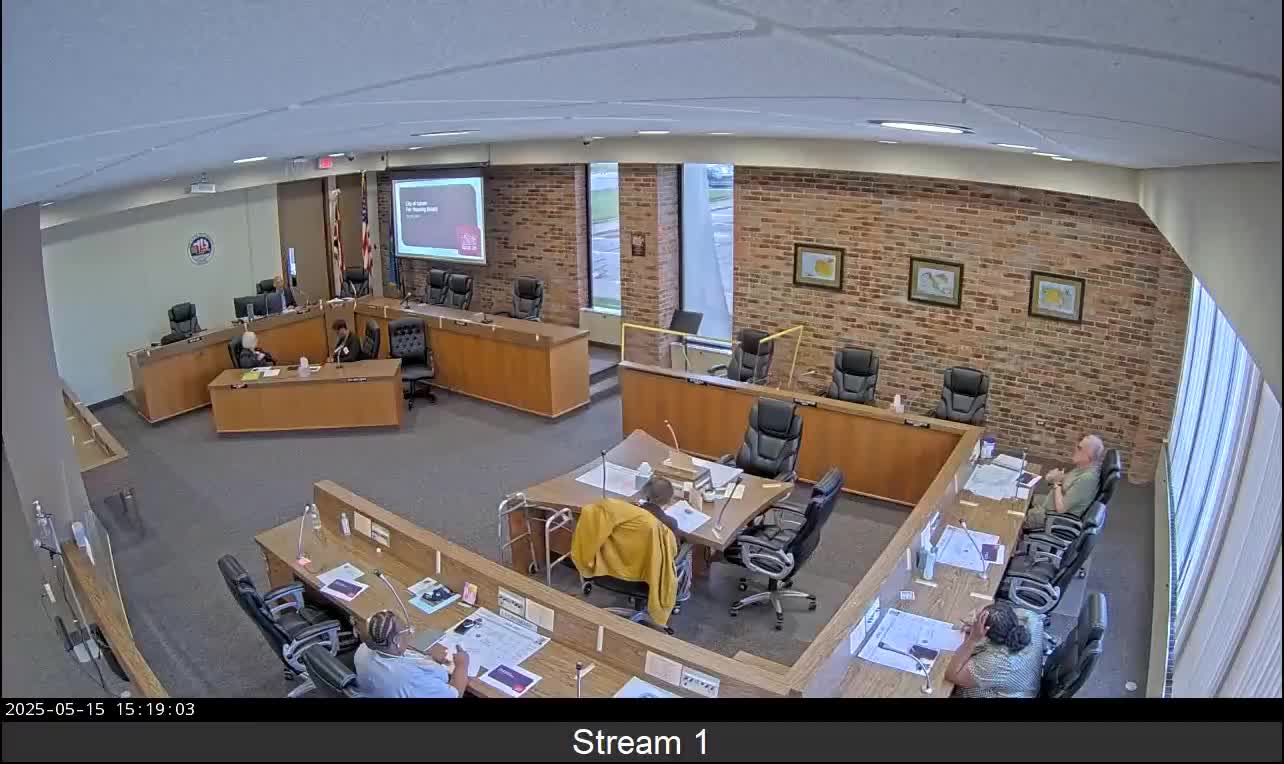
Raise Up, the agency formerly known as the Lorain Metropolitan Housing Authority, presented redevelopment plans for South Lorraine and other city properties to members of the Lorain Boards & Commissions during a public meeting, outlining a multi‑phase housing strategy, an early‑action park project and contingency steps if federal implementation funding does not arrive.
The agency’s chief executive officer, Judy Carlin, said Raise Up submitted a Choice Neighborhoods planning document to the U.S. Department of Housing and Urban Development that HUD accepted earlier this year and that the plan defines a housing strategy for a South Side Gateway area bounded roughly by Broadway to Grove and Eighth to 36th streets. "We are committed to providing resources that help individuals thrive and our community grow and thrive," Carlin said.
Why it matters: the Choice Neighborhoods implementation grant — if issued — would supply the largest infusion of outside funding for the plan; Raise Up and the city say they want to be ready to apply but are preparing alternate financing and projects that do not rely on an implementation award.
Raise Up described the housing strategy in the planning document as roughly 430 units in five phases. Carlin said the plan envisions about 115 mixed‑income rental and homeownership units on the current Southside Gardens site and roughly 315 additional mixed‑income units elsewhere in the neighborhood, with Habitat for Humanity remaining a partner. The Choice planning grant is a neighborhood‑focused blueprint; HUD accepted the plan but Carlin said HUD had not issued an implementation notice of funding opportunity (NOFO) as of the meeting.
The agency also described an early‑action park project that was developed with community input. Gail (Raise Up staff) said the park was designed after resident meetings and that Raise Up and the city raised funds for construction. According to the presentation, Raise Up and partners committed roughly $1,200,000 to build a park with a performance stage, playground, community gardens, a flex programming area and restrooms; the park will be lit, gated and have security cameras and is scheduled to open in August. Gail said philanthropic donations plus board‑ and city‑approved contributions covered the cost.
Carlin and other presenters stressed uncertainty at HUD. Carlin said the federal government is operating under a continuing resolution that funds Choice Neighborhoods at 2024 levels through March 14, 2026, but that there had been no clarity from HUD headquarters about if or when a Choice Neighborhoods implementation NOFO would be released. "It is funded; however, there is no communication from headquarters whether or not or how this money would be distributed," Carlin said. She also said HUD staff levels have been reduced by about 30 percent, which is affecting program administration.
Because of that uncertainty, Raise Up outlined parallel, non‑HUD dependent paths. The agency said it is pursuing the Rental Assistance Demonstration (RAD) conversions for several properties — Westview, Levitt Homes and Westgate Apartments in Lorain and a Wilkesville property in Elyria — to enable private financing and carry debt for deep rehabilitation. Carlin said the two RAD investments together total about $150,000,000 in project value; work in Elyria is expected to start in 2025, and Lorraine work is expected to start in 2026 with an anticipated construction timeframe of 18 to 24 months.
Raise Up described other financing activity: the agency submitted an application for 9% low‑income housing tax credits to the Ohio Housing Finance Agency to finance a $25,500,000, 60‑unit mixed‑income project on land across from Oakwood Park. The presentation said 45 units would target households at or below 60 percent of area median income (AMI) and the remaining units would serve households at 80–100 percent AMI; the application’s award announcement was scheduled for the week after the meeting. If the 9% credit is not awarded, the agency said it will pursue 4% credits and gap financing.
On relocation and resident impacts, Carlin described phased rehabs and a relocation plan. She said Raise Up is limiting new leasing on RAD properties to create vacant units that can be renovated and to avoid off‑site displacement where possible. "We are responsible for relocating residents throughout the construction and pay for them," Carlin said, adding the authority aims to move residents as few times as possible and to keep most moves within the development.
Speakers from the audience pressed on homelessness, youth and tiny‑home options. Carlin said the housing authority does not operate shelters or transitional housing but that the authority’s board had sought HUD permission to add a homeless preference on wait lists; she said HUD had given preliminary approval and the board had approved adding the homeless preference for public housing and HCV wait lists pending formal HUD sign‑off. Carlin encouraged advocacy for steady HUD funding, warning that federal cuts could worsen housing instability.
Raise Up also described resident‑services and workforce goals: a renamed and expanded resident services department, a Family Self‑Sufficiency (FSS) program that places escalated savings into an escrow as income rises, and commitments to hire locally for redevelopment projects. Carlin said FSS has enabled some residents to complete school or purchase homes and noted advocacy concerns about proposed federal budget changes that could affect that program.
The presentation and Q&A included several cost and timing clarifications: the Choice implementation grant — if awarded — could provide roughly $40 million to $50 million for the neighborhood; the park design cost of about $1.2 million was funded from multiple sources; the Lorraine redevelopment scope had grown from an earlier estimate near $30.5 million to an estimated $80 million after pre‑demolition and deeper infrastructure work; and RAD financing filings were being prepared for HUD review, with a financing submission planned for the week following the meeting.
Discussion vs. decisions: the meeting recorded no local vote to commit city funds beyond previously approved board and city contributions to the park. Raise Up reported that the Choice planning document was accepted by HUD, that it has submitted tax credit and RAD financing applications, and that the agency’s board approved adding a homeless preference pending HUD’s formal approval. The board also approved the April meeting minutes earlier in the session.
Raise Up urged residents and board members to continue advocacy for consistent HUD funding and said the city and agency will move forward with projects that can be completed without an implementation grant while remaining prepared to apply if HUD issues a NOFO.
Raise Up said it would answer follow‑up questions from the board and community and that staff would continue resident meetings during the redevelopment process to minimize disruptions and provide relocation assistance.