Get Full Government Meeting Transcripts, Videos, & Alerts Forever!
Get email alerts on the Fair Housing topic
No spam. Unsubscribe anytime.
Fair Housing Center trainer briefs Lorain board on law, complaint process and reasonable accommodations
Summary
Tanisha Seaborne, director of education and outreach at the Fair Housing Center, gave a training to the Lorain Fair Housing Review Board covering federal and Ohio protections, the board's jurisdiction, complaint timelines, reasonable accommodations and outreach/testing plans.
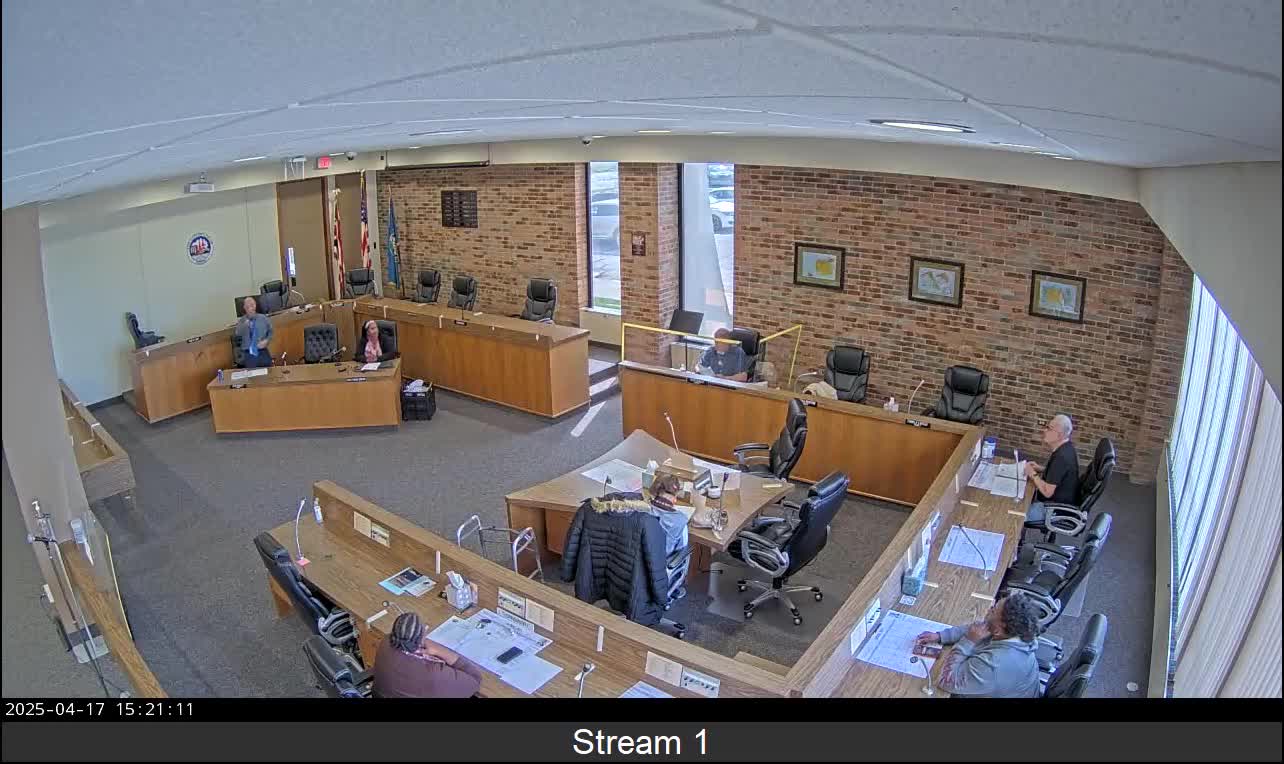
Tanisha Seaborne, director of education and outreach at the Fair Housing Center, told the Lorain Fair Housing Review Board on May 15 that the board should expect to receive and handle complaints under both federal and Ohio fair housing law and that the board's local ordinance includes additional protected classes not always covered at the federal level.
Seaborne said the Fair Housing Center conducts about 60 trainings per year and offers direct advocacy, testing and research for municipalities. "We do direct advocacy and then we do testing, which we are contracted to do, with the city of Lorain," she said.
The presentation covered which properties and actions qualify under fair housing law, the protected classes at federal and state levels, and how the board should screen complaints. Seaborne told the board most residential property in Ohio is covered and noted Ohio does not recognize two federal owner-occupant and small single-family exemptions. "So just about all residential property in Ohio is covered under fair housing law," she said.
Seaborne reviewed the seven federally protected bases (race, color, national origin, religion, sex, familial status and disability) and said Ohio law adds ancestry and military status. She also explained that the city's ordinance includes additional protected classes such as sexual orientation and source of income; in those cases, she said, complainants may come to the city board even if federal agencies decline jurisdiction.
The training outlined two common legal theories: intentional discrimination and disparate impact. Seaborne used domestic violence and landlord rules affecting survivors as an example of a disparate-impact claim and cited the Violence Against Women Act (for federally assisted housing) as an additional federal protection.
Seaborne spent substantial time on disability protections and reasonable accommodations and modifications. She said a covered disability must substantially limit a major life activity and that reasonable accommodations (changes to rules or policies) may include allowing service or emotional-support animals despite a no-pets policy. "You can't charge someone for a reasonable accommodation," she said, noting providers cannot impose pet deposits or pet rent for approved emotional-support animals.
She described reasonable modifications (physical changes such as lowered countertops or ramps) as the tenant's responsibility to fund in many cases, while the housing provider may require permits, professional work and restoration on vacancy. Seaborne said HUD guidance should be used to assess accommodation requests and cautioned that inexpensive online "certificates" are not adequate proof; medical or social-service providers must substantiate the need.
On jurisdiction and process, Seaborne reviewed the elements the board should check before accepting a complaint: whether the property and complainant are covered, whether the alleged act violates law, and timeliness. She said complainants generally have one year to file a fair housing complaint and cited the board's ordinance provision that the respondent must be served within 10 days of a filed complaint.
Board members raised practical concerns and local examples during Q&A: whether a long-term nursing-home resident can be considered to have a dwelling (Seaborne said length of stay and whether the person receives mail there are factors), how quickly the city can intervene in emergencies such as utility shutoffs (Seaborne said outreach or leverage from advocates and Legal Aid can sometimes produce rapid help even if formal administrative timelines are longer), and whether realtors steering families to different neighborhoods may constitute discrimination (Seaborne said such incidents could give rise to complaints if the steering was because of a protected characteristic).
Seaborne and board members discussed outreach ideas, including "know-your-rights" events and joint trainings with Legal Aid and other partners. She offered to provide follow-up materials and to return for additional training on the city's locally added protected classes and specific complaint-handling procedures.
The meeting record shows the group moved acceptance of the January minutes earlier in the agenda and, at the end of the session, a motion to adjourn was seconded and the meeting was closed.