
Lorain council accepts $100,000 donation to pursue HUD Section 108 loan program
Get AI-powered insights, summaries, and transcripts
Subscribe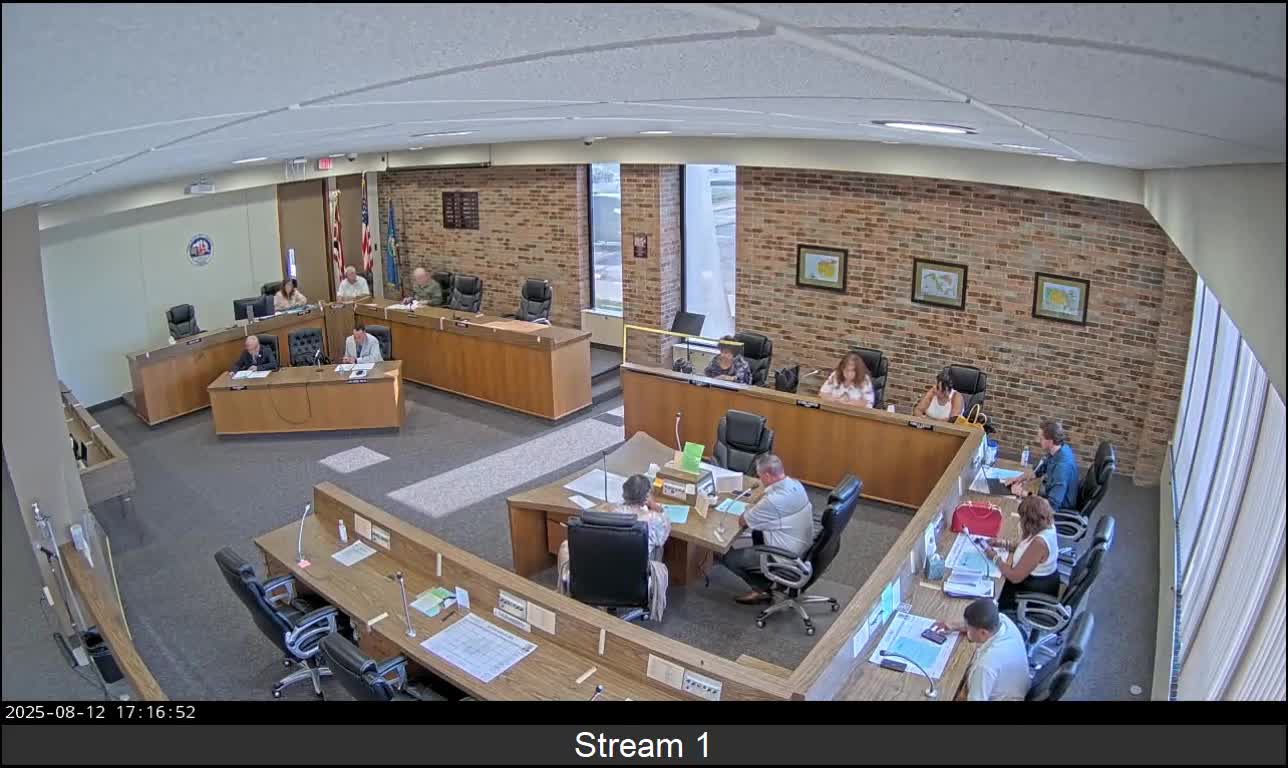
Summary
Lorain City Council unanimously passed an ordinance authorizing the safety-service director to accept $100,000 in donated technical assistance from Enterprise Community Partners, funded by the Robert Wood Johnson Foundation, to pursue a HUD Section 108 loan program that could allow the city to borrow up to $6.3 million.
Lorain City Council on Aug. 12 unanimously approved an ordinance authorizing the city’s safety-service director to accept a $100,000 donation of technical assistance from Enterprise Community Partners to prepare an application to the U.S. Department of Housing and Urban Development (HUD) for a Section 108 loan guarantee program. The council also suspended rules to consider the ordinance on first reading and declared an emergency to allow prompt action.
The donation — provided to Enterprise Community Partners through funding from the Robert Wood Johnson Foundation — will pay for consultant work to prepare a Section 108 application. City staff said the Section 108 program is available because Lorain is a CDBG entitlement community and would allow the city to borrow up to five times its annual Community Development Block Grant (CDBG) allocation, approximately $6.3 million in this case. “I am very impressed. This is a service donated from Enterprise Community Partners sponsored by the Robert Wood Johnson Foundation,” Council member Wall said during the meeting.
City staff said the funds available through Section 108 are loans, not grants, and must be repaid. Staff explained the city would use any approved Section 108 loan to create or revive a revolving loan program for local businesses and other CDBG-eligible activities; loans would be underwritten, secured, and repaid with interest charged to borrowers. “We will have an intense underwriting process. We will have to put liens on properties, people will be individually held accountable if need be,” a city staff member identified as Matt said. Staff added that council approval will be required for individual loans and that the city’s law department will work on legal protections and lien procedures.
Officials said technical assistance is time-sensitive: the city’s current funding run window closes in October, and the donated assistance will help complete required steps such as public hearings and amendments to the annual action plan with HUD. Staff said HUD limits Section 108 loan terms to no more than 20 years. They also noted the federal rules allow HUD to require repayment from a recipient’s CDBG allocation if a Section 108-backed loan defaults and cannot be recovered through other remedies; the city’s annual CDBG entitlement cited at the meeting is about $1.3 million per year.
Council members asked about borrower eligibility, collateral and recovery if a business defaults, whether limited liability companies would be eligible, and whether loans would be restricted to low- and moderate-income (LMI) areas. Staff said eligibility rules will be developed consistent with federal guidelines, that loans below about $100,000 are not the initial priority per current recommendations, and that loans would typically require security such as mortgages or liens and will come to council for approval. Staff also said underwriting criteria will be conservative to limit the city’s exposure.
The ordinance was introduced by Council member Duval, a motion to suspend the rules was made by Council member Wagner and carried, and the council voted to adopt the ordinance on emergency passage. Council members and staff said the technical assistance will also help the city prepare a financing toolbox for future redevelopment projects, including potential use alongside TIF and other local financing tools.
Next steps described at the meeting include finalizing a memorandum of understanding (MOU) with Enterprise Community Partners, continuing work with the law department on contract language and collateral procedures, holding required public hearings, and amending the city’s annual action plan with HUD before a Section 108 application is filed. The donation covers only the technical-assistance work to prepare an application; any loan approval and actual borrowing would be separate decisions involving underwriting, council approval of individual loans, and HUD approval.