Get Full Government Meeting Transcripts, Videos, & Alerts Forever!
Get email alerts on the Public Meetings Governance topic
No spam. Unsubscribe anytime.
Council adopts ordinance to ban intentional disruptions of official city meetings after Georgia Supreme Court guidance
Summary
City Council approved an ordinance, 5-0, that targets people who attend official city meetings with the intent to disrupt proceedings; city attorney said the measure responds to a Georgia Supreme Court ruling and follows GMA recommendations.
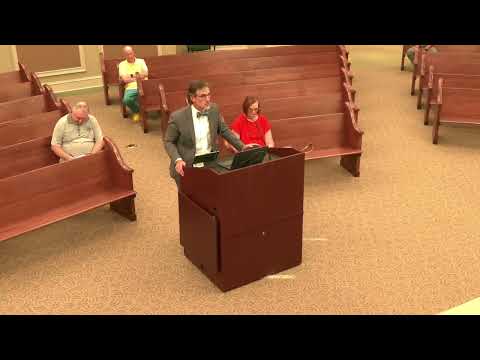
The City Council voted 5-0 to adopt an ordinance making it unlawful to attend official city meetings with the intent to disrupt the proceedings, the city attorney told the council. The city attorney said the Georgia Supreme Court recently struck down a statute in the Official Code of Georgia and that the new ordinance follows guidance and recommendations from the Georgia Municipal Association (GMA).
“This makes it illegal to come here with the intent to prevent you from doing your job as members of the city council,” the city attorney said, adding the ordinance is not intended to prevent people from speaking during public comment. “We don't have a problem with this, currently and coming, thankfully. But if someone ever did come to one of your meetings with the intent to disrupt your meeting or prevent you from carrying on a meeting, this is when this ordinance would apply.”
City staff and council members clarified the ordinance's scope would cover official city meetings beyond the council, including the planning commission, the Downtown Development Authority and the development authority. The city attorney said enforcement would start with a mayoral warning; police officers would determine whether there was sufficient intent to disrupt and remove an individual if necessary.
Council members pressed for clarity about how “intent” would be determined. The city attorney gave examples the ordinance is meant to reach — for example, a person bringing loud external speakers, blaring music or deliberately shouting to drown out proceedings. The attorney also cited a widely reported Atlanta protest in which attendees threw small objects and distracted the meeting as an example of disruptive conduct the ordinance aims to address.
The council approved the ordinance on a motion and recorded a unanimous vote. The transcript does not include the ordinance's penalty structure, precise legal language, or whether the city will publish enforcement guidelines for the public.
After the vote the council moved into executive session to discuss real estate acquisition and pending litigation, then returned and adjourned.