Get Full Government Meeting Transcripts, Videos, & Alerts Forever!
Get email alerts on the Code Enforcement topic
No spam. Unsubscribe anytime.
City staff outlines administrative code-enforcement overhaul with citations, hearings officer and abatement powers
Summary
Staff proposed an administrative code-enforcement system with on-the-spot citations, a contracted administrative hearings officer, daily accruing fines for uncorrected violations and formal abatement powers while stressing voluntary compliance remains the primary approach.
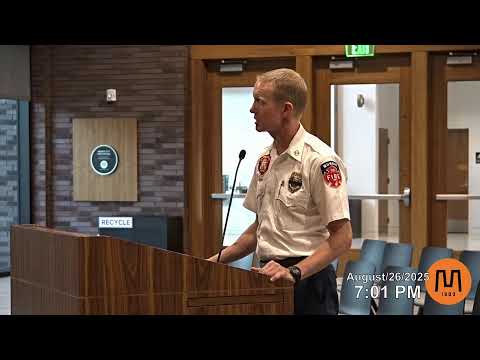
MURRAY, Utah —1 Aug. 26 —1 City staff reviewed proposed changes to Murray's code-enforcement program on Tuesday, outlining a two-track administrative system that would preserve voluntary compliance efforts while adding administrative citations, a hearings officer (administrative law judge), daily accruing fines for uncorrected violations and abatement authority for the city.
Chad Wilkinson and other staff described the current approach: mailed notices, courtesy warnings, in-person visits and referral to the city attorney for prosecution where voluntary compliance fails. Staff and council members said the court process is sometimes slow, can produce inconsistent results, and is ill-suited to quick-turnaround problems such as parking, weeds or snow removal.
Under the proposed framework staff presented, short-term, easily corrected violations would receive an administrative warning and then an on-the-spot citation (similar to a parking ticket) if not corrected. Longer-term violations would receive a notice of violation with a minimum cure period (commonly 14 days) and the ability to appeal. If the property owner does not correct the issue and does not request a hearing, daily fines would begin to accrue. If necessary, the city could abate the condition and charge the property owner; emergency abatement is also proposed for immediate public-health or safety hazards.
Staff recommended the city select or contract with an administrative hearings officer and adopt a consistent fine schedule; they noted other Utah cities (West Valley, West Jordan, Midvale, Bluffdale) use variants of this model. Staff also said they have budgeted and are hiring additional code enforcement personnel and an administrative supervisor to coordinate hearings, fines and abatement actions. The council asked about fiscal implications; staff said the positions are budgeted and that fine revenue would offset but not be the driving purpose of the program. The council did not adopt ordinance language Tuesday; staff said they will return with draft ordinance text, a proposed fines schedule and a request for proposals for a hearings officer.