
Wellington staff urge opting into Prop 1‑23 and seeking housing planning grants to meet state requirements
Get AI-powered insights, summaries, and transcripts
Subscribe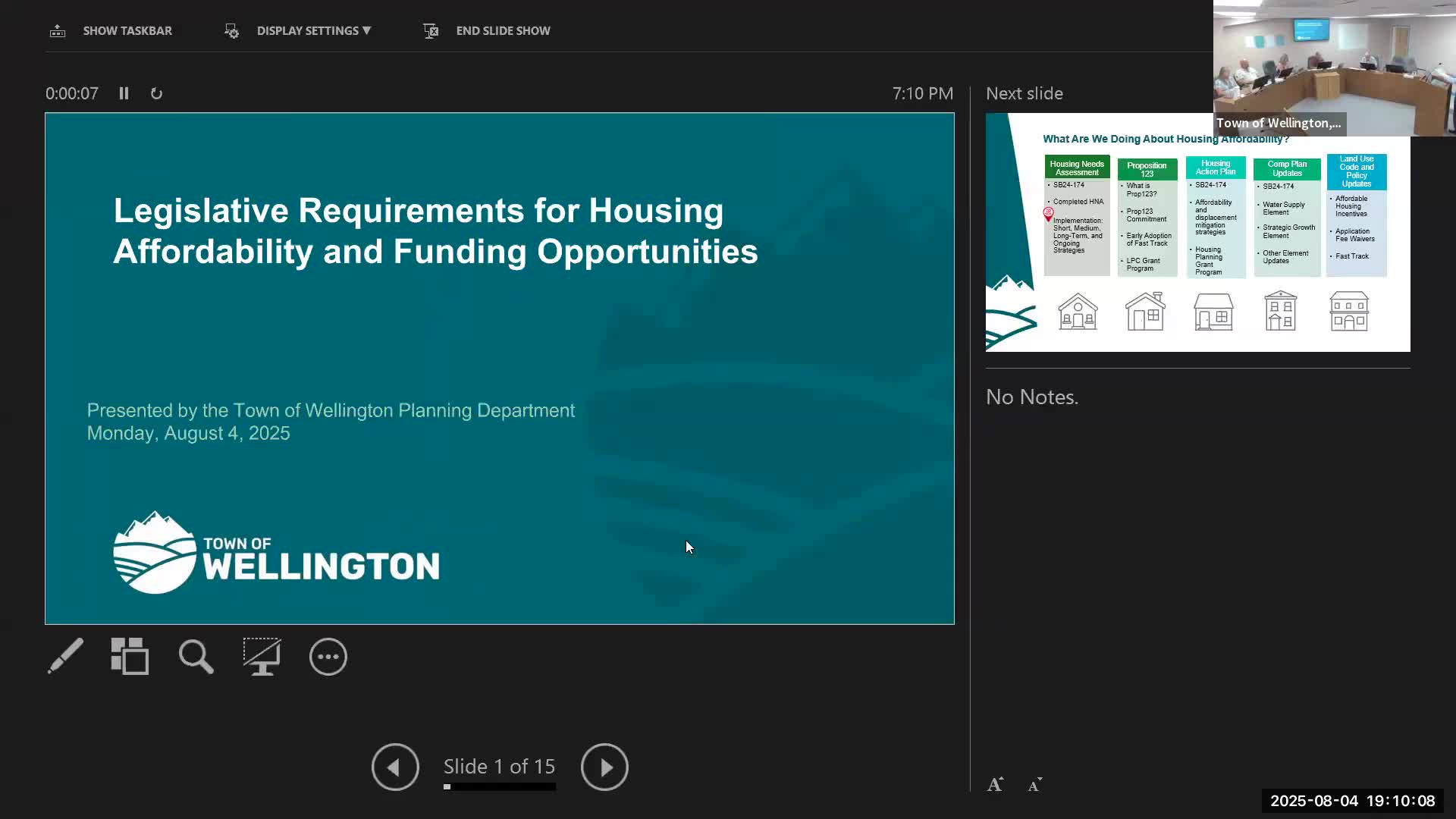
Summary
Staff recommended the town opt into Proposition 1‑23, pursue fast‑track incentives and apply for housing planning grants to support required comprehensive plan and housing action plan work from Senate Bill 24‑174 and related statutes.
Planning staff told the Planning Commission they recommend that Wellington opt into Proposition 1‑23 and pursue related grant programs and a local fast‑track process to help meet state housing requirements and to access grant funds, staff said at a Planning Commission meeting.
Britney Lenore, planning staff responsible for housing programs, explained the Prop 1‑23 framework and eligibility for grants. "Our baseline was calculated using guidance from DOLA ... the baseline was 52 units. A 3% increase would equate to 2 new affordable units by the end of the reporting cycle, 12/31/2026," Lenore said. Staff emphasized that the commitment is voluntary and that failing to meet it would make the town ineligible for some funds for a year but would not require repayment of previously awarded grants.
Background: the town has completed a housing needs and affordability assessment (required under Senate Bill 24‑174) and must adopt a housing action plan by 2028 and update its comprehensive plan to include a water supply element and strategic growth element by Dec. 31, 2026, staff said. The housing needs assessment identified a gap in housing supply and metrics for cost‑burdened households; staff said the town will need code and policy changes to implement the assessment's recommendations.
What staff proposed: opt into Proposition 1‑23 to become eligible for local planning capacity (LPC) grants and other Prop 1‑23 programs; adopt a fast‑track policy for qualifying affordable projects (50%+ of units affordable) to be eligible for a $50,000 LPC award with no local match; and apply for housing planning grant (HPLN) funds to support drafting the housing action plan and required comprehensive plan elements (HPLN requires a 25% local match). Staff also proposed pursuing code and policy changes — including expedited review, fee reductions for qualifying projects, updates to accessory dwelling unit (ADU) rules, and potential inclusionary zoning — and creating a naturally occurring affordable housing (NOA) inventory.
Key program details explained at the meeting: - Baseline and target: DOLA guidance produced a baseline of 52 affordable units for Wellington; a 3% increase during the reporting cycle equals two additional affordable units by Dec. 31, 2026. The commitment covers rental units at or below 60% AMI and for‑sale units at or below 100% AMI with household costs not exceeding 30% of income, as Lenore explained. - Grants and matches: the LPC grant can award up to $250,000 with a 20% match generally required; the fast‑track incentive tied to Prop 1‑23 offers up to $50,000 with no local match if the town adopts early fast‑track procedures. HPLN housing planning grants are available for the housing action plan and require a 25% local match.
Commissioners raised operational questions: whether the town's electrical grid and utility capacity could support EV chargers at scale (staff said it will coordinate with Xcel Energy and Poudre Valley REA), whether requiring electric‑ready building features would raise costs for affordable housing (staff noted such building code measures are a separate process handled by building officials), and whether staff capacity will be sufficient to complete the required updates (staff said they will pursue consultant support funded by grants where appropriate and may request budget match funding for 2026).
Commissioners generally indicated support for pursuing Proposition 1‑23 and for implementing the fast‑track incentive and housing planning grant strategies. Several commissioners noted concern about other overlapping statutory changes (for example, forthcoming landscaping and turf requirements) and asked staff to watch for cumulative impacts on development costs. Staff said they will present the same recommendations to the Board of Trustees and may seek a board resolution or letter of support ahead of key program deadlines.
Next steps: staff plans to pursue grant opportunities, prepare code and policy recommendations (including draft fast‑track language already submitted informally for state technical assistance), request budget match funding in the 2026 budget cycle where required, and return to the Planning Commission and Board of Trustees with drafts for public hearings and adoption timelines.
The quotes and attributions above are limited to named staff and commissioners appearing in the meeting transcript.