
Board directs staff to advertise multi‑year Pine River water and sewer rate increases; staff favors gradual option
Get AI-powered insights, summaries, and transcripts
Subscribe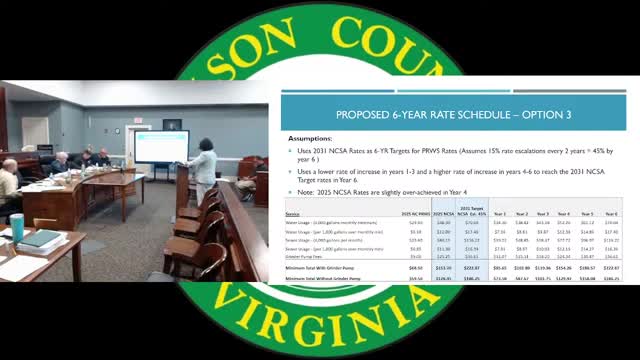
Summary
County staff presented three multi‑year rate scenarios for the county‑run Pine River water and sewer system and the board directed staff to prepare a public‑hearing resolution to advertise a multi‑year schedule, targeting an initial January effective date and later July adjustments.
County staff presented three six‑year rate‑path options intended to progressively close the gap between Pine River’s current rates and those used by the regional service authority. The board discussed the options’ pace and timing and directed staff to prepare a public‑hearing resolution that would advertise a multi‑year schedule. Staff described the scenarios as variations in how quickly the county would approach service‑authority target rates and how increases would be phased. “This is option 1… it uses the 2025 service authority rates as the 6‑year targets,” the presenter said. Other scenarios modeled a 15% escalation every two years or a lower initial increase followed by larger rises in years four through six. Several supervisors favored an approach that eases residents into higher bills. One member said option 3 “is easing in to this adjustment for the residents,” while another said a linear increase is easier for customers to plan for but agreed that options 2 and 3 reach the same long‑term target. Board instructions and timing: The board reached consensus to advertise a multi‑year increase (board members discussed three to four‑year blocks) and to include a first effective date of Jan. 1 for year‑one increases with subsequent increases effective July 1. The board also asked staff to include connection fees and other water/sewer charges (yard‑hydrant fees, unauthorized‑use charges and daily charges) in the ordinance amendment so county fees more closely match the service authority’s schedule. Why it matters: Pine River has been operating at a deficit; staff reported a simple per‑customer average of service‑authority costs at about $45.86 per month using one year of expenses, noting that deeper analysis would be required to split water, sewer and grinder‑pump costs. The board’s goal is predictable increases and to make county rates more comparable to the service authority before an eventual handoff. Next steps: Staff will prepare a draft resolution and public‑hearing notice for the board’s September meeting and a public hearing in October. The board indicated it may advertise four years of proposed increases and will set the final effective dates when it votes.