Get Full Government Meeting Transcripts, Videos, & Alerts Forever!
Get email alerts on the Camp Field Trip Michindoh topic
No spam. Unsubscribe anytime.
Schools detail sixth-grade trip to Camp Michindoh, outline packing, health and supervision rules
Summary
School and camp staff described activities, supervision, luggage and bedding rules, and Michigan-based medication procedures for upcoming sixth-grade trips to Camp Michindoh in Hillsdale, Michigan.
School and camp staff outlined logistics, supervision and medical procedures for upcoming sixth-grade trips to Camp Michindoh in Hillsdale, Michigan, telling parents that completed health forms and labeled medication are required and that students must bring only two pieces of luggage and separate bedding.
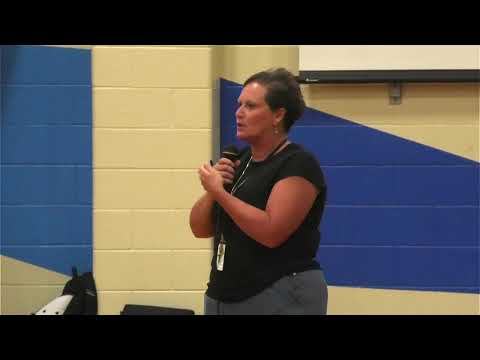
The information was presented by Matt Smith, principal at Paul and Timber Field School; Bethany Kolhor, director of the outdoor education program at Camp Michindoh; and Robin Fritz, who said she is the person in charge at the camp. They described an outdoor-education program on roughly 250 wooded acres with a 25-acre lake, where students attend hands-on classes, participate in activities such as rock climbing and archery, and stay in cabins with adult and high-school cabin leaders.
Kolhor emphasized the program's educational goals. "We are very hands on, very interactive, very team building," she said, adding that students should be encouraged but never forced: "Nobody is forced to do anything that they don't want to do or that they are uncomfortable with." She told parents to label all items and limit luggage to two pieces because students are responsible for carrying their own bags from the drop-off point to cabins.
The presenters listed specific packing and behavioral rules. Bedding should be separate from clothing (twin-size mattresses are provided; a sleeping bag and pillow or rolled blankets fit best); bedding may be transported in a trash bag to keep it dry. Kolhor said capsule toiletries are available at the camp if needed, but parents should send deodorant, socks, underwear and pajamas. Electronics and personal sports equipment should be left at home: the camp supplies balls, fishing gear, archery equipment and other activity materials.
On meals and daily schedule, the presenters said breakfast begins with flag-raising each morning, classes run through the day with buffet-style meals and evening programs, and lights-out is at 10 p.m. Kolhor described the program rhythm: students meet at the flagpole at 7:30 a.m., classes resume after lunch, and evening activities may include a night hike, campfire or skit night. The camp video shown at the meeting highlighted on-site facilities, cabins with 12 to 14 bunks and private indoor bathrooms, and a resident health officer who staffs a 24-hour health center.
Robin Fritz described supervision and drop-off logistics. "Every cabin will have a leader from our high school with them, and those cabin leaders are in charge of taking them everywhere," she said, adding that cabin leaders are juniors and seniors who apply and are trained. Parents should deliver students and medications at the school on the assigned drop-off day; luggage will be loaded on separate buses and driven to the camp ahead of students. Fritz said the bus ride to Camp Michindoh is about 1 hour 15 minutes and that students typically return to school around 1:30 p.m. on the scheduled return day.
Kolhor and Fritz gave detailed instructions on medications and health forms. Kolhor said: "I have to follow Michigan state rules" for medication administration. Presenters said all medications for regularly scheduled use must come in original containers labeled with the student's name and dosage instructions; if the instructions on the container differ from the administration schedule, a physician's note with a signature is required. Over-the-counter items such as bandages, cough drops and common pain relievers are stocked at the camp and do not need to be sent, the presenters said. Exceptions allowing students to carry life-saving devices''1 such as an inhaler, EpiPen or insulin''1 were described; parents should still label these items and notify the camp health officer.
Staff stressed communication protocols: teachers from the sending school will be on camp grounds while students are present, and any need to contact parents will go through the teachers rather than directly to students. For urgent medical situations, presenters said Hillsdale Community Health Center is about 5 miles from the camp.
Forms and next steps: parents were told to return completed health forms in advance so camp staff can review allergies and needs. "If you have any paperwork today, you're welcome to leave it with us," Fritz said; she and other staff remained after the session to answer questions.
The presentation combined a video tour of facilities with in-person remarks and concluded with an offer for individual follow-up at the end of the meeting.