Get Full Government Meeting Transcripts, Videos, & Alerts Forever!
Get email alerts on the Roadside Parking 1917 topic
No spam. Unsubscribe anytime.
County sends proposed no-parking ordinance affecting 1917 back to committee after public outcry
Summary
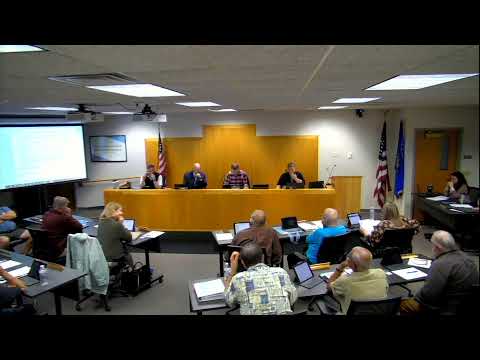
Chippewa County supervisors voted unanimously to return a proposed no-parking ordinance affecting the roadside in front of the 1917 venue to committee for further study after residents, business partners and multiple supervisors urged more locally tailored safety options.
Chippewa County supervisors voted 20-0 to send a proposed no-parking ordinance affecting the roadside in front of the 1917 venue back to committee for reconsideration, after more than an hour of public comment and board discussion centered on safety, parking access and business viability.
The proposal would have restricted on-street parking along sections of Highway S and adjacent county roads near the venue known in public comment as “1917” and “The Edge.” Proponents on the board said the measure aimed to reduce crash risk around busy driveways; opponents said the county had not explored less disruptive safety measures.
Many neighbors and business owners spoke during the public-comment period. Leo Krakowski, who said he lives “a kitty corner from the parking lot,” told the board the main concern is vehicle speed but that neighborhood parking historically has not caused trouble. “We have no problem over there except the entryways,” Krakowski said during public comment.
Mike (Mike) Hannon, who said he grew up locally and attends events at the site, described the venue as an “ambassador for the Chippewa Valley” and asked the board to “apply some common sense” and pursue measures such as reduced speed when pedestrians are present.
Jason Darley, who identified himself as one of the partners at 1917, said the business can seat about 425 people and operates boat slips that bring visitors to the lake. He described prior proactive efforts by the partners — placing cones and contacting county staff — and called the proposed restriction “drastic and heavy handed.”
Owner William “Lupe” Klish said the partners bought the business expecting roadside parking to be available and that removing parking would “debilitate our business.” Klish told the board the county had recorded only four complaints to the sheriff’s office — one related to fishing from a bridge, one from a former employee and two anonymous reports — and said county patrols found no parking violations on earlier checks.
Supervisors and staff discussed alternatives during the meeting. Several supervisors suggested speed-limit reductions, flashing caution lights, targeted signage, and selective lighting or crosswalk improvements. Supervisor Kempe recommended a drop to 35 mph; county staff and traffic engineers noted that any reduction below the statutory 45-mph design speed would require Wisconsin Department of Transportation (DOT) approval and typically additional traffic-calming infrastructure.
County staff said they will meet DOT traffic engineers to revisit options and return recommendations to the highway committee. Highway staff noted that the most recent traffic count on the stretch was about 4,835 vehicles per day with 16% trucks, which factors into safety analyses.
The board’s 20-0 vote to return the item to committee directs highway staff and the committee to examine alternatives — including traffic calming, signage, and potential temporary restrictions — rather than immediately adopting a countywide no-parking ordinance for the segment.
Why it matters: The decision preserves immediate parking access for the venue’s customers while requiring county staff to pursue more detailed engineering, enforcement and safety options with DOT input. Supervisors emphasized balancing public safety with the economic viability of a long‑running local business.
What happens next: The highway committee will reopen the issue, consult DOT traffic engineers, and report back to the county board with potential engineering, signage or regulatory options; no ordinance change was adopted at Tuesday’s meeting.