Get Full Government Meeting Transcripts, Videos, & Alerts Forever!
Get email alerts on the Governance Bylaws topic
No spam. Unsubscribe anytime.
Board reviews bylaws changes to align with recent state laws on teleconferencing, public comment and meeting conduct
Summary
The board heard first readings of updates to governance bylaws to reflect recent state legislation governing teleconference participation, accommodation requests, distribution of late materials and removal of disruptive individuals; the changes will return on the consent agenda next month.
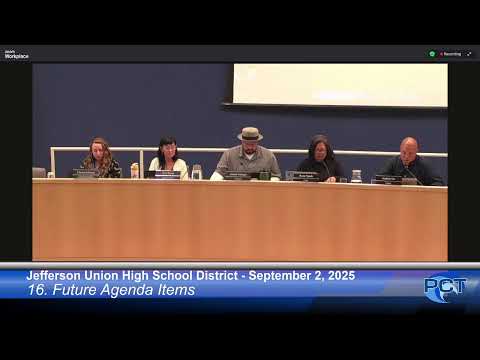
The Board of Trustees reviewed a set of proposed bylaw updates Tuesday that the superintendent said were intended to align district meeting rules with recent state law. Superintendent Toni Preston told the board the changes primarily reflect Assembly Bill 577, which modifies a board member’s ability to join meetings by teleconference, and other recent statutes affecting public comment and meeting conduct.
The updates are a first reading and will be placed on the consent agenda for approval at the board’s next meeting, Superintendent Preston said. “It’s pretty self explanatory,” she added while summarizing the package, which the presentation said draws on California School Boards Association (CSBA) recommended language.
Why it matters: the proposed changes would clarify when and how trustees may participate remotely, require procedures for members of the public who request reasonable accommodations, and set out new protocols for distributing materials published fewer than 72 hours before a meeting. The presentation also described an update based on SB 1100 to authorize the board president to remove individuals who are disrupting a meeting after a warning and other procedures including how to define a threat.
Board members asked no substantive questions on the content during the first-reading presentation. Superintendent Preston also said the draft replaces prior language that allowed immediate civil action alleging a Brown Act violation with a step requiring a demand to cure and correct the alleged violation and consultation with legal counsel before further action, per the new statutory framework.
What the board did: no formal vote was taken on the policy language Tuesday; staff said the package will return on the consent calendar for approval at the next meeting.
Documents and sources referenced in the presentation included AB 577 (teleconference participation), AB 2449 (procedures to receive and resolve reasonable accommodation requests), AB 2647 (procedures for distribution of late materials under the Brown Act) and SB 1100 (authority to remove disruptive individuals), along with CSBA model policy language and the Brown Act itself.