Get Full Government Meeting Transcripts, Videos, & Alerts Forever!
Get email alerts on the School Safety Sro topic
No spam. Unsubscribe anytime.
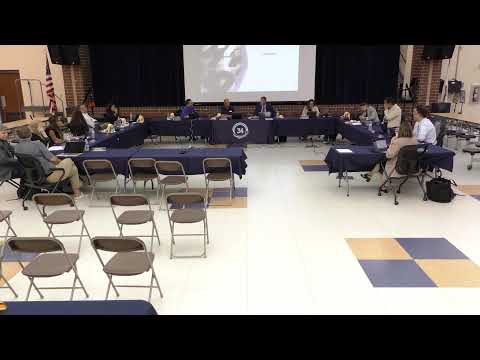
Board approves one-year extension of SRO agreement with Village of Glenview including "floating" officer
Summary
School District 34 trustees voted to extend by one year an intergovernmental agreement with the Village of Glenview to continue the district's school resource officer program, adding contract language to permit a "floating" SRO who will divide time among multiple schools.
School District 34 trustees voted to extend by one year an intergovernmental agreement (IGA) with the Village of Glenview to continue the district's school resource officer program, including new language that allows one "floating" SRO to divide time among multiple schools. The board approved the resolution after a roll call vote with all members present voting in favor.
The extension keeps in place the existing two sworn officers assigned to the district's middle schools and adds contract language describing a floating SRO that the village may assign to support public and private schools across Glenview. Superintendent Dr. Deli said the underlying model and most contract provisions remain the same as the previous two years.
District leaders and middle school principals told the board the SROs are integrated into the schools' existing responsive systems rather than operating as isolated campus police. Megan Chen, assistant principal for student services at Springman, and principals Diane O'Donnell and Lisa Engel described the officers' day-to-day roles: visible, uniformed law-enforcement officers who are identified in buildings, carry standard-issue weapons and participate in drills, safety planning and student-facing education such as life-skills classes and drug-prevention lessons.
Administrators presented survey and incident data they say show positive trends since the program began. The Panorama student survey question "The presence of a school resource officer makes me feel safer in school than without one" drew a favorable response from roughly 95 percent of responding middle-school students (about 1,100 students, district figures provided), and a separate question on SRO impact on school environment drew about 96 percent favorable responses. Staff responses were also reported as increased, with 81.8 percent of staff reporting they feel safer in school with an SRO present, up about 4 percentage points from the previous year.
District presenters cautioned that those results cannot be isolated to SRO involvement alone because SROs were integrated into an existing network of social workers, psychologists, advocates and learning-behavior specialists. Administrators said SROs often serve as a trusted adult who can de-escalate situations, shorten investigation time, connect families to resources and support crisis response and medical incidents.
Public commenter Mister Sipes urged the board to reconsider the contract and raised concerns about how the district posted versions of the draft agreement; he also referenced state legislation and national reporting about SRO practices. Board members asked for clarifications about the survey methods; administrators said they now use Panorama and PowerSchool data and that the district tracks demographic subgroups to look for differences by race, language status and special education status. Trustees discussed the number of students who selected "no opinion" on the student survey and asked staff to continue analyzing that subset.
Administrators and the board identified a state bill on the governor's desk (referred to in presentations as Senate Bill 1519) as a development the district is monitoring. The bill would, as presented to the board, restrict use of municipal code violation citations as student discipline and require additional stakeholder involvement and data reporting. District staff told the board their model already emphasizes restorative approaches and does not use municipal code citations for school discipline; they said any statutory changes likely would require only minor practice adjustments and possible contract language changes if the bill is enacted. The district said any statutory changes would take effect July 1, 2026.
After discussion, Board Member Jessica Pritzker moved to approve the resolution authorizing the SRO agreement extension; James Dolan seconded. A roll call vote approved the resolution unanimously.
District leaders said they will continue to monitor legislation, maintain the district's restorative focus, and keep the board informed of any required contract amendments or policy adjustments.
Administrators emphasized that the SROs operate as part of a broader student support system rather than as standalone law-enforcement officers.