Get Full Government Meeting Transcripts, Videos, & Alerts Forever!
Get email alerts on the Land Use Energy topic
No spam. Unsubscribe anytime.
Council advances zoning change to ban ground‑mounted household solar in residential areas
Summary
After two recent special‑use hearings, the Planning Commission recommended and council moved a first reading to amend zoning code to prohibit ground‑mounted solar arrays in residential and small agricultural lots; rooftop solar would remain allowed.
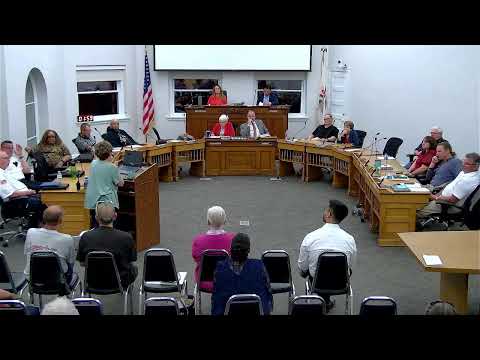
The Freeport Planning Commission recommended a text amendment to the zoning code that would prohibit ground‑mounted solar arrays in residential and small agricultural zoning districts; the council took first‑reading action Sept. 2 to move the change forward for future consideration.
Director of Planning Wayne Duckman said the commission reviewed two recent special‑use permit applications for ground‑mounted residential solar and, after public hearings, voted 5–0 to recommend removing the special‑use option from residential and small agricultural zones. "Essentially what they're proposing is going to take away the discretion," Duckman said, adding that rooftop solar would still be allowed.
Commission supporters and planning staff said many neighbors who testified at hearings did not want to see panels in backyards, citing visual impacts. Planning commission member Darren (last name on file) told council the issue had been debated for over 30 minutes at recent hearings and the commission concluded ground‑mounted systems do not fit with existing residential land‑use patterns.
Alderman Stacy and others questioned the fairness of a rule that would block new ground‑mounted installations after previous approvals had been granted for specific properties. Duckman and a planning commission member answered that the amendment would create a uniform rule for all residential properties and end the case‑by‑case special‑use process that could lead to inconsistent outcomes.
Ending: The change was introduced as a first reading; the council will schedule a second reading and final vote at a later meeting after staff processes the ordinance language and any public comment received in the interim.