Get Full Government Meeting Transcripts, Videos, & Alerts Forever!
Get email alerts on the Airport Parking topic
No spam. Unsubscribe anytime.
Bloomington delays decision on airport remote-parking rules after operators and planners disagree
Summary
City staff presented an ordinance to allow conditional-use remote airport parking in two zoning districts and establish standards including a 3-acre development set‑aside; the council left the public hearing open and laid the ordinance over to Sept. 15 to allow more information and public comment.
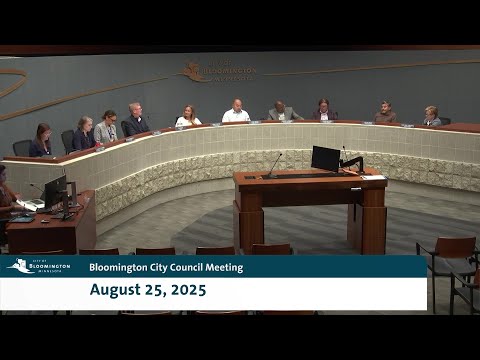
City staff and operators sparred Thursday over proposed permanent rules for remote airport parking near the Minneapolis–Saint Paul airport, and the Bloomington City Council voted to keep the public hearing open and continue action to Sept. 15. The staff-backed ordinance would allow remote airport parking as a conditional use in CX2 and HXR zoning districts, set performance standards and require a three‑acre set‑aside for future development.
Why it matters: The City has been operating under a moratorium and interim approvals aimed at preventing unchecked remote parking facilities while encouraging higher‑density redevelopment. Operators say the proposed set‑aside and compliance deadlines could make redevelopment financially impossible; staff say standards and a deadline are needed to ensure sites meet modern code for landscaping, lighting and stormwater when they become permanent.
Summary of the proposal and debate: Planning staff led the presentation, describing two established remote parking operators — Park And Go (about 12.5 acres and roughly 1,500 stalls) and Park and Fly (surface and structured spaces totaling about 2,100 stalls) — and saying the earlier moratorium and study led to a middle course: permanent rights through conditional use permits with performance standards rather than outright prohibition or unfettered permission. Staff told council the ordinance would require: a minimum three‑acre set‑aside for future development; deferred compliance for landscaping, lighting and stormwater until a development deadline (staff recommended end of 2029; the Planning Commission recommended Dec. 31, 2034); limits on new standalone surface lots; and standards distinguishing hotel airport parking (treated as permitted accessory uses where parking is genuinely ancillary to hotel stays).
Operators and property owners told the council the three‑acre set‑aside and milestone deadlines risked devaluing property and would not by themselves make projects financeable. Dan Williamson of Park and Go told the council, “We like where this is going. We think a lot of good work has been done. We're very supportive of the direction it's going,” but he urged the council to reconsider the mechanics of the set‑aside and the effect on financing. Kristen Muir, representing Rizza Development, said Bloomington was unique in treating the use as interim and warned that the proposal could amount to a lien on long‑standing property rights.
Council action and next steps: After public comment and staff answers, the council voted 7–0 to leave the public hearing open and continue the item to Sept. 15 to allow staff to provide additional information requested by council and to allow further public input. No ordinance was adopted at the meeting; the moratorium currently expires Oct. 10.
What remains unresolved: The council has not yet chosen between staff's recommended compliance deadline (2029) and the Planning Commission's 2034 date; it must also decide exact screening requirements, how the three‑acre set‑aside will be measured and enforced, and whether to treat certain re‑purposed structured parking as acceptable locations for new remote parking operators. Staff will return with answers and any revised ordinance text for the continued hearing on Sept. 15.
Ending: The council emphasized more technical detail and follow‑up would be needed before arriving at a final ordinance, and gave staff direction to answer the specific financing, stormwater and code‑compliance questions raised by operators and commissioners.