Get Full Government Meeting Transcripts, Videos, & Alerts Forever!
Get email alerts on the Parental Rights Termination topic
No spam. Unsubscribe anytime.
Texas Supreme Court weighs sufficiency of evidence in parental-termination appeals
Summary
The Supreme Court of Texas heard arguments in Case No. 24-0307 over whether the evidence presented at trial was legally sufficient to support termination of parental rights for a mother and a father, focusing on endangerment, best-interest findings and the trial court—s denial of an extension request under Tex. Fam. Code §263.401.
The Supreme Court of Texas heard argument in Case No. 24-0307 on whether evidence at a trial met the clear-and-convincing standard needed to terminate parental rights for a mother and a father, lawyers and justices said during the hour-long session.
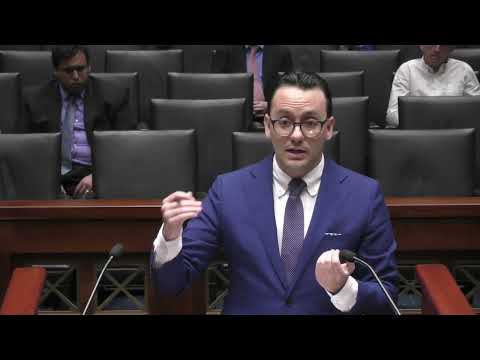
Petitioners— counsel, Mr. Kotlarski, told the court, "This is not a case where father was woefully incapable of caring for his children," and argued the record shows the father had provided food, shelter and care and that the undisputed evidence about improvements and the timing of the children—s hospitalizations undercut the endangerment and best-interest findings.
The petitioners, represented by Mr. Kotlarski and Mr. Vaughn, also contested the sufficiency of the evidence that the mother knowingly exposed the children to danger. "This court has warned that a parent's status as a domestic violence victim is no evidence and does not warrant termination," Mr. Vaughn said, pressing that the evidence did not meet the statutory "knowing" element for endangerment and that some testimony was retrospective after services were provided.
Respondent counsel, Ms. Barnett and Mr. Beach, defended the jury—s verdicts. Barnett noted that the trial record did not include certain documentary items, acknowledging, "There were no medical records, your honor," while stressing testimony from providers and witnesses about children's behavior and safety concerns. Beach told the court that, "the absence of that [documents] does not require a reversal here," pointing to provider testimony and parental admissions in the record that the respondents say support endangerment and best-interest determinations.
A recurring procedural issue at argument was the trial court—s denial of a request to extend the statutory deadline under Texas Family Code §263.401. Petitioners argued the district court—s refusal to extend the date a week before trial was an abuse of discretion that deprived parents of a chance to complete counseling and demonstrate progress; respondents countered that the trial court found the record did not show extraordinary circumstances and that evidence nonetheless supported the jury—s convictions.
Justices questioned multiple aspects of the case record, including the timing of the children—s hospitalizations and whether those events could be attributed to prior exposure in the home or to trauma after removal. The court also examined how subjective service-plan expectations and the department—s approach to reunification factored into both endangerment and best-interest analyses; petitioners urged the court to apply limits on reliance on subjective service plans, citing an opinion attributed to Chief Justice Blacklock and the court—s prior decisions.
Counsel discussed gaps in documentary evidence at trial. Petitioners stressed that the record lacked police reports, medical records and drug-testing records that the department relied on in its factual presentations; respondent counsel acknowledged those documents were not admitted but argued the testimonial record and parents' admissions provided an adequate evidentiary basis for the jury.
The arguments also turned on the forward-looking nature of the statutory best-interest inquiry: petitioners said recent, unrebutted improvements by the mother should control any forward-looking best-interest judgment; respondents emphasized provider testimony that the parents remained enmeshed and that the father had not meaningfully remediated his violent or controlling behaviors.
The justices did not announce a decision. Counsel for both sides urged reversal and remand in various respects; respondent counsel urged affirmance. The court adjourned after questioning concluded; a written opinion will follow the court—s deliberations.