Get Full Government Meeting Transcripts, Videos, & Alerts Forever!
Get email alerts on the Franchise Tax Sourcing topic
No spam. Unsubscribe anytime.
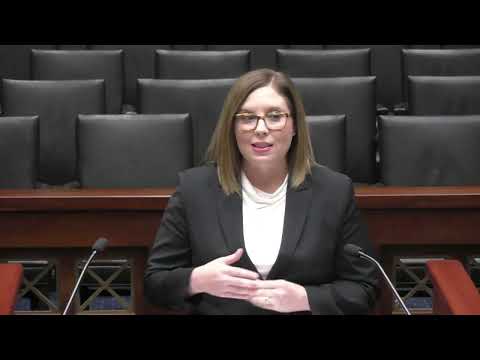
Texas Supreme Court hears dispute over franchise-tax sourcing in NuStar Energy case
Summary
The Texas Supreme Court heard oral arguments in NuStar Energy v. Hancock on whether franchise-tax receipts from sales of tangible personal property should be sourced to the place of delivery in Texas or to the buyer’s ultimate destination and market of use.
The Supreme Court of Texas heard oral arguments in NuStar Energy v. Hancock over how Texas’s franchise tax should treat receipts from sales of tangible personal property: should receipts be sourced where property is delivered in Texas or where the buyer ultimately uses or markets the goods? Petitioner counsel argued for an "ultimate destination" or market-based test; respondent counsel defended the comptroller’s longstanding place-of-delivery rule.
Why it matters: the court’s ruling could change how out-of-state buyers and Texas sellers apportion receipts for the Texas franchise tax, with implications for corporate taxpayers and state tax revenue. Counsel told the court the dispute affects decades of franchise-tax enforcement for goods such as marine fuel and other bulk shipments.
Petitioner counsel told the court that sourcing should look to the buyer’s ultimate destination and market of use rather than where goods momentarily transfer possession. "We are always looking to the ultimate destination for the goods," petitioner counsel said, arguing that a destination test prevents inconsistent results driven by transportation method or contractual terms such as FOB provisions.
Respondent counsel said the statutory text requires a place-of-delivery approach and described NuStar’s argument as "fundamentally atextual." Respondent counsel urged the court to affirm the court of appeals, saying: "The statute is straightforward, and NuStar’s approach is fundamentally atextual." Respondent counsel added that Texas’s single-sales-factor apportionment and decades of comptroller practice support the current rule.
Justices pressed both sides with hypotheticals. Counsel debated scenarios involving bunker fuel picked up at a Texas port and consumed in international waters, and whether a buyer who takes possession in Texas but immediately ships the property out of state would create a Texas receipt. Petitioner counsel emphasized that the statutory phrase referencing delivery or shipment should be read to identify the transaction’s consummation and the market for the goods, not contractual allocation of risk or title. Respondent counsel countered that the statutory words do not contain an "ultimate destination" or "consumption" exception and pointed to Texas precedent and the comptroller’s long-standing rule.
Counsel for both sides discussed prior decisions the court and other jurisdictions have used as touchstones, including Lockheed Martin and SiriusXM decisions and out-of-state authorities such as Hercules and a Pennsylvania decision referenced as Gilmore. Petitioner counsel argued some precedents are distinguishable and urged a destination-based construction; respondent counsel said the text and Texas case law support the place-of-delivery test.
No decision was announced. After argument concluded, the court recessed and the case was submitted for decision.
The court allowed 20 minutes per side during oral argument. The parties flagged that the refund claim at issue covers tax years 2011 through February 2013; counsel said the comptroller’s rule at issue has been applied for decades and the current form of the rule dates back many years. The court did not indicate a timetable for issuing a decision.