Get Full Government Meeting Transcripts, Videos, & Alerts Forever!
Get email alerts on the Childcare Subsidies topic
No spam. Unsubscribe anytime.
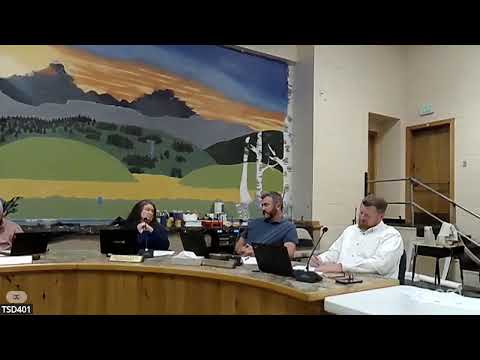
Board hears proposal for staff childcare subsidies, center reports enrollment and funding risks
Summary
A presenter described a childcare partnership that subsidizes costs for district employees, gave cost scenarios, reported current enrollment and local fundraising, and warned federal grants may shift to one-year awards this year.
A presenter for a local childcare collaborative told the Teton School District Board about an existing partnership that subsidizes enrollment and supplies for district employees and outlined several subsidy models that the district could adopt. "If the school district put $50,000 towards the cost of care, each employee would pay basically 40% less than their tuition — $7,772 instead of $12,772," the presenter said, and added that a $100,000 subsidy would reduce employee cost to "$2,772," a projected 78% savings per family.
The presenter said about 10 district employees have children enrolled in the program and referenced past surveys that counted 13 children in the relevant age range. Board members asked for clarifications about the center's lease and whether the facility's operating grants would continue into the next calendar year. The presenter said local fundraising and recent grants (including $12,500 and $8,500 from community foundations) provide short-term support but noted federal early-childhood grants are moving from multi-year awards to one-year awards under the current administration. "There should be a notice of funding opportunity in September and then a notification that everything is funded another year out in December," the presenter said.
Board members discussed options for helping employees pay childcare costs, including employer prepayment with payroll recovery, tax-advantaged accounts, or direct partnerships with local providers. A board member asked whether providers would accept a reduced rate if the district could prepay; the presenter said providers that could rely on stable, timely revenue would likely be interested but that specific arrangements would require further work.
The presenter described how the program uses multiple funding streams and that project managers in the state's network can channel extra program funds into subsidized care. They also said the cooperative provides scholarships and tuition assistance that any licensed or unlicensed local program can access. The presenter reported the center presently serves about 50 families overall and that growth in infant enrollment could increase capacity and sustain the program long-term.
Board members requested a follow-up discussion to review concrete subsidy options and implementation pathways and to invite a specialist to present a menu of subsidy models that districts can use. The presenter offered to bring that material to the board within a few months. Board members and administrators also discussed possible human-resources mechanisms to pass childcare payments or tax benefits through payroll, and asked district HR staff to investigate existing flexible spending account options and payroll deduction logistics.
The board did not take formal action on a subsidy model at the meeting; members asked staff to return with proposed options and potential agenda items for future discussion.