Get Full Government Meeting Transcripts, Videos, & Alerts Forever!
Get email alerts on the Historic Preservation topic
No spam. Unsubscribe anytime.
Committee approves change to certificates-of-appropriateness criteria for historic properties
Summary
The planning committee approved an amendment to the city code for certificates of appropriateness to treat listed criteria as alternatives ("ors") rather than requirements that must all apply, following a recommendation from the Urban Design and Historic Preservation Commission.
Committee approves change to certificates-of-appropriateness criteria for historic properties
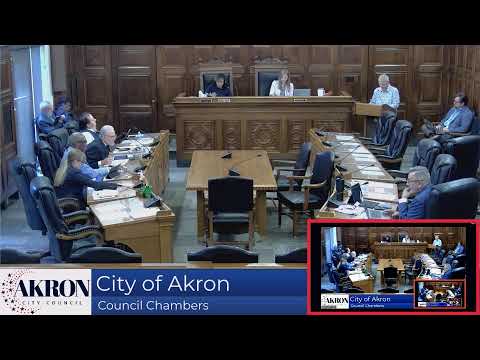
The Akron City Council Planning Committee on an apparent voice vote approved an amendment to city code governing certificates of appropriateness to clarify that the code’s review criteria operate as alternatives rather than cumulative requirements.
The change matters because it aligns the written code with the Urban Design and Historic Preservation Commission’s intent and makes it easier for property owners to meet the standard for a certificate of appropriateness.
Chair Fusco opened discussion on the amendment and invited staff comment. "This was legislation that was read in in July," said Mister Gillian, a staff member presenting the item, summarizing that the amendment replaces the current wording so that the four listed criteria are treated as "ors" rather than as conjunctive "ands." Gillian said the original intent was for any one of the criteria to qualify a project for review and approval: "These are ors, so any 1 could apply." He added that if all four criteria had to apply simultaneously, the provision would rarely be usable.
There were no questions from committee members on the record. A motion to approve the amendment was made and seconded; the item passed by voice vote. The committee did not record a roll-call tally for the item in the transcript.
The amendment implements a recommendation from the Urban Design and Historic Preservation Commission and is intended to resolve inconsistent language in the code for certificate-of-appropriateness decisions. The committee treated the item as routine and moved it forward without further substantive debate.
At the meeting the amendment was presented during the agenda item labeled as relating to departments, boards and commissions; no other legal citations or statutory references were provided in the discussion. Staff indicated the change is clarifying rather than creating new substantive criteria.