
City approves 15-year, 75% tax abatement for 120-unit affordable housing at 441 Griswold Road
Get AI-powered insights, summaries, and transcripts
Subscribe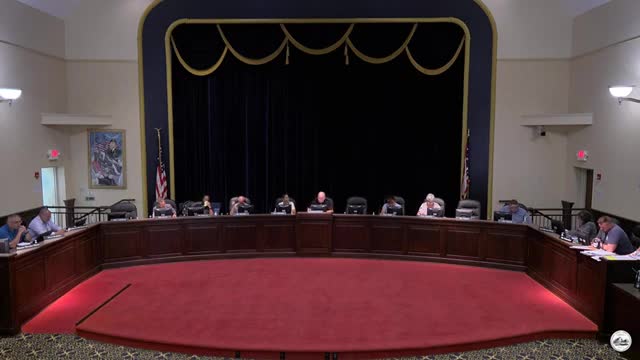
Summary
Elyria’s joint Community Development and Finance committees approved a Community Reinvestment Area (CRA) agreement for TWG Development to build a 120‑unit multifamily project at 441 Griswold Road, authorizing a 15‑year, 75% tax abatement and requesting emergency legislation to meet state deadlines.
Elyria’s joint Community Development and Finance committees approved a Community Reinvestment Area tax‑abatement application on Aug. 11 for a proposed 120‑unit multifamily affordable‑housing development at 441 Griswold Road.
The committees voted to request legislation establishing a 15‑year, 75% CRA abatement for the project, which TWG Development representatives said has an estimated project investment of about $29,300,000 and is anticipated to create about 200 temporary construction jobs and two full‑time permanent positions. Community Development staff recommended that the legislation be drawn as an ordinance with an emergency clause so the signed contract can be submitted to the State of Ohio within program deadlines.
“TWG is a development firm specializing in multifamily affordable housing,” said Mona Bayad, Community Development Manager, explaining the CRA application and state‑notice requirements. Bayad said the site, a roughly 10.1‑acre parcel that previously contained a school building, has been remediated and is effectively shovel‑ready. She told the committee that a 14‑day notice required by Ohio law was sent to the school district and Joint Vocational School (JVS); because the abatement is at or below 75% it did not require the school board’s approval and no objections were received during the notice period.
Alex Frasier, Ohio development director for TWG Development, said the company focuses on affordable housing in multiple states and estimated rents targeted around 60% of area median income: about $1,000 for a one‑bedroom, $1,200 for a two‑bedroom and $1,400 for a three‑bedroom. Frasier added that utilities would be billed separately from rent.
Committee members asked questions about site readiness, traffic, parcel size and utilities. Bayad said the project will redevelop about 10.1 of the site’s roughly 20 acres, generally on the southern portion near Griswold, and that construction is expected to begin in September 2026 with completion by March 2028 “contingent upon the tax credit award this fall.”
Mrs. Mitchell moved that legislation be drawn and Mr. Oswald seconded; the motion passed on both the Community Development and Finance committee votes. The committees recommended emergency legislation to meet state filing deadlines so the signed contract can be delivered to the state program in time.
If the ordinance is drafted and passes Council, subsequent steps noted by staff include final project permitting, any required state tax‑credit awards, and standard planning and building reviews before construction.