
Consultants propose phased cuts to spouse/dependent county contribution, explore partial self-insurance
Get AI-powered insights, summaries, and transcripts
Subscribe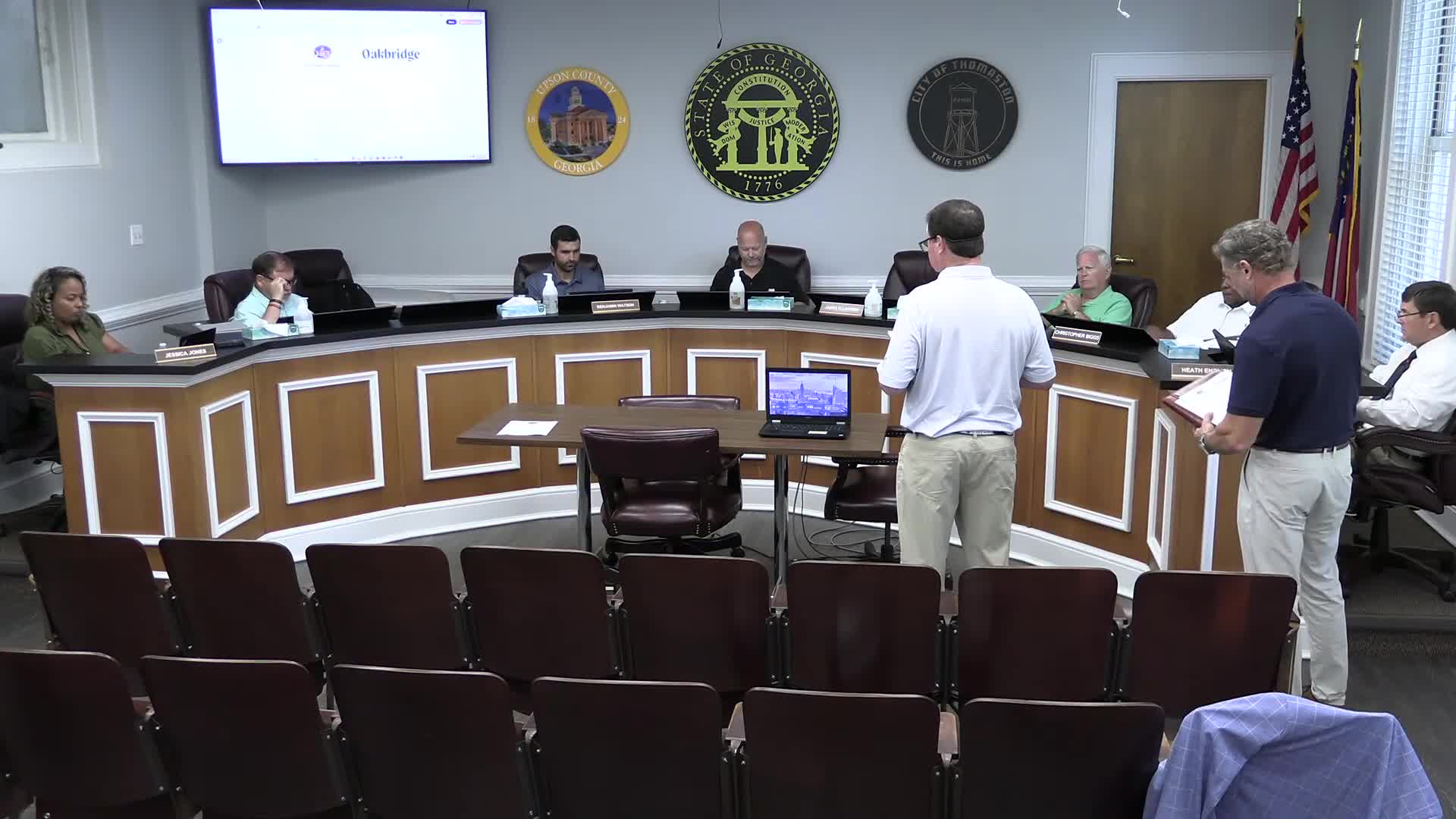
Summary
Oakbridge consultants told commissioners the county faces large premium increases and recommended gradually reducing the county’s spouse/dependent contribution from about 82% to 70% over several years, plus evaluating a partial self-insurance model to stabilize costs.
Consultants from Oakbridge presented renewal results and cost-containment proposals for the county’s employee health insurance at the Sept. 3 special meeting. They recommended a phased reduction in the county’s contribution toward spouse and dependent coverage and studying a partial self-insured funding model as a longer-term option.
Mike Stone of Oakbridge said the county accepted a 14% renewal from Blue Cross Blue Shield at the July 1 renewal rather than a 24% alternative from another carrier. Stone told the board that “that’s about $340,000 annually to the county under that current structure.” He recommended two primary approaches: 1) move the county’s contribution on the base (majority-enrolled) plan from roughly 92% employee-only and 82% employee-plus-spouse/dependents toward a more uniform 90% employee-only and 70% employee-plus tiers over several years by dialing contribution rates down about 3 percentage points per year; and 2) evaluate a partial self-insurance model to gain better claims data and control, particularly on pharmacy costs.
Oakbridge showed an example using current premiums: an immediate change from an 82% spouse/dependent contribution to 70% would raise annual cost for an employee with two or more dependents by $4,001.59 (based on current-year premiums), so the firm recommends phased changes and grandfathering current employees while applying new ratios to future hires. Consultants modeled a scenario that assumed a 6% annual trend and a phased 3%-per-year reduction in contribution, producing multi-year savings projections for the county of tens of thousands annually as the adjustments mature.
On partial self-insurance, consultants described the model as shifting variable claim costs to the employer while buying stop-loss insurance to cap catastrophic liability; they said pharmacy-management levers alone could reduce pharmacy spend 30–40% in some cases and help bend the trend. Oakbridge recommended returning with firm proposals by March–April so the county can plan before the July 1 renewal cycle; consultants said one possible implementation date for new-hire contribution rules would be Jan. 1 or July 1, depending on timing and board preference.
Discussion vs. decision: commissioners did not vote on policy or specific contribution changes at the meeting. The board asked staff and consultants to return with detailed modeling, cost runs and proposed implementation dates before any change is adopted.
Next steps: Oakbridge will prepare models and a recommended timeline for the board, including costs by plan tier and options for immediately applying new ratios to new hires while phasing changes for current employees.