Get Full Government Meeting Transcripts, Videos, & Alerts Forever!
Get email alerts on the Comprehensive Planning topic
No spam. Unsubscribe anytime.
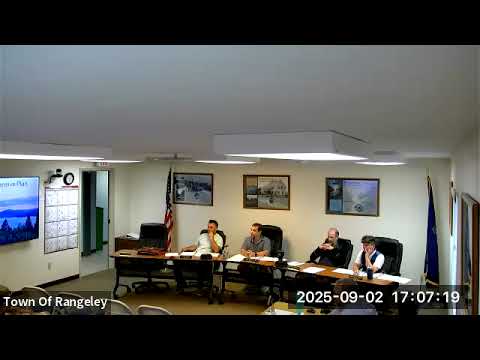
Rangeley holds public hearing on 2025 comprehensive plan; state found version consistent, town meeting set for Sept. 16
Summary
The Select Board opened a public hearing on the town’s draft 2025 comprehensive plan and supporting maps; the state found the published version consistent and the town scheduled a Sept. 16 town meeting for voters to act.
The Select Board opened a public hearing on the town’s draft 2025 comprehensive plan and accompanying maps and amendments, and discussed next steps after the Maine state review found the published version “consistent.” Town staff and the comp-plan review committee described the changes from the 2012 plan and said voters will be asked to adopt the published document at a town meeting scheduled for Sept. 16.
Why it matters: the board and committee said state consistency makes the plan eligible for some state grant processes and helps guide zoning and capital spending for the coming decade. The discussion centered on how the plan balances preserving Rangeley’s character with measured infill development, affordable housing tools, and protections for natural resources.
Major details and context: committee reviewers said the 2025 draft reorganizes chapters (for example, consolidating forestry, outdoor recreation and agriculture under an expanded economy chapter), and adds new standalone chapters on climate adaptation and health care access. Committee members summarized population and demographic updates, saying the plan document reports an updated permanent population estimate (reported in the draft as roughly 1,270 vs 1,168 in 2012), a higher median age (56.5 vs 51.4), and a wide seasonal population swing (the draft described peak seasonal population as about 5,300 to 10,000).
On housing and growth, committee members and staff described recommended tools to direct new housing toward village areas where public water and sewer exist: allowing smaller infill lots, encouraging accessory dwelling units (ADUs), revisiting clustering provisions, and creating incentives such as density bonuses tied to sewer/water service. The draft also recommends consideration of transfer-of-development rights as a long-term tool to protect woodlots and farmland while concentrating new units in serviceable areas.
Speakers emphasized the need to balance growth with infrastructure capacity. Select Board members asked whether the town’s wastewater and water systems have capacity for added density; presenters said investments in wastewater and water systems provide some room for additional connections but noted infrastructure and processing limits should be considered when drafting implementation ordinances.
Natural-resources protections and renewable-energy siting were discussed as well. Reviewers said the draft adds site-plan review standards, third-party engineering review, and on-the-ground inspections as mechanisms to reduce sediment and phosphorus impacts from construction; committee members said those review costs would be borne by developers.
Maps and voter materials: committee members displayed a higher-resolution land-use map and explained the color coding used for growth areas; they agreed to add an appendix with a blown-up, more legible view of a portion of the future land-use map so voters can see exact boundaries at the 11×17 size used in packet materials. Staff stressed the map shape and boundaries will not change — only the presentation for easier reading.
Implementation and follow-up: committee members recommended the Board of Selectmen continue to lead implementation and suggested using the ordinance committee and planning board to draft the zoning and site-review changes needed to carry out the plan. Several speakers urged the board to form an implementation review process (either an implementation committee or regular annual reviews) so ordinance updates do not languish; a member who had worked on the 2012 plan warned that failing to follow up could create conflicts between the comp plan and town ordinances.
Where it goes next: staff and committee participants said the version the state reviewed is the version that will be before voters on Sept. 16. If voters approve the published plan, the board and planning bodies will move into ordinance drafting and site-plan-review updates; if substantial new material is needed later, staff said an addendum or future amendment could be proposed at the next town meeting cycle.
Ending: Board members thanked the comp-plan committee and staff for the multi-year work. The public hearing was closed later in the meeting and the town will take the adoption question to voters on Sept. 16 as scheduled.