Get Full Government Meeting Transcripts, Videos, & Alerts Forever!
Get email alerts on the Bond Projects Air Conditioning topic
No spam. Unsubscribe anytime.
Board hears updated bond cost, recommends adding two middle-school spaces and high-school music room to air-conditioning plan
Summary
District facilities staff reported updated cost estimates for a proposed capital bond to add air conditioning and other projects, recommended additional middle-school rooms (148 and 150) and high-school space G100, and outlined a proposed energy audit range and next steps before a district vote expected Dec. 2.
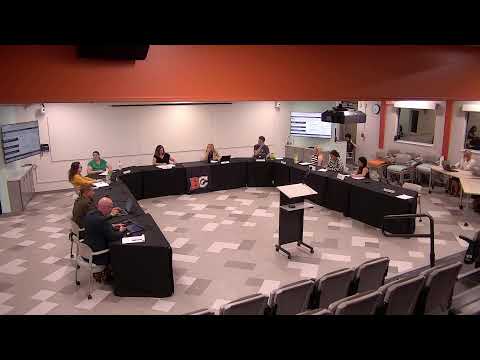
At a September school board meeting, district facilities staff presented an updated cost estimate and scope refinements for a proposed capital bond that would add air conditioning and other building projects, and recommended a district energy audit before finalizing project design. The board was told staff expect to present additional data to the board on Sept. 17 and is planning a public bond vote on Dec. 2.
Nick, a district facilities staff member, said the current overall project cost estimate is $56,175,490 after reductions and additions uncovered in a recent re-scope. He identified specific line-item changes: an $83,000 reduction tied to inclusion of an art room in classroom work, a $152,000 addition to include middle-school rooms 148 and 150, an $882,000 reduction after correcting an inadvertent inclusion of two high-school rooms, and a $182,400 addition for high-school Music Room G100. Nick said the recommended enhancements to the middle-school “pit” (a cluster of lower-level multiuse bays) would add about $863,000 to that element and raise the overall estimate to $57,038,490 if included.
Nick described options staff examined for how to add cooling, saying they have not yet chosen equipment types (chilled water, direct expansion, heat pumps) and therefore cannot yet project annual operating-cost increases precisely: "without knowing the actual energy efficiency ratios of the equipment, the future equipment, it's very difficult for us to project that number," he said. He advised that most of the ongoing cost impact would be electricity, with minor maintenance such as filters.
On the energy-audit question, staff cited ASHRAE definitions of audit levels and said the consultants recommend an audit between the top of a level 1 and just below level 2. Nick said a commercial energy audit for the district—6s 898,667 square feet would cost roughly 10A2 to 30A2 per square foot, giving a range of about $89,800 to $269,600; the consultants' estimate for a level-2 audit for Bethlehem runs between $100,000 and $200,000. He added a preliminary internal estimate of about $170,000 for a full-district audit excluding operations and transportation. Staff also noted that New York State Energy Research and Development Authority (NYSERDA) programs could reimburse a portion of audit costs and that NYSERDA grants might pay up to $200,000 under certain conditions.
Board members asked for clarifications about air handling in the middle-school bays used for wrestling, adaptive PE and other activities; Nick confirmed the spaces currently have unit ventilators tied to the building automation system and said ventilation configurations would change if the spaces are renovated. He also described how newer low-global-warming-potential refrigerants create design and cost challenges because many modern refrigerants are flammable and require factory-installed refrigerant monitors for safety, raising installation complexity and cost.
No formal bond approval or vote occurred at the meeting. Staff outlined next steps: refine scope with consultants, define the energy-audit scope and funding options, provide updated cost and design information to the board at the Sept. 17 meeting, and prepare for the planned bond vote on Dec. 2. Board discussion included whether to perform the energy audit before finalizing bond plans and whether audit costs should be funded from operating or capital budgets; staff noted audit funding could come from other sources or be budgeted over multiple years.
Why it matters: a bond that adds widespread air conditioning and other capital work will affect construction cost, annual energy budgets and building comfort for students and staff, and the board sought more precise energy and design data before asking voters to authorize borrowing.