Get Full Government Meeting Transcripts, Videos, & Alerts Forever!
Get email alerts on the Elections And Voter Integrity topic
No spam. Unsubscribe anytime.
Residents urge Boone County to adopt resolution on 2026 election integrity; no vote taken
Summary
Speakers representing Unite for Freedom and allied groups presented a resolution alleging widespread registration and vote-count irregularities in Illinois’ 2024 election and asked the Boone County Board to place a resolution on a future agenda; the board heard the request during public comment but took no formal action.
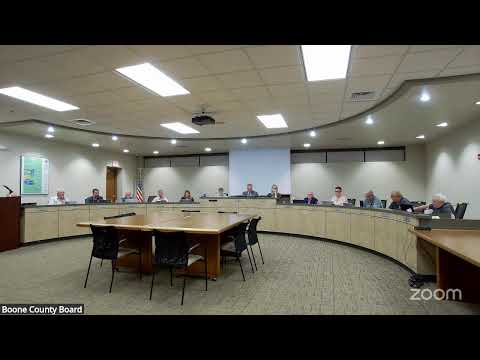
Several speakers representing Unite for Freedom and allied volunteer groups spent the public-comment period at the Boone County Board meeting on Aug. 28 urging the board to adopt a resolution calling for reforms to ensure what they described as a “legally valid” 2026 general election. The group read a multi-page resolution and cited audit figures they said show millions of registration errors and more than a million apparently invalid votes from the 2024 election.
The request was presented during the public-comment portion of the meeting, and board members did not vote or place the item on the agenda at that time. Organizers said they would request a formal agenda placement and offered to return with a fuller presentation if the board invited them.
Why it matters: The speakers asked a county governing body to take a public stance on the integrity of statewide elections and to request local and state action. While county resolutions are symbolic, a decision to consider or adopt such language could prompt local media attention and a formal request for state-level review.
What presenters said: Brian Jones, who identified himself as a Rockton resident, opened the presentation by describing the research and asking for the board’s “awareness, understanding, support, and action.” A reader then recited a resolution titled “A resolution for a legally valid 2026 general election” that invoked U.S. Supreme Court decisions and federal election law. Babe Postis, who said he lives in Chicago, read audit figures the group attributed to an independent audit, including a claim of 4,566,205 “material registration errors and omissions” and 1,045,659 “votes improperly counted.” Dean Barker and other local chapter directors asked the board to review and potentially pass the resolution.
How the board responded: Board members listened and asked no procedural questions during the presentations. The chair closed public comment and proceeded to other agenda business. Board staff and members did not commit to placing the resolution on a future agenda during that meeting.
Context and limits: Presenters repeatedly referenced federal statutes and court decisions (see authorities list). They said their figures were derived from audits submitted to state officials and litigation records; the board did not evaluate or verify those claims during the meeting. No county staff report or legal opinion was requested or offered at the meeting to confirm the numbers or the legal effect of a county resolution.
Next steps: Organizers asked the board to invite them back for a detailed presentation if the item is scheduled; the board did not schedule such a presentation at the Aug. 28 meeting.
Ending: The public-comment segment ended with organizers offering contact information and additional copies of their materials; the board moved on to the consent agenda without formal action on the requested resolution.