Get Full Government Meeting Transcripts, Videos, & Alerts Forever!
Get email alerts on the Urban Agriculture topic
No spam. Unsubscribe anytime.
Lorain presenters outline urban-ag plan; zoning, maintenance rules cited as barriers
Summary
City staff, Lorain County Public Health and Second Harvest described a USDA-funded Food for Lorain planning effort to expand urban agriculture and food-system coordination, highlighting zoning conflicts, a planning consultant contract and community concerns about animals, maintenance and soil contamination.
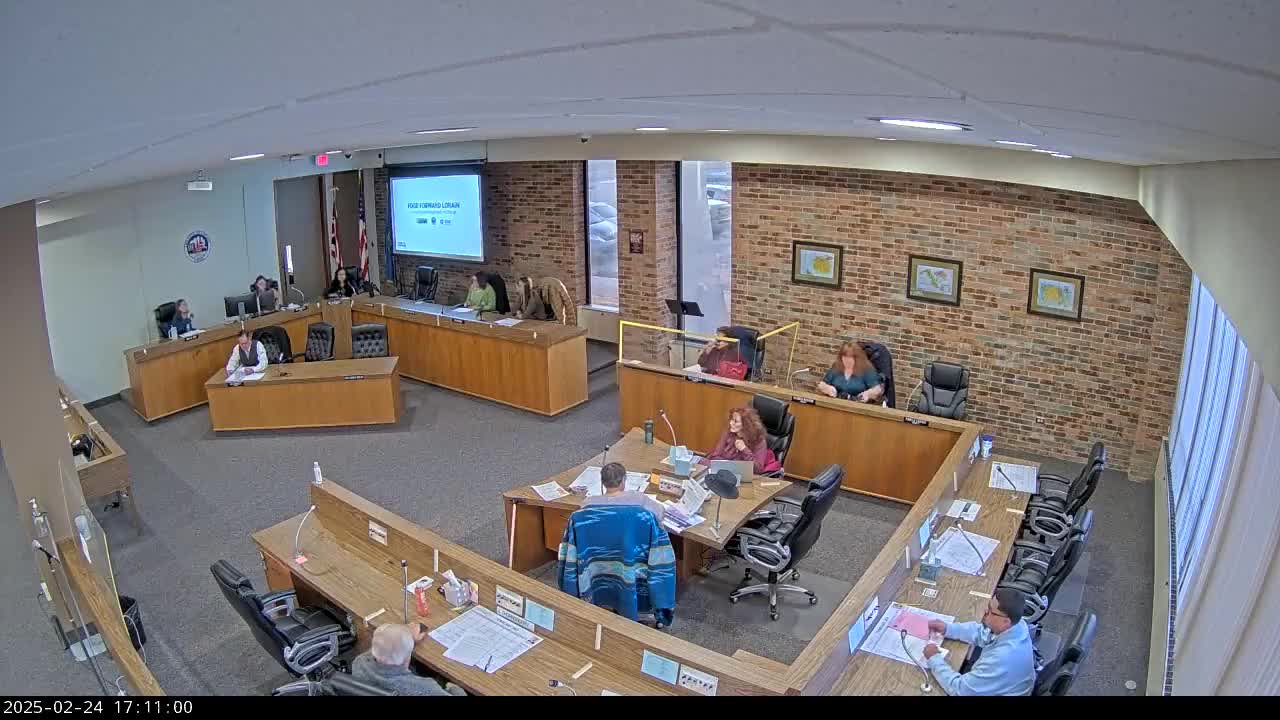
Food for Lorain partners presented a USDA-funded urban agriculture planning project to the Lorain City Council Federal Programs Committee, describing consultant work, a draft budget and community concerns.
The presentation matters because it lays out a formal plan — backed by a USDA planning grant and city and nonprofit partners — to make urban agriculture part of Lorain’s local food system and economic-development strategy, while raising questions about zoning, property maintenance rules and long-term management of community plots.
Hannah Crowley, program manager of community and economic development for the City of Lorain, told the committee the Food for Lorain initiative is a "food systems approach to change," and said the city joined the partnership as a co‑lead after data and stakeholder outreach during 2019–2022 identified three focus areas: urban farm and retail expansion, health‑care partnerships (food‑as‑medicine), and technology and transportation networks. Crowley described the project timeline and the role of two consultants: TSW Inc., hired for zoning and policy assessment ($62,500), and an urban‑agriculture consultant contracted for site and market analysis (about $80,000). The partners include Second Harvest Food Bank of North Central Ohio and Lorain County Public Health.
The plan is funded by a USDA Urban Agriculture planning award Crowley said was "just over $200,000" and will produce a plan and playbook combining consultant reports, a Lorain food‑system assessment and public outreach. Crowley said the final deliverable will include zoning recommendations that must go before the Planning Commission and then council for approval.
Lorain County Public Health population‑health strategist Catherine Maverick summarized public‑health aims, saying the partnership is meant to "make the healthy choice easier" by increasing access and coordination. Julie Chase Marfield, president and CEO of Second Harvest Food Bank of North Central Ohio, described how Second Harvest already buys produce from local urban farms and distributes it through SNAP‑eligible channels and partner agencies.
Council members and residents raised recurring concerns during a lengthy Q&A: whether the effort is limited to commercial controlled‑environment or greenhouse operations or would include backyard/front‑yard gardens; who would maintain community plots; water and fertilizer runoff; soil contamination on vacant lots; and the possibility that initial small projects could expand into livestock or other uses the public does not want. Councilwoman Smazowski asked, "would this include for‑profit enterprises?" and several council members and public speakers urged clarity on whether residential yards would be affected.
Speakers suggested implementation approaches. Several council members and residents urged that the city focus on parkland or larger vacant sites rather than residential parcels, and to partner with nonprofits and schools for workforce and food‑literacy programming. Council and public speakers repeatedly recommended pilot projects tied to training, youth engagement and collaboration with existing organizations; Councilman Dan Arredondo and others emphasized controlled‑environment agriculture (greenhouses/vertical farms) as a way to scale production and local jobs. As Arredondo said in public comment, "If you build it, they will come." Crowley and Marred repeated that community gardens are valued but distinct from the larger commercial and controlled‑environment models the consultants will evaluate.
Presenters flagged two specific code and policy obstacles: the city’s property maintenance rules (they cited an ordinance provision that limits weeds to 8 inches) and gaps in the zoning code that do not clearly accommodate many urban‑ag practices. Crowley said consultants will recommend zoning code changes and property‑maintenance clarifications; those changes will require Planning Commission review and council action.
The project team also described community‑level implementation risks: volunteer burnout at community gardens, theft and scavenging, and potential soil contamination on vacant lots where former structures or industrial uses existed. Crowley said the urban‑ag consultant will conduct site assessments, market analyses and tax‑status reviews to identify suitable parcels and to evaluate whether land can be used safely for food production.
Public commenters and council members urged active outreach and partnership: several speakers recommended working with existing nonprofits (including Solidarity Urban Farms and El Centro), the public schools and vocational programs, and the Lorain library and local colleges to provide gardening and culinary education. Council members pressed staff to keep council and residents informed as consultant recommendations materialize.
The presentation did not include any formal council action. Next steps outlined by staff: continued stakeholder engagement, consultant site assessments, preparation of zoning and property‑maintenance recommendations by TSW Inc., and eventual Planning Commission and council review of any code changes. Staff set a public engagement plan through the consultants; no final zoning changes or ordinances were presented or voted on at the committee meeting.
The discussion combined enthusiasm for local food access and economic opportunities with repeated requests for clear limits on residential impacts, explicit maintenance plans, and soil and water safety reviews.