Get Full Government Meeting Transcripts, Videos, & Alerts Forever!
Get email alerts on the Public Safety topic
No spam. Unsubscribe anytime.
Council committee holds hearing on declaring Mass and Cass a public-health, public-safety emergency
Summary
The Boston City Council committee heard testimony from elected officials, health and safety agencies, business owners and residents on a resolution sponsored by Councilor Ed Flynn to declare Mass and Cass and nearby neighborhoods a public-health and public-safety emergency and humanitarian crisis. No vote was taken; the item remains in committee.
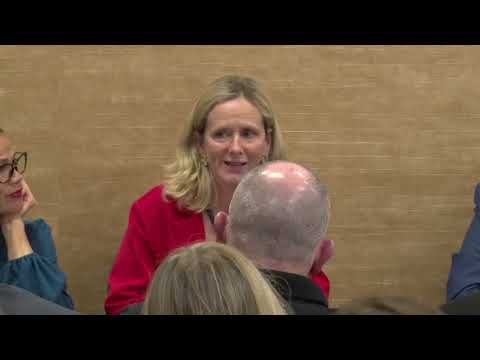
An evening hearing of the Boston City Council Committee on Public Health, Homelessness, and Recovery examined a resolution to declare Mass and Cass and nearby neighborhoods a public-health and public-safety emergency and humanitarian crisis.
Committee Chair John Fitzgerald, District 3 city councilor and chair of the committee, opened the session by saying the hearing would “level set” the public record and hear from administration officials and residents. The measure — docket 1457, sponsored by Councilor Ed Flynn — drew testimony from city and state officials, public-safety agencies, neighborhood business owners and dozens of residents.
The hearing focused on two competing lines of argument heard throughout the night: (1) residents and business owners described daily exposure to open drug use, discarded syringes, human feces, violent incidents and property crime; and (2) city and state health and outreach officials described ongoing harm-reduction and treatment efforts while warning that a formal public-health emergency declaration would not by itself unlock additional sustained funding.
Boston Public Health Commission (BPHC) Commissioner Dr. Bisola Ojukutu told the committee the commission had expanded treatment navigation, increased needle pickup and placed substance-use navigators in community health centers. “We have made 1,185 referrals to substance use treatment and 14,500 syringes distributed last week,” she said, adding that the commission’s monthly average syringe distribution in 2025 is about 81,112 (a 22 percent decrease from 2024) and that licensed detox beds in the city total 63. She cautioned that under Massachusetts law a formal public-health emergency “does not unlock any additional public authority for resources” and would suspend public processes if invoked.
Kelly Young, director of the mayor’s Coordinated Response Team (CRT), said her unit has connected hundreds of people to treatment this year and that the team has joined a new weekly “hub table” with providers and state partners to prioritize individuals at highest risk. “From March 1 to Sept. 1 the coordinated response team has connected an average of 55 individuals a week in the South End and Roxbury to acute treatment and residential services,” Young said.
Boston Police Department officials described stepped-up enforcement and outreach. Deputy Superintendent Dan Humphreys said the department has increased directed patrols and year-to-date arrests in the South End are “up 83 percent” and that the department has doubled the size of its street-outreach unit. Ryan Walsh, director of the Boston Regional Intelligence Center, cited an 11 percent increase in quality-of-life calls in the impacted area this year and said the department recorded 1,057 arrests in the area so far in 2025, including 467 drug-related arrests (an 85 percent increase over 2024 in his dataset).
State and elected officials also testified in favor of more aggressive action. Senator Nick Collins outlined legal tools including the sanitary code and the authority of boards of health, and said an emergency declaration would allow municipal leaders to reassign staff more quickly. He also pointed to state funding streams and said the Commonwealth could respond to a dramatic emergency request.
Several treatment and commitment options were described. Jeff Sweetman and Melissa Hughes of the Stony Brook Stabilization and Treatment Center (Hampden County) described Section 35 civil-commitment procedures under Massachusetts General Laws Chapter 123, Section 35 and said their facility is licensed for 152 beds and accepts individuals statewide; Hughes said roughly 50 percent of Stony Brook clients report homelessness upon admission and that after treatment only about 7 percent discharge to a shelter.
Residents and business owners gave extended testimony about daily impacts. Nivia Pina, owner of Dona Habana restaurant near the corridor, said her business has lost customers and taken personal losses: “We put $5,000 out of our pocket just to pay payroll. I have no more strength to fight,” she said. Several residents described needles and human waste on sidewalks, break-ins and what they said was increased violent behavior. Diane Wilkerson told the committee she has observed overdoses and a coroner’s response while in the neighborhood and said the effects extend beyond the South End to other neighborhoods where people disperse.
Committee discussion covered a range of proposed responses: more police patrols and directed enforcement, expansion of the CRT and outreach teams, stronger judicial pathways for diversion and civil commitment, and convening a state–local effort to site and fund a “recovery campus” or continuum-of-care facility. Several councilors and community leaders said they want a regional approach because many people who use drugs in the corridor are from other municipalities.
Sponsor Councilor Ed Flynn said he filed the resolution to send a clear message and to prompt urgent action, but no vote was taken at the hearing. Committee Chair Fitzgerald and others said the committee will hold additional hearings to pursue solutions and to press state and federal partners for resources.
What happened next: the committee heard panel testimony and many public comments and did not vote on the docket. Councilors said they will continue the process with follow-up hearings and with the working group that includes city, state and neighborhood representatives.
Why it matters: the hearing brought into public view persistent quality-of-life problems around Mass and Cass, competing policy approaches (harm reduction vs. recovery-first with stronger enforcement), and disagreements over what a local emergency declaration would accomplish. City officials repeatedly said urgent, coordinated investments are needed across public health, housing, judicial and policing systems to move people into sustained recovery and to reduce street congregations.
The committee adjourned after several hours of testimony; the resolution remains in committee and councilors indicated more hearings and targeted requests to the administration and the state are planned.