Get Full Government Meeting Transcripts, Videos, & Alerts Forever!
Get email alerts on the Budget 2026 Assumptions topic
No spam. Unsubscribe anytime.
City manager outlines preliminary 2026 budget assumptions; ARPA wind-down and police reconciliation are key drivers
Summary
At the Sept. 7 meeting the city manager presented preliminary assumptions for the 2026 budget: final ARPA spending year, full-year admissions tax revenue, anticipated PERS employer-rate decrease, police reconciliation refunds for unfilled officers, and capital-project forecasts.
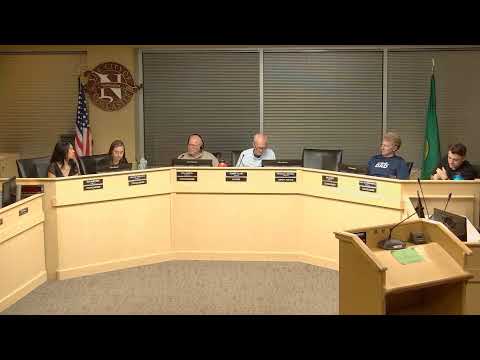
The Newcastle City Manager presented preliminary assumptions for the 2026 budget at the Sept. 7 council meeting and highlighted several major drivers the council should expect as staff prepares the preliminary budget later this month.
Key points: The city expects to present a balanced general-fund forecast for 2026 with a modest surplus or shortfall in the $80,000–$90,000 range; federal ARPA funds must be spent by Dec. 31, 2026, and staff plans a final transfer from reserves; 2026 will be the first full year of the city’s admissions tax revenue; and the city anticipates reconciliation payments from King County for police staffing shortfalls.
Why it matters: Those items materially affect the general fund and multi-year forecasts. ARPA (American Rescue Plan Act) carryover, changes to PERS employer rates, and payments tied to the contract policing reconciliation will change operating balances over the next several budget years.
Details from the presentation: The city manager told council that 2026 will be the final year city staff can obligate ARPA funds and that the city will transfer ARPA money from the cumulative reserve fund into the general fund for one-time uses. The presentation noted that 2026 is the first full year when the admissions tax will flow for all four quarters; in 2025 the city will receive only three quarters of that tax because of quarterly remittance timing.
Police staffing and reconciliation: The manager described the city’s contract arrangement with King County for policing: Newcastle contracts for 12 officers but has had only 10 assigned so far in the current year. Under the contract, the county returns funds for officers not provided (a process staff calls reconciliation), and the city will budget those reconciliation amounts for 2026. The manager said contract cities are typically staffed at roughly 80% of contracted levels currently and that as the sheriff’s office hires, that percentage should rise.
Other revenue and expenditure notes: The city will budget a 1% allowed property-tax increase plus any revenue tied to new construction (staff said they will conservatively estimate the new-construction increment until mid-October building valuation updates). Sales-tax collections were characterized as “coming in strong.” The manager described keeping interfund service charges conservative because of year-to-year project timing and reported the city’s separately managed investment accounts and a policy change that directs a portion of investment interest to the general fund.
On expenditures, staff proposed a small increase in full-time equivalents (0.2 FTE) by converting a part-time events coordinator to full time, budgeted an 8% increase in health benefits per AWC guidance, and flagged an 11% contract increase for fire services (about $337,000) and a 6.5% police contract increase (about $200,000). The manager said the June–June CPI-U (2.7%) will guide any cost-of-living adjustments to the salary schedule.
Capital and rates: REET (real estate excise tax) revenue was lowered in long-range plans from prior assumptions; staff proposed using about $2.15 million of REET for the Transportation Capital Fund in 2026 and $85,000 for parks capital in the same year. The city manager said the council must consider whether to continue a previously recommended 3% annual rate increase for the swim fund through 2029; staff will bring that item forward during the budget process if the council wishes to continue the increases.
Questions from council and clarifications: Council members asked about the timing of the swim-fund rate decision, the analysis supporting a proposed skid-steer equipment purchase versus rental, and how the police-reconciliation process works in practice. The city manager said the swim-fund rate item can come at any time but his plan was to place it after initial budget discussions; he said fleet replacements and the skid-steer purchase reflect long-range equipment-replacement planning and a cost-benefit analysis that found purchasing cheaper than continual rentals. On the police topic, the manager reiterated that contract cities are being staffed at roughly 80% and that reconciliation appears as a negative expenditure (a refund) in the year after officers were not provided; the multi-year forecast does not assume permanent staffing shortfalls.
What was not decided: The council did not adopt the preliminary budget at the meeting. Council members asked staff to post the preliminary budget at month-end and indicated they will hold formal study sessions in October. Staff indicated a second budget-adjustment ordinance is planned for the Sept. 16 meeting.
Selected quote: “This will also be our first year, our first full year for the admissions tax,” the City Manager said in the presentation.