
Demographic study shows modest enrollment shifts; district has building capacity for current projections
Get AI-powered insights, summaries, and transcripts
Subscribe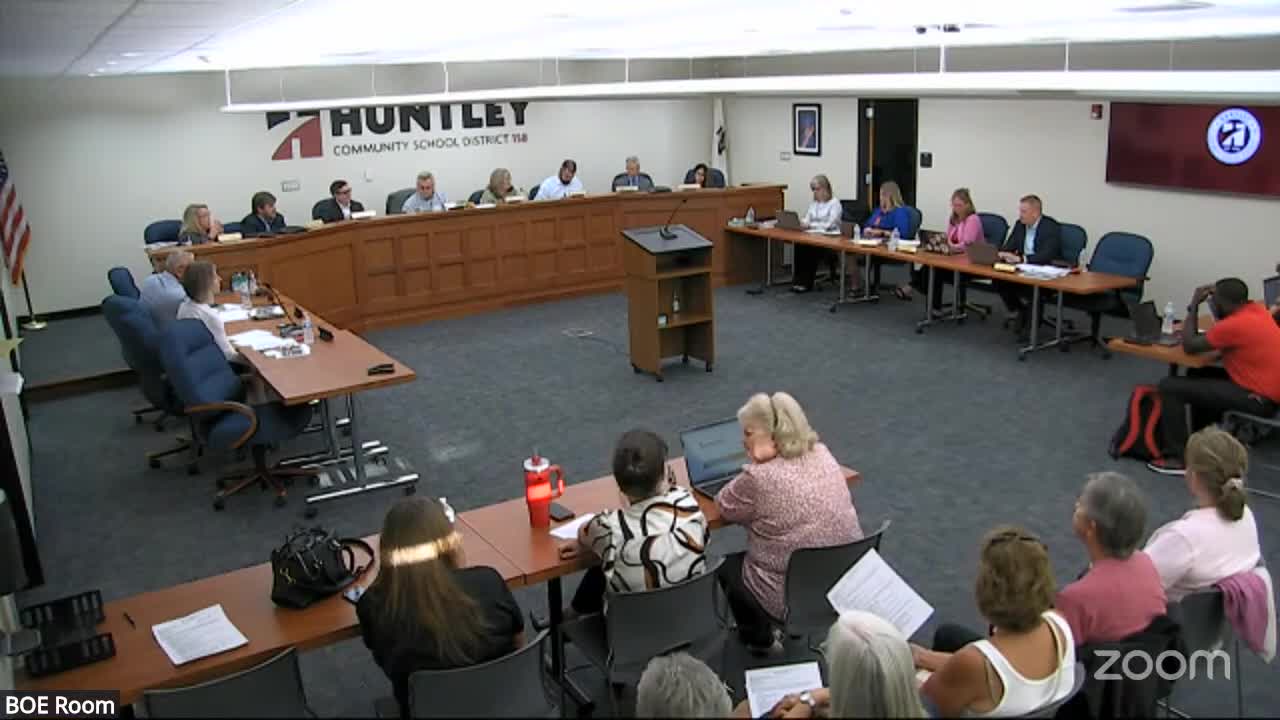
Summary
District consultants presented a 10-year enrollment projection (three scenarios). Trustees and administration reviewed capacity analyses and architects’ facility study and concluded current buildings provide adequate space under midrange projections; class-size and staffing implications will be discussed after six‑day enrollment.
District 158 staff and an outside consultant presented a 10‑year demographic and enrollment study at the Aug. 7 Committee of the Whole meeting, showing three projection series: one with moderate decline (Series A), a midrange scenario (Series B) and an aggressive growth scenario (Series C). The board used Series B (midrange) for the meeting’s planning examples.
Why it matters: The projections inform staffing, classroom assignments and capital planning. Administration and the architects concluded that, under the midrange projection, existing buildings have room and there is no immediate need for a new high school.
What was presented: The consultant reviewed 25 years of enrollment history, noting a peak around the 2016–17 school year and a gradual decline since. The presentation attributed part of the decline to lower birth rates and changes in household composition. The district’s Series B forecast shows relatively stable totals in the near term and modest change over 10 years.
Facility review: Architects who walked every building reported that many rooms have been repurposed (for interventions, related services and programming) and that theoretical “flex” capacity exists if a rapid boom occurred. They cautioned that “theoretical capacity” is not the desired operating standard and would require temporary, uncomfortable measures (for example, shared carts for music or art). The architects’ capacity tables and utilization diagrams will be used to guide decisions on class configurations and future capital needs.
Class sizes and staffing: Trustees asked staff to provide a follow‑up report after the district’s six‑day enrollment count in September. Administration said staffing will be adjusted through attrition and targeted reassignments, and that retirement and hiring patterns will factor into how positions are filled or repurposed.
Quotes and attributions: Superintendent Zier (presenting the demographics) said, “We have seen a decline in enrollment over the past 10 years” and that the study will help “make some really purposeful and intentional decisions moving forward.” An architect summarized capacity findings: “We have space for what’s going on right now.”
Next steps: Staff will return with updated six‑day enrollment counts, class‑size reports by building and refined staffing proposals; trustees said they may review boundary adjustments or other operational responses if localized growth changes the projections.
Ending: The report will guide the fall budget and staffing cycle and is expected to be revisited as new enrollment data come in.