Get AI Briefings, Transcripts & Alerts on Local & National Government Meetings — Forever.
Boston council hearing spotlights expanding internships for students with disabilities in BPS
Loading...
Summary
Boston City Council Committee on Education Chair At-large Councilor Henry Santana convened a Sept. 11 hearing on docket 0551 to examine expanding internship opportunities for students with disabilities in Boston Public Schools, hearing testimony from BPS staff, the city’s youth employment office, the Boston Private Industry Council and parent advocates.
Boston City Council Committee on Education Chair At-large Councilor Henry Santana convened a Sept. 11 hearing on docket 0551 to examine “expanding internship opportunities for students with disabilities in Boston Public Schools,” bringing together Boston Public Schools (BPS) staff, the city’s youth employment office, and the Boston Private Industry Council to review data and surface barriers to inclusion. The panel and councilors heard program data, discussed transportation and accommodation needs, and stressed employer supports and external partners as ways to increase placements.
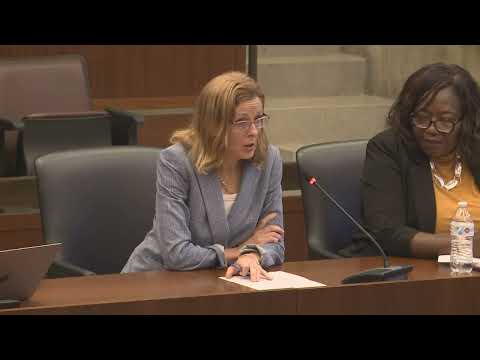
The hearing assembled lead sponsor Councilor Aaron Murphy, BPS assistant superintendent Brett Dickens, Kate Seale, chief of specialized services for BPS, Rashad Cope of the city’s Worker Empowerment Cabinet, Katie Gao of the Office of Workforce and Policy Development, and Neil Sullivan, executive director of the Boston Private Industry Council (PIC). Parent and advocate Kelsey Brendel gave public testimony urging explicit planning for students with severe and medically fragile disabilities.
The discussion centered on evidence that while students with disabilities are participating in career-technical and city-managed placements, gaps remain in outreach, employer readiness and capacity, and back-end logistics such as transportation and individualized accommodations. BPS reported roughly 45,000 students across 125 schools, about 21 percent of whom receive special education services. In BPS career and technical education programs, 25 percent of enrollees are students with disabilities; in the class of 2024, 46 percent of CTE seniors completed a defined internship (100+ hours), and 44 percent of students with disabilities in CTE completed internships. The Office of Youth Employment and Opportunity (YEO) reported this past summer that 65 percent of its worksites said they could accommodate students with disabilities, 62.7 percent of job opportunities were described as accessible to youth with sensory, behavioral, emotional or physical needs, and 223 young people with individualized education programs (IEPs) ages 14–18 were placed in city-managed positions.
Neil Sullivan of the PIC described placement patterns across a range of employers and programs. Among the roughly 700 career-oriented placements the PIC tracked, 5.9 percent of students placed directly reported having an IEP; for about 400 sponsored community placements the IEP rate was 17.02 percent; indirect placements (retail, food service) had 10.7 percent with IEPs. Sullivan emphasized the need to disaggregate “students with disabilities” into practical accommodation categories and noted legal constraints around student privacy and hiring questions.
Councilors and panelists identified recurring obstacles and possible remedies: clearer, centralized public-facing resources for families about internship and transition options; targeted recruitment of employers and capacity-building supports (technical assistance, job coaching, staff training) for host sites; use of external specialist supports (for example, the Massachusetts Commission for the Blind was cited as a model for disability-specific support); expanded travel-training and transportation planning; and stronger links between school-based transition plans (the IEP transition page, required beginning at age 14) and employer placements.
BPS described a new “navigating employment and transition” program that will start with 60 students this school year, scale to 90 next year and target roughly 120 students by 2027–28, housed in Roxbury and designed to co-locate state and community supports and build employer partnerships. Panelists also highlighted existing partnerships such as the long-standing Scribe/DISC vocational program, the PIC’s SuccessLink and YouthWorks placements, and a growing collaboration with Wentworth Institute of Technology that provides year-round training and paid summer work for some students.
Parent Kelsey Brendel urged the city and BPS to plan explicitly for students with severe and medically fragile disabilities, describing practical barriers (feeding tubes, nonverbal students, unpredictable medical needs) and arguing that routine community venues (pharmacies, grocery stores, campus service areas) can be meaningful placement partners if city leaders and employers approach inclusion as a dignity issue. "These expanded internship opportunities for students with disabilities in BPS cannot be overstated in terms of what it will mean for them," Brendel told the committee.
No formal motions, votes, or ordinance actions were taken during the hearing. Councilors raised requests for follow-up information: lists of employer partners and community organizations that serve as capacity-building sponsors; a roster of higher-education programs (for example, Wentworth) that currently partner with BPS on training and certificates; and more granular data on jobs and worksites that self-identify as able to host students requiring accommodations. Councilors also asked the administration to make online resources more customer-facing so families can find transition and employment options without multiple clicks.
Councilors and panelists characterized the issue as both an access and a capacity challenge: ensuring nondiscrimination and access under existing programs while increasing employer readiness, funding models (city-managed placements vs. employer-paid internships), and the list of intermediary organizations that can supply job coaches and technical assistance. As Councilor Ed Flynn put it during questioning, “This is a civil rights issue as far as I’m concerned,” and Neil Sullivan added that “autism is an asset in the right employment setting,” underscoring the panel’s push toward employer education and intentional matching.
Next steps identified on the record included BPS and city youth-employment staff supplying requested partner lists and placement data to councilors, continuing outreach to the Disabilities Commission and state agencies for contracted supports, and implementing the new BPS transition program opening next week. The hearing record was left open for written comments to the committee email listed by Chair Santana; committee members signaled interest in follow-up briefings and a possible future hearing to review progress on the specific follow-up items.
The Boston City Council Committee on Education hearing on docket 0551 was adjourned with no formal vote taken.