Get Full Government Meeting Transcripts, Videos, & Alerts Forever!
Get email alerts on the Police Funding And Services topic
No spam. Unsubscribe anytime.
Central committee reviews sheriff's cost breakdown for Central substation as city weighs policing options
Summary
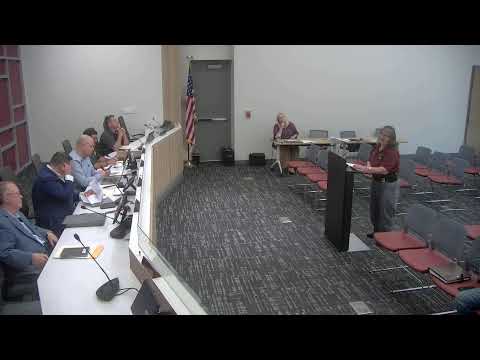
A City of Central committee heard a detailed budget breakdown from the East Baton Rouge Sheriff's Office for the Central substation, discussed who should pay for primary policing inside city limits and agreed to seek further talks between the mayor and the sheriff before the next committee meeting.
Captain Kevin Dimelon, East Baton Rouge Sheriff's Office, presented a packet of budget figures and operations data for the Central substation and told the City of Central committee that the sheriff's office budgeted $4,797,000 for the substation in 2024, covering salaries, benefits, operating costs and capital outlay.
The packet, presented at the committee meeting, broke the 2024 total into $2,323,000 for salaries and related benefits, about $355,000 for operating expenses (insurance, fuel, utilities) and roughly $2,119,000 for capital outlay (vehicle purchases and outfitting). Captain Dimelon said vehicle purchases account for roughly $50,000 per unit and that fleet replacement typically targets about one-quarter of the fleet per year.
Why this matters: the committee is preparing a recommendation for the full council on whether Central should continue with a hybrid arrangement with the East Baton Rouge Parish Sheriff's Office (EBRSO), expand the Central Police Department's role, or pursue a different structure. Those choices affect the city budget, expected millage needs and who answers crashes, traffic incidents and emergency calls inside the city limits.
Details from the presentation and committee discussion
- Scope and staffing: Captain Dimelon said uniform patrol personnel who staff substations totaled about 125 countywide and that Central is staffed at roughly 21% of that total while handling about 10% of the parish's criminal operations. He cautioned that the Central-specific budget line did not include detectives, communications, community policing or other parishwide functions that also serve parts of Central.
- Calls and traffic coverage: Using an apples-to-apples time span that matched Central Police Department (CPD) reporting, Captain Dimelon said EBRSO had 63 crash files in Central during the December 2024'May 2025 period and an additional 87 traffic-related file-number incidents, representing about 15% of crash reports and about 20% of traffic incidents compared with CPD'submitted numbers for the same period. He said an additional 312 CAD activity entries for traffic-related incidents in Central lacked file numbers and therefore were not included in those percentages.
- Extra-duty and visibility: Committee members and staff discussed the role of extra-duty deputies (paid details) who work for about $35'$40 per hour. Captain Dimelon confirmed those hours are drawn from the same patrol budget bucket and that some extra-duty time is used for highway safety or contract details that increase visible presence.
- Millage and revenue: The packet included parish millage receipts for Central. Captain Dimelon reported the sheriff collected $3,652,625.03 in property-tax revenue from the area inside Central (about 4.5% of the sheriff's parishwide millage receipts, which were reported as about $81,000,912.85). The packet itemized three millage components and their Central contributions as reported to the committee; the presenter cautioned that the figures came from current tax rolls and the sheriff's accounting breakdown.
- Contract and legal questions: The packet addressed several legal or procedural questions committee members had raised earlier, including whether the sheriff could sign contracts that extended beyond his term; the packet cited relevant law but did not reproduce specific statutory citations in the meeting materials.
Positions and next steps
Mayor (City of Central) told the committee he had discussed options with the sheriff and that the sheriff had offered a lower figure for continued hybrid services; the mayor said, "I thought the number he gave me was extremely generous," but declined to disclose the amount because he said negotiations remain private between the mayor and the sheriff.
Captain Dimelon and other EBRSO speakers repeatedly said there is no plan to abruptly withdraw policing from Central and that the sheriff's office would work with the city if Central chose to stand up more local policing. The sheriff's office representative said resources would be reallocated over time and that no immediate "drop-dead" cutoff date had been set.
Committee members suggested two immediate follow-ups: (1) the mayor and the sheriff should meet to attempt to 'sharpen the pencil' on potential fee or hybrid arrangements before the committee reconvenes; (2) the committee should either meet again in September or prepare recommendations for the full council within the committee's statutory timeline. One committee member asked the mayor to commit to a meeting with the sheriff before a September committee session; the mayor said he had already sent texts to the sheriff and would arrange discussions.
No formal vote or contract decision was taken at the meeting. The committee closed with a request that staff circulate the packet to council members who were absent and that members consider whether they wanted another committee meeting in September or preferred a negotiated offer for council consideration.
What the meeting did not decide
The committee did not approve any change to the city's policing arrangement, did not set a specific fee or millage to fund a local police department, and did not accept or reject any specific sheriff's office proposal on the record. Multiple speakers emphasized that a final decision about transitioning to a full-time city police department or preserving a hybrid model will rest with the city council.
Next publicly stated steps: staff and the mayor will arrange a meeting with the sheriff; the committee will consider reconvening in September and will prepare a recommendation for the full council if negotiations do not produce a timely, practicable option.