Get Full Government Meeting Transcripts, Videos, & Alerts Forever!
Get email alerts on the Land Use Development topic
No spam. Unsubscribe anytime.
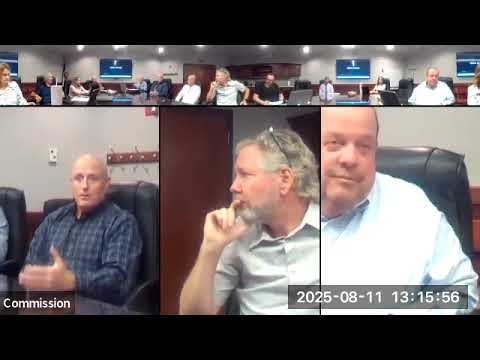
Weber County commissioners, developer discuss Westbridge rezone, but take no formal vote
Summary
County commissioners and developer representatives discussed the Westbridge rezone and master development agreement, focusing on shoreline setbacks, a proposed industrial byway trade, market-study attachment, senior housing approach and infrastructure sequencing; no final decision or vote was taken.
Weber County commissioners and developer representatives spent the work session on Monday discussing the proposed Westbridge rezone and master development agreement, focusing on shoreline setbacks, required bridges, housing product mix and how the county and developer will use market studies and future zoning changes to guide long-term outcomes.
The discussion matters because the Westbridge project is planned as a large, multi-decade community that would change land use and infrastructure needs in western Weber County and could establish long-running obligations through a master development agreement.
Commissioner Bullos opened the item by asking for direction on how to proceed after the item had been tabled. Developer representative Charlie (first name only in transcript) said the development team had met with the state water agency and provided a letter confirming collaboration on shoreline and wetlands mitigation and that the team expected continued coordination on engineering and FEMA-related mitigation. Charlie said the letter "was a 100% reflective of the conversation that we had, so we were very happy." The developer also described a negotiated trade: the project team sought a 100-foot minimum setback along the river rather than 300 feet in exchange for accommodating an industrial byway across portions of the Westbridge property.
Commissioner Harvey said he was satisfied with the planning commission outcome along the shoreline "as long as there's a genuine earnest attempt" with the state resource agencies. Harvey and Charlie discussed two required bridges; Harvey asked that construction sequencing explicitly obligate the developer to build a specified bridge first. Charlie acknowledged one item in the MDA needed to be changed to obligate that the "25 50 bridge will go in first." (The transcript used that phrasing; the MDA language should be reviewed for the exact bridge identifier.)
Commissioner Frower and others pressed the developer to provide evidence that the project will deliver homeownership opportunities, not mainly rental housing. Charlie said the project team had engaged a national firm for a market study (a 180-page report, per Charlie) and said the summary showed the overall plan would be "a for-sale community" outside the form-based city-center zone. Charlie said the market study "does a marvelous job" of breaking down product types and affordability and that the county zoning revisions were intended to enable a wide range of product types, including condos and small townhomes that could act as paths to ownership.
Commissioners raised whether "age-targeted" or "age-restricted" senior housing should be required in the MDA. Commissioners warned that deed-restricted or age-restricted requirements can depress buyer interest; several speakers favored "age-targeted" marketing rather than binding deed restrictions. Charlie said the developer is open to including language in the MDA that references "age-targeted" product types rather than deed restrictions and suggested that language about age targeting be captured in the MDA rather than left to later subdivision review.
Commissioners also debated whether the market study should be attached to the MDA. Several commissioners supported referencing the current market study as an informative attachment but opposed making the current study a binding, long-term requirement because market conditions change. Charlie and staff proposed that the MDA could require an updated market study if the developer later sought an amendment that would change the approved entitlements or product mix, saying "if in the future there needs to be some type of amendment ... it would require an updated market study to inform whatever the request is." The county attorney/staff also noted that the way the draft MDA is written allows future county ordinances to apply to the project in limited ways and that the agreement does not lock the county into permanently precluding future code changes.
On infrastructure, multiple commissioners said that adequate public infrastructure must be in place for the project to succeed. One commissioner summarized: "If you have the proper infrastructure, then the market will tell you what product to put there." Commissioners urged explicit MDA language on sequencing (the bridge obligation was the specific item noted) and more precise drafting so future commissions would have clear guidance.
No vote or formal action on the Westbridge rezone or the draft MDA was recorded during the work session. Commissioners asked staff and the developer to circulate the market-study summary and to revise the MDA language to capture agreed points (for example, sequencing of the specified bridge and language referencing age-targeted housing rather than deed restrictions). Several commissioners said restrictive, binding requirements at this stage would likely require the MDA to return to a future commission.
The discussion closed with staff and developer representatives agreeing to return with revised MDA language and supporting materials. That subsequent meeting or public hearing will be the point for formal action if the commission places the item on a decision agenda.
(Ending) Commissioners emphasized they want the MDA to be clear on obligations such as bridge sequencing and infrastructure requirements, and they asked staff to circulate the market-study summary and to bring revised agreement language back to the commission for consideration.