Get Full Government Meeting Transcripts, Videos, & Alerts Forever!
New London faces multimillion-dollar wastewater upgrades to meet 2029 phosphorus limits
Summary
City staff and consultant Donahue & Associates presented three upgrade paths to meet new Wisconsin DNR phosphorus limits, discussed funding options and a compliance timeline that reaches to mid‑2029. Staff recommended beginning preliminary design this fall and applying to the Clean Water Fund.
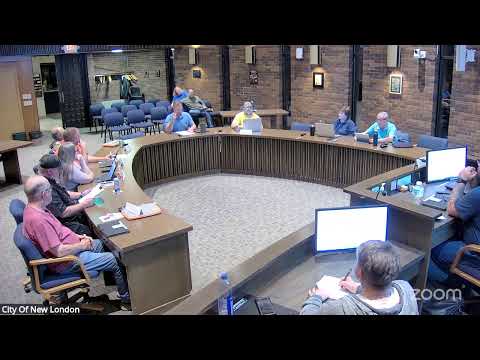
Mike Gerbets, a wastewater engineer with Donahue & Associates, told the Board of Public Works on Sept. 3 that the city must upgrade its treatment plant to meet a new Wisconsin Department of Natural Resources phosphorus limit and a compliance schedule in the city’s permit.
The DNR allocation from the Upper Fox–Wolf River Basin total maximum daily load sets the city’s six‑month average at 3.3 pounds per day of phosphorus (about 0.25 milligrams per liter), the consultant said; that limit takes effect July 1, 2029. “You are on the clock,” Gerbets said. “You have a compliance schedule in your permit, and it takes an awful lot of time to design and especially build things today.”
Why it matters: the plant is old and complex, officials said. Staff reported mechanical equipment that has reached or exceeded expected service life and operational limits that make chemical‑only fixes unlikely to achieve the new 0.25 mg/L phosphorus requirement. The consultant presented three primary alternatives: add effluent filtration to the existing facility (lower capital cost but more complex hydraulics and continued reliance on older processes); build a new biological nutrient‑removal activated‑sludge liquid train on the existing site with land‑applied Class B biosolids; or build the same activated‑sludge train plus an on‑site dryer that produces a Class A (dried) biosolids product.
On sludge and biosolids: Ben (staff member), who…
Already have an account? Log in
Subscribe to keep reading
Unlock the rest of this article — and every article on Citizen Portal.
- Unlimited articles
- AI-powered breakdowns of topics, speakers, decisions, and budgets
- Instant alerts when your location has a new meeting
- Follow topics and more locations
- 1,000 AI Insights / month, plus AI Chat