Get Full Government Meeting Transcripts, Videos, & Alerts Forever!
Get email alerts on the State Housing Programs topic
No spam. Unsubscribe anytime.
MSHDA outlines statewide housing funding programs, new housing TIF and accelerator pilot
Summary
Michigan State Housing Development Authority chief housing investment officer Tony Lenti described recent program growth, Housing TIF uptake and new pilot financing intended to expand production and bridge construction financing gaps.
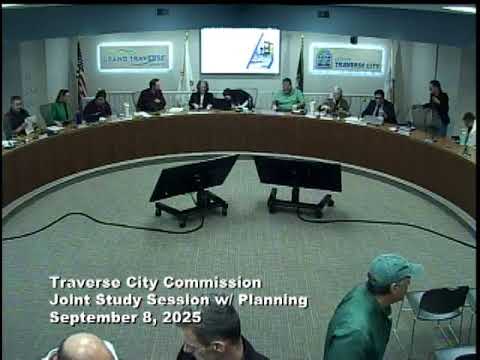
Tony Lenti, chief housing investment officer at the Michigan State Housing Development Authority (MSHDA), told the joint Traverse City study session that 2024 was MSHDA’s most productive funding year and summarized a set of programs and pilot financing tools the state is offering to expand housing supply. “In 2024, we had a great year for investment in housing,” Lenti said, and described a portfolio that includes tax‑credit financing, a $110 million “missing middle” program, the MyNeighborhood small‑scale investment program, a housing tax‑increment financing (TIF) program and a new accelerator (mezzanine) lending pilot to reduce construction financing costs.
Lenti described the Housing TIF program — adopted at the state level and administered by MSHDA — as an emerging tool that has yielded multiple approved plans and a $20 million loan fund to help projects that otherwise are not financially viable. He said the TIF can subsidize rental or for‑sale housing up to 120% of area median income and that MSHDA’s approach includes technical assistance and a pilot mezzanine financing product designed to replace higher‑cost construction debt with longer‑term “patient” financing. Lenti said MSHDA has nearly 31,000 housing choice vouchers in use statewide and that the agency’s 2024 activity included “about $2.2 billion” in investment and several thousand housing units, and he encouraged local governments to align local goals with regionally targeted MSHDA programs.
Lenti emphasized the state plan’s production target (an initial five‑year goal of 75,000 units, increased to 115,000 by executive direction) and said regions respond differently to funding opportunities — some have exhausted local allocations while others still have funds available. He highlighted employer‑assisted housing grants (a $10 million pilot) and the MyNeighborhood common application for smaller projects and local governments. He advocated early alignment between local plans and MSHDA funding applications and offered technical assistance resources.
Commissioners asked about program details, layering of incentives and whether MSHDA can support local projects; Lenti said technical assistance and coordination are available and recommended that local officials reach out to MSHDA staff. No formal city action was taken; staff and commissioners discussed next steps to compile program comparisons and possible local incentives to attract funding.