Get Full Government Meeting Transcripts, Videos, & Alerts Forever!
Get email alerts on the Public Policy Consumption topic
No spam. Unsubscribe anytime.
City enacts amendment to public‑consumption code after debate on enforcement and signage
Summary
The commission voted to adopt an amendment to Chapter 670, Section 670.04 (Consumption in Public). Commissioners discussed enforcement discretion, requirement for signage, and limits to right‑of‑way (not parks).
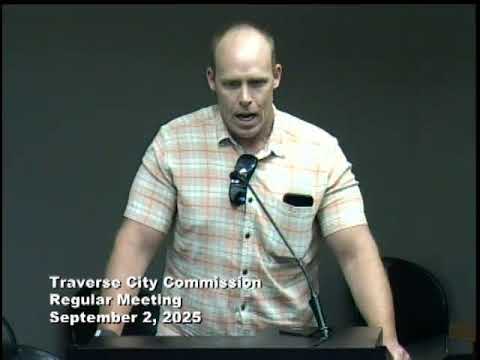
The City Commission on Sept. 2 enacted an amendment to the Traverse City Code of Ordinances, Chapter 670, Section 670.04 (Consumption in Public), with an effective date set eight days after publication. The motion carried after a brief discussion about how the rule will be enforced and where it applies. Context and why it matters: The change affects public consumption rules on sidewalks and streets (public rights‑of‑way) that city staff and attorneys clarified do not automatically apply to city parks, which are governed by different ordinances and administrative orders. Commissioners asked how enforcement would be applied to avoid selective or disparate treatment of people in different circumstances. What commissioners heard: Police Chief (present at meeting) and staff said enforcement is generally discretionary and guided by officer judgment and department directives rather than a “100% enforcement” mandate. The chief said officers regularly give warnings and that the objective is often compliance—such as asking people to pour out beverages—rather than automatic citation or arrest. Commissioners also said the city will require visible signage where consumption is prohibited; the city manager said tickets issued where required signage was missing could be dismissed. Process and next steps: The ordinance amendment was adopted by commission vote. Staff will coordinate signage placement for parks and rights‑of‑way and will meet with police staff on enforcement guidance; commissioners requested follow‑up to ensure consistent application and public information about where consumption is allowed or prohibited. Ending: The commission adopted the ordinance amendment and asked staff to return with any necessary clarifications and to continue public outreach about permitted locations and enforcement expectations.