Get Full Government Meeting Transcripts, Videos, & Alerts Forever!
Get email alerts on the Neighborhood Communications topic
No spam. Unsubscribe anytime.
Traverse City staff propose presidents council to streamline neighborhood association communication
Summary
City staff presented a proposal at a June 9 study session to form a "presidents council" of neighborhood-association leaders to consolidate information-sharing with residents; commissioners and residents raised concerns about representation, meeting frequency, and compliance with the Open Meetings Act.
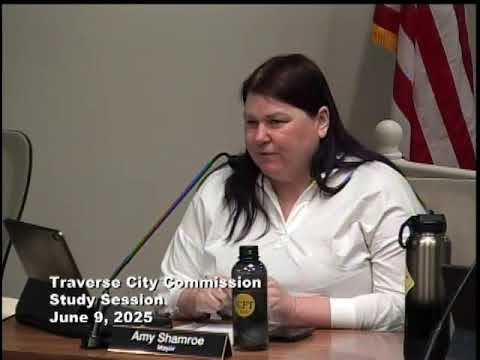
At a City Commission study session Monday, city staff proposed creating a presidents council made up of neighborhood-association presidents to consolidate and streamline communication between city staff and the city’s neighborhood groups.
Assistant City Manager Deb Allen said the council would unify information sent to associations and ease staff time spent repeating the same updates across many separate meetings. “The president's council was an idea to unify communication that goes out to all the neighborhood associations, to be able to streamline that,” Allen said.
The idea would not replace individual associations, Allen said, but would provide a regular forum — proposed quarterly in the draft language — where association presidents could set the agenda and city experts could present high‑level updates about projects, strategic planning, bylaws resources and other items.
Why it matters: Traverse City has about a dozen formally recognized neighborhood associations and more proposed or pending groups; staff attendance at numerous monthly neighborhood meetings consumes significant staff time. Commissioners said a centralized forum could save staff hours while preserving the ability for individual associations to request staff to attend their separate meetings for in‑depth discussion.
Commissioners and neighborhood leaders pressed staff on design details. Commissioner Heather pointed to a drafting error in the resolution text: “the motion calls for quarterly meetings, but the text says tri quarterly, so there's an error in there,” she said. Several speakers urged staff to make sure the council would not become a substitute for direct resident involvement; Fred Bimber of Slabtown said a presidents-only meeting risks creating “a bubble more distant from city residents.” He described his association’s effort to require membership votes before an officer can claim to speak for the neighborhood.
Residents who addressed the commission said the council could be useful if it stays focused on information sharing and two‑way agenda setting. Oak Park Neighborhood Association President Vicky (last name not specified) said she supports the proposal and that presidents generally would not make decisions without consulting their associations: “I don't know of a sitting Neighborhood Association president who would make any decision, without the regard of their association,” she said. Other neighborhood leaders said a pilot or test run would help reveal whether the forum fosters collaboration or sidelines resident voices.
Staff said two email notices about the concept have been sent to associations; Allen said she has personally attended multiple neighborhood meetings this year and would continue to attend individual association meetings when invited. She noted that 12 associations are currently represented across the city, that Oakwood Terrace has proposed merging with Triangle, and that formal adoption of Fernwood and an Oakwood/Triangle association would increase the total to 13 associations once formalities are complete.
Questions raised included whether the presidents council would allow public comment and how the Open Meetings Act would apply if multiple commissioners attended. Allen said the council could be virtual or in person and that public participation would not be precluded; she warned that commissioners’ attendance might create open‑meeting obligations under the Open Meetings Act.
Next steps: Commissioners asked staff to solicit more formal feedback from each neighborhood association — for example, placing the proposal on upcoming association agendas or convening a leadership meeting — and to run a trial session to test participation and agenda development. No vote or formal action was taken at the study session; staff will return with further outreach results and revised language before any resolution is considered.
As the discussion concluded, commissioners and several neighborhood representatives urged attention to inclusivity in the council’s design and to ensuring that the forum remains an information hub rather than a substitute for association votes or direct resident engagement.