
City approves up to $102,256 to keep Jubilee House day shelter open through year end
Get AI-powered insights, summaries, and transcripts
Subscribe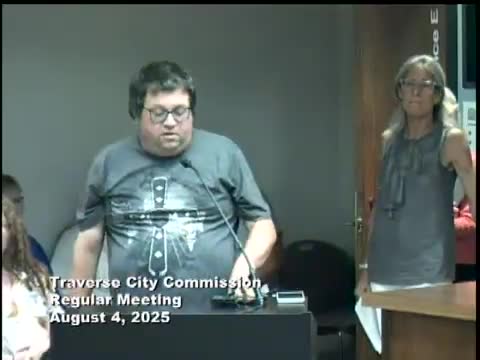
Summary
The Traverse City Commission authorized a one-time payment not to exceed $102,256 from the general fund balance to Grace Episcopal Church to support Jubilee House day-shelter operations through Dec. 2025; commissioners asked for monitoring, reporting and a longer-term plan from partners.
Traverse City commissioners on Aug. 4 approved a one-time agreement authorizing the mayor and interim city clerk to execute a services contract with Grace Episcopal Church for up to $102,256 to keep Jubilee House operating as a daytime shelter through Dec. 31, 2025. The funds will come from the city’s general fund balance with a budget adjustment authorized by the commission.
City leaders said the payment is intended as a temporary measure while partners pursue grants and plan longer-term shelter solutions. “We hope that this is a runway that gives us the leeway that we need to figure out what this ministry is going to look like and what Traverse City's care of the homeless is going to look like in the years to come,” Derek Quinn, coordinator for outreach efforts at Grace Episcopal Church, told commissioners.
Why it matters: Jubilee House provides daytime services — showers, laundry, computer access, basic casework and a safe indoor place — during hours when overnight shelters are closed. Commissioners, staff and many public speakers said discontinuing Jubilee’s operations now would shift needs into neighborhoods and businesses and reduce access to immediate services for people experiencing homelessness.
What the commission approved: The motion authorized a contract “not to exceed $102,256” for day-shelter services at Jubilee House, with funds from the general fund balance and a city budget adjustment. The contract includes standard approvals as to substance by the interim city manager and as to form by the city attorney. Staff said if outside grant funding or other donations arrive before city disbursement, the city’s payment would be reduced accordingly.
Deliberations and conditions: Commissioners pressed for accountability and for clarity on how the expenditure fits into a broader homelessness response. Commissioner Jackie Anderson asked for more frequent reporting and suggested directing city contributions toward services and supplies rather than employee compensation; Derek Quinn and Jubilee House staff said they are willing to provide data and to work with the commission on reporting frequency. Commissioner Tim Treadwell said the $102,256 is a temporary measure and urged a broader public process so the community understands how the funding fits into long-term solutions.
Public comment: More than a dozen residents, volunteers and people with lived experience spoke. Supporters described Jubilee House as a lifeline: “When I was hungry, they gave me food,” said Audrey Ouellette, who identified herself as currently homeless. Volunteers and staff said the house supplies hygiene aid, clothing, help with job applications and short-term casework; volunteer Jim Cleland described the site as a place where trust and small interventions can change outcomes. Some nearby residents raised quality‑of‑life concerns about noise, smoking and loitering on adjacent properties and urged better outdoor supervision and coordination with police when needed.
Next steps and oversight: Commissioners asked staff to track any outside funding that reduces the city’s obligation, and several members requested regular briefings on usage metrics (unique clients served, services provided) and financial reports. Several commissioners described the approval as a one-time bridge while the task force and community partners pursue a collaborative, long‑term 24/7 shelter and wraparound services.
Ending: The motion passed after robust public comment and extended discussion. Commissioners emphasized that the funding is temporary and said they expect continued work with county and local partners, task force members and funders to create a more durable regional shelter strategy.