Get Full Government Meeting Transcripts, Videos, & Alerts Forever!
Get email alerts on the Transportation Safety topic
No spam. Unsubscribe anytime.
Traverse City staff seek $1M Safe Streets planning grant; $200,000 local match on table
Summary
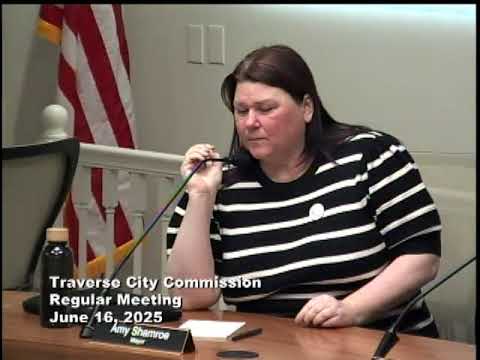
City staff asked the commission to authorize a resolution for a Safe Streets and Roads for All planning grant application that would make the city eligible for future implementation grants; commissioners pressed staff on costs, scope and the limits of local control over state-owned roads.
Traverse City officials discussed applying for a federal Safe Streets and Roads for All planning and demonstration grant that would fund a community safety action plan and make the city eligible for later implementation grants.
The request before the commission was to approve a resolution stating the city’s intent to participate in the planning process and to authorize up to $200,000 as a 20% local match should the action plan grant (up to $1 million) be awarded. The city engineer told commissioners the action-plan grant is a two‑phase program: first the safety action plan; later a separate competitive implementation grant, which may be as large as $25 million.
Why it matters: the action plan is a prerequisite for larger federal funding and could enable major projects in Traverse City such as work discussed for Seventh and Fourteenth streets. Commissioners said they want to avoid paying for duplicative planning while acknowledging that without an approved action plan the city is ineligible for implementation dollars.
City Engineer Anne Pagano said the grant timeline is tight, the grant program is federal, and the city does not yet have consultant proposals for preparing the action plan. "The grant is for up to a million dollars, so there's no way it would be more than that, so a 20 percent match would be 200,000," Pagano said. She added the action-plan work would occur over at least a year and the commission would see any contract before work begins.
Commissioner Warner and others pressed staff on whether the action plan is materially different from the city’s existing Mobility Action Plan and Complete Streets work. Pagano replied the safety action plan focuses on crash data and engineering countermeasures — intersections, signals and measures intended to reduce crash severity — and is more targeted toward vehicle-safety engineering than the broader mobility plan. "It looks at crash data like we talked about, and it looks at intersection improvements, signal improvements," she said.
Several commissioners also noted constraints on municipal authority where state highways are concerned. Commissioner Warner and others observed that many crashes occur on state-owned routes through the city and that any recommended changes on those roads would require cooperation from MDOT. Pagano acknowledged that the plan must include the city’s entire roadway network for analysis and that outcomes on MDOT-owned corridors would require interagency coordination.
Commissioner Shaw said the city often faces tight federal-grant timelines and explained staff chose a consultant with experience (Wade Trim) to prepare the application rather than duplicating outside services. Pagano confirmed the city had identified the June 26 application window and that missing the application could reduce future funding opportunities.
The commission did not vote to authorize the local-match expenditure at this meeting; item 9 had been pulled from the consent calendar for discussion and remained under consideration. Commissioners asked for more detail about consultant costs, a clearer estimate of likely match obligations, and how the action plan would align with existing plans before returning to the item for formal approval.
What’s next: staff said they will return with consultant proposals and a clearer budget estimate for the planning match and scope before the commission is asked to approve any contract or obligate local funds.