Get Full Government Meeting Transcripts, Videos, & Alerts Forever!
Get email alerts on the Placemaking topic
No spam. Unsubscribe anytime.
East Side social district returns with adjustments; commissioners ask for more data before expansion
Summary
The city’s East Side placemaking pilot — a social district around Common Ground and adjacent businesses — will continue in 2025 with new furniture, planters and programming; commissioners directed staff to collect more data and return with recommendations before any map expansion.
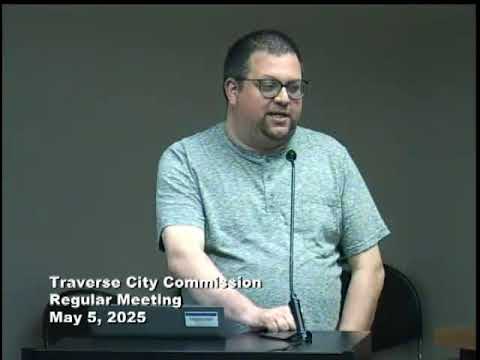
Traverse City staff, businesses and residents reviewed the East Side placemaking pilot and social district at the May 5 meeting, with the commission endorsing continued operation and asking staff to compile additional data before considering any expansion.
The pilot, launched in summer 2024, repurposed curb and parking space near Common Ground and other businesses for outdoor seating, umbrellas, planters and evening programming under a state‑approved social district framework. Business owners reported better public use and said the site hosted neighborhood meetings, running groups and family gatherings during the short season in 2024.
Staff reported new equipment delivered for the 2025 season — additional picnic tables and umbrellas, bike racks, solar benches and planters — and noted ongoing efforts to refine management rules, signage and safety measures. Planning Director Sean Winter said the city worked with the Festival Foundation to borrow traffic barriers in 2024 and has since ordered permanent fixtures and additional amenities.
Several businesses in the district told the commission the Commons area had produced positive activity and that additional refinements, such as banning smoking in the Commons area and allowing reusable beverage vessels, would improve the space. Two businesses — Tank Space and Oakwood Proper Burgers — said they intend to use the space for regular programming and community events this year.
At the meeting, commissioners and staff addressed neighborhood concerns, including pedestrian safety, trash pickup, library security and access to the postal box. Some neighbors said the pilot altered parking and asked the city to track impacts on surrounding businesses. Planning staff said some early complaints were based on misunderstandings (for example, asserted “handicap” parking that was never signed as such) and that the city would work to resolve remaining issues.
Commissioners asked staff to return with a broader, more systematic evaluation before approving any geographic expansion of the social district. Commissioner Jackie Stanley said she wanted more complete business data and neighborhood feedback, including sales or ticket data from participating businesses, police reports and usage counts, rather than relying on limited anecdotal responses. Other commissioners emphasized the need to reach a wider set of adjacent businesses and to set clear metrics for performance.
Staff and business owners said they would collect additional data during the 2025 season and return to the commission with aggregated findings. Commissioners also asked staff to evaluate a targeted smoking prohibition for the Commons area and consider allowing reusable beverage vessels to reduce single‑use waste, both items the commission asked be brought back for formal action.
For now, the pilot continues with added furniture and programming; staff will coordinate with the businesses and neighborhood groups on signage, trash management and safety measures to reduce negative impacts while preserving public access and activity in the East Side Commons.