Get Full Government Meeting Transcripts, Videos, & Alerts Forever!
Get email alerts on the Commercial Use Crypto Club topic
No spam. Unsubscribe anytime.
Commission sends proposed Bitcoin education/club at 8513 Manchester to site-plan subcommittee
Summary
An application for a Bitcoin Benz Crypto Club at 8513 Manchester Road prompted questions about uses, parking, landscaping and tenant improvements; the Planning & Zoning Commission referred the conditional-use permit and a text amendment proposal to a site-plan subcommittee for further information.
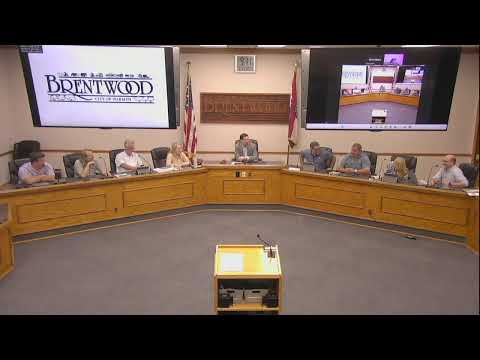
The Planning and Zoning Commission on June 11 referred a conditional-use permit application for Bitcoin Benz Crypto Club (BBCC) at 8513 Manchester Road to the commission’s site-plan subcommittee after commissioners raised multiple questions about the nature of the business, parking and site improvements.
Staff presented a two-part request: (1) a text amendment to allow "educational services" as a conditional use in the Manchester Corridor (MC) commercial district for class C properties under Section 400.1375(e)(2), and (2) a conditional-use permit for BBCC, which the applicant described in public testimony as a membership-based "technology education center" and social club focused on assisting individuals with cryptocurrency transactions. Planning staff told the commission the building is preexisting nonconforming; the lease is for 8513 only and the building is estimated to hold up to 25 people.
The applicant, represented at the hearing by Ben Simche and Greg Garland, told commissioners, "I think we screwed up when we actually filled out the application because we are not an education center." Simche added that BBCC will offer advice and hands-on assistance for people using crypto—"we have people who have a lot of questions, and we have answers"—and that membership dues would be part of the business model. Architect and planner testimony noted the site has not provided a landscape plan that meets current city standards and that wheel stops currently block a rear access between Ruth Avenue parcels. City staff requested removal of the blocking devices and a cross-access agreement.
Commissioners and staff focused on three recurring concerns: (1) whether the proposed activity should be classified as "education" under the MC district or instead tallied under a business-use category, (2) the absence of a landscape plan and several site deficiencies flagged by the city’s landscape consultant and on-call planner (including a missing landscape buffer, dead trees and an un-enclosed dumpster), and (3) traffic/occupancy management for a space that staff estimated could hold up to 25 people. Architect Joe Klitzing, retained by the applicant, noted the building-code occupancy/use group distinctions do not always map to zoning uses, and he urged the commission to consider the building-code business/educational classifications separately from the zoning-use decision.
Commissioner Bilderback asked whether the proposed text amendment’s language would actually allow the business that applied; staff and another commissioner noted the applicant’s description had evolved during the hearing and that NAICS codes and building-code use groups were being used as cross-references. Commissioners also asked whether other jurisdictions regulate similar uses; staff said they were not aware of regional examples.
After public comment—including the building owner, who said exterior repairs and power washing had been completed and indicated willingness to work with city staff—the commission voted to send the case to a site-plan subcommittee meeting (scheduled for June 25) to give the applicant time to submit a landscape plan, address parking and access questions, and clarify hours of operation and operational controls (for example, membership-only “Car Side” or enrollment procedures discussed elsewhere in the meeting). The referral passed on a voice vote.
Staff recommended that the applicant provide a revised landscape plan, remove obstructive wheel stops, provide a cross-access agreement, and document building-owner willingness to implement exterior repairs and required landscape improvements before a building permit would be issued. The subcommittee will review these items and report back to the full commission.